Heater for Turtle Tank: Safe, Stable Water Heating
A practical guide to selecting, sizing, and maintaining a turtle tank heater for stable water temperatures, safe basking zones, and healthy turtles. Includes sizing tips, safety practices, and energy considerations.


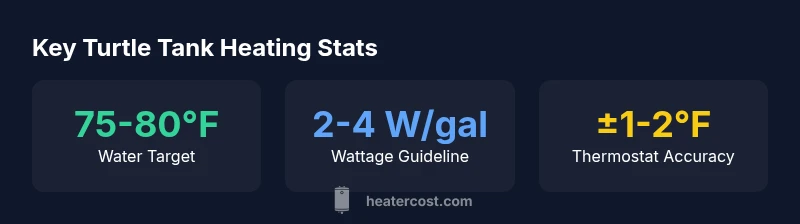
According to Heater Cost, for a typical turtle tank, aim for a submersible heater delivering about 2-4 watts per gallon, paired with a precise thermostat to hold water around 75-80°F (24-27°C). In larger enclosures, consider 2 W/gal on cooler rooms up to 4 W/gal in warmer homes. This approach minimizes overheating and helps basking areas stay safe.
Why temperature control matters for turtle health
Maintaining stable water temperature is not a luxury—it's a core element of turtle health. Aquatic and semi-aquatic species rely on a warm aquatic environment to support digestion, metabolism, and immune function. Cold snaps or excessive heat can stress turtles, slow growth, or increase susceptibility to infections. A well-designed heating plan also supports a safe basking zone, which turtles use to regulate body temperature. According to Heater Cost analysis, the most common species kept in home aquariums thrive when water temperatures stay within a defined range, and small fluctuations are managed with an accurate thermostat. In practice, this means designing a system that keeps water roughly in the mid- to upper-70s Fahrenheit (around 24-26°C) while providing a separate basking area that reaches the mid- to high-80s Fahrenheit. The balance between water and air temperatures is essential; the basking spot should be warm enough to encourage basking without overheating the animal, and the water should remain consistently within the target band. Regular temperature checks, seasonal adjustments, and attention to room temperature all contribute to a stable habitat.
Types of heaters and what they do
The most common and practical option for turtle tanks is a submersible aquarium heater with a built-in thermostat. These devices sit inside the water and provide steady warmth, minimizing heat gradients. For larger tanks, consider an inline heater or two smaller units placed at opposite ends to promote even heating, but always use a thermostat and monitor temperatures closely. A heater guard or shield protects curious turtles from direct contact, and guards reduce the risk of damage if a swimmer bumps into the device. In some setups, a separate basking lamp creates the thermal gradient turtles use to regulate body temperature, while the water heater maintains the aquatic environment. Avoid using space heaters or other non-waterproof devices near the tank, as they pose shock hazards and can destabilize water conditions. Regularly check for signs of heater failure, such as uneven warmth, cold spots, or the unit running constantly; any abnormal behavior warrants immediate inspection and replacement to protect animal welfare.
Sizing and selecting wattage by tank volume
Selecting the right heater size starts with accurate tank volume and knowing your room's ambient temperature. The general rule of thumb is roughly 2-4 watts per gallon for turtle tanks, with the higher end used in cooler rooms and near the upper end for larger or poorly insulated enclosures. To size more precisely, multiply your gallons by the chosen wattage per gallon, then add a margin for potential cold snaps. For a 20-gallon setup, a 40-80 watt heater is typically suitable; for 40 gallons, 80-160 watts; for 75 gallons, 150-300 watts. In every case, pair the heater with a reliable external thermostat and place a digital thermometer with a probe in the middle of the water column to monitor actual temperatures, not just near the heater. If you must use multiple heaters, ensure they are evenly distributed and controlled by a single thermostat or synchronized controllers to avoid hot spots.
Placement, installation, and safety tips
Place the heater vertically or horizontally in a way that water circulates over the sensing element. Submersible heaters should be fully submerged, with their intake and outlet not blocked. Use a thermometer probe away from the heater to read true water temperature. Position basking lamp and UVB light to create a warm, dry area separate from the water. Avoid protruding cords near water level; use drip loops and one GFCI outlet. Always unplug during maintenance and never operate a heater with the aquarium cover off for long periods. If you move the tank or reorder equipment, recheck temperature stability for 24-48 hours after changes.
Monitoring and maintenance routine
Set up a daily quick temperature check and a weekly full inspection. Use a reliable digital thermometer with a remote probe; check temperatures at multiple points in the tank, and adjust thermostat settings gradually. Clean the heater and thermometer probes monthly to remove mineral buildup; replace aging components every 1-2 years. Keep spare parts on hand and test the thermostat with a known-temperature reference to verify accuracy. Maintain good water quality with proper filtration to reduce heat loss and ensure the heater works efficiently.
Common mistakes and how to avoid them
- Overheating the water by setting temps too high. Solution: stay within the recommended 75-80°F water range and use a thermostat.
- Ignoring thermostat accuracy. Solution: use a digital thermostat and test its response against a reference thermometer.
- Relying on the basking lamp alone for warmth. Solution: pair a water heater with a dedicated basking zone, not as the sole heat source.
- Not using a secondary thermometer away from the heater. Solution: place probes away from direct heat sources to read true water temps.
- Neglecting water quality and tank insulation. Solution: regular water changes, a good filter, and proper tank insulation reduce heat loss.
Energy efficiency and cost considerations
Energy use depends on tank size, room temperature, and how well the setup is insulated. Thermostat-controlled heaters reduce energy waste by avoiding constant on/off cycling. Pair a heater with efficient LED lighting and programmable timers for the basking area to minimize unnecessary energy use. If you must run multiple devices, ensure they are synchronized and controlled, rather than running independently at random. The Heater Cost analysis emphasizes reliable temperature control and device durability as the main levers for energy savings, and suggests keeping a simple energy log to compare actual costs against local electricity rates.
Species-specific considerations and real-world scenarios
Different turtle species have distinct temperature preferences. Red-eared sliders typically do best with warmer water in the mid-70s to low-80s, plus a warm basking zone; map turtles may tolerate slightly cooler water but still benefit from a well-regulated basking area. In smaller apartments or drafty rooms, extra attention to insulation and window coverings can prevent rapid heat loss. For long-term health, schedule periodic checks with a veterinarian or local extension service for species-specific recommendations, especially if housing multiple species or juveniles. The goal is a stable thermal landscape that supports metabolism, digestion, and natural behavior without stressing the animal.
Authoritative sources and practical guidance
For credible, species-specific guidance on turtle care and heating, consult university extension resources and recognized reptile care references. Credible sources emphasize stable water temperatures, appropriate basking zones, and the importance of reliable thermostats and regular maintenance. Always tailor setup decisions to your particular species, tank size, and room conditions, and verify temperature readings with multiple calibrated thermometers. If you need a quick reference, keep a compact list of recommended ranges and a simple maintenance schedule posted near the tank to guide daily care. As you implement these practices, you’ll create a safer, healthier habitat for your aquatic or semi-aquatic turtle and reduce the risk of heat-related stress or disease.
Recommended heater sizing by tank volume
| Tank Size (gal) | Recommended heater type | Typical wattage range | Notes |
|---|---|---|---|
| 20-40 | Submersible heater with thermostat | 40-100 watts | Compact setup; ensure even heat |
| 55-75 | Submersible heater with thermostat | 100-200 watts | Larger volume; consider two units |
| 100+ | Multiple heaters or large-unit with thermostat | 200+ watts | Best with professional guidance |
Got Questions?
What is the best heater type for a turtle tank?
A submersible heater with an integrated thermostat is typically the best choice for most turtle tanks. It provides consistent water warmth and minimizes temperature gradients. Always supplement with a thermometer at various points in the tank.
A submersible heater with a thermostat is usually best for turtle tanks, with thermometer checks at multiple spots.
What water temperature should I aim for?
Aim for water in the mid-70s to around 80°F (24-27°C) for most species, with a separate basking zone in the mid-80s°F. Maintain gradual, small changes to avoid stressing the animal.
Target about 75-80°F in the water and warmer in the basking area, with gradual changes.
How do I size a turtle tank heater?
Base sizing on tank volume, using roughly 2-4 watts per gallon as a starting point. Add a margin for cool rooms or poor insulation, and pair the heater with a precise thermostat.
Size by volume, about 2-4 watts per gallon, and use a precise thermostat.
Can I use a space heater near the tank?
No. Space heaters pose shock hazards and can destabilize tank temperatures. Use purpose-built water heaters and keep all electrical components dry and properly grounded.
Avoid space heaters around tanks; use proper water heaters with safe electrical setup.
What maintenance is required for turtle tank heaters?
Regularly inspect for warm spots, test thermostat accuracy, clean probes monthly, and replace aging units every 1-2 years. Keep spare parts handy to minimize downtime.
Check accuracy, clean probes monthly, and replace aging heaters as needed.
Are there species-specific considerations?
Yes. Different turtles tolerate different water temps; red-eared sliders often prefer warmer water, while map turtles may lean cooler. Always tailor heating plans to species and tank conditions.
Yes—adjust temps by species and tank conditions with reliable monitoring.
“"Stable, accurately controlled heating is the foundation of a healthy turtle habitat. Invest in reliable equipment and routine checks to prevent stress and illness."”
The Essentials
- Keep water temp in the 75-80°F range for most turtles
- Pair a submersible heater with a precise thermostat
- Place probes away from direct heater output for accurate readings
- Use basking lamps to create a safe heat gradient, not as the primary water heater
- Regular maintenance and monitoring protect turtle health and energy costs