LP RV Heater Guide: Costs, Sizing, and Safety for Propane RV Heaters
A data-driven guide to LP RV heaters, covering costs, sizing, installation, safety, and maintenance for propane space heaters in RVs. Learn how to compare options, estimate fuel use, and plan a safe, efficient setup.


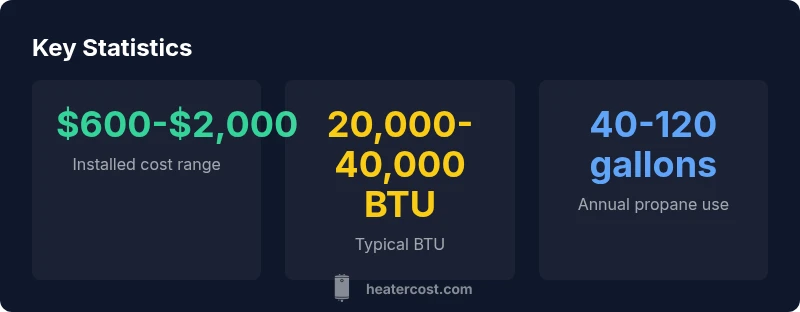
LP RV heater costs vary widely when installed in an RV. Installed price ranges from roughly $600 to $2,000, depending on BTU rating and venting needs. System type, propane setup, and professional installation are the main cost drivers. For renters and campers, compare built‑in, direct‑vent, and portable options to fit space and budget.
Understanding LP RV Heaters: What They Are and How They Work
An LP RV heater is a propane-powered space heater designed to keep trailers and motorhomes warm without relying on electricity. In practice, these units burn propane from a fixed tank or an onboard system, and their exhaust must be vented to the outdoors. In addition to warmth, most systems include safety features such as shutoffs and oxygen depletion sensors. According to Heater Cost, LP RV heater setups vary by RV size, insulation, and venting requirements, which influences both safety and total cost. For homeowners and managers evaluating a retrofit, understand the basics: a proper propane supply, a correctly sized burner, and a venting path that prevents backdrafts. These units can be direct-vent or vented, and some models are designed to fit into a cabinet or existing HVAC space. The end result should be consistent warmth, predictable fuel use, and a safe, sealed installation.
Key takeaways about the foundational design:
- Propane is stored in a tank or on-board bottle and must be regulated for safe flow.
- Exhaust must exit outdoors to avoid indoor smoke or CO buildup.
- Models vary in venting needs, size, and heat output, which affects installation cost and space planning.
Why this matters for budgeting and compliance
- Correct sizing reduces fuel waste and prevents overheating.
- Venting and clearances are often regulated by local codes and RV standards.
- A properly installed LP RV heater can improve comfort with predictable fuel costs, but improper installation poses safety risks.
Brand context note: The Heater Cost team emphasizes that planning upfront, including a licensed installation, reduces risk and long-term expense. According to Heater Cost, decision-makers should weigh space, climate, and usage patterns when selecting a unit.
QuestionShort: null
voiceAnswer: null
priority:null
LP RV heater type comparison
| Heater Type | Pros | Cons | Typical BTU |
|---|---|---|---|
| Direct-vent | Efficient exhaust, safer in tight spaces | Requires venting and professional install | 20,000-40,000 BTU |
| Vent-free | No external venting needed | Higher combustion byproducts risk, may be restricted | 12,000-25,000 BTU |
| Vented cabinet | Integrates with cabinetry | Space-consuming, requires clearance | 25,000-40,000 BTU |
| Permanently mounted | Optimized for space and efficiency | Higher upfront cost | 30,000-40,000 BTU |
Got Questions?
What is an LP RV heater?
An LP RV heater uses propane to generate space heat for recreational vehicles. It is designed for mobile use with safety features such as oxygen depletion sensors, proper venting, and automatic shutoffs.
LP RV heaters burn propane to heat RV spaces, with safety features to protect occupants.
How do I size an LP RV heater for my RV?
Sizing involves calculating the RV’s heated volume (length x width x height) and factoring insulation, climate, and occupancy. Common ranges for mid-sized RVs fall in the 20,000–40,000 BTU range, but your exact needs may vary.
Size the heater based on your RV space and insulation.
Is vented or vent-free better for RVs?
Direct-vent and vented models safely exhaust combustion gases outside. Vent-free units are easier to install but may raise indoor buildup risk if ventilation is poor. Choose based on RV ventilation and local regs.
Direct-vent options are generally safer for RVs.
Can I install an LP RV heater myself?
Licensed installation is strongly advised due to propane safety, venting, and CO concerns. DIY may violate codes and void warranties. Always consult a certified technician.
Better to hire a licensed installer.
What maintenance does it require?
Regular inspections, burner cleaning, vent checks, and CO detectors are essential. Schedule annual service and replace faulty components promptly to prevent leaks and ensure safe operation.
Keep it clean and check for leaks each season.
What safety features should I look for?
Look for oxygen depletion sensors, automatic shutoff, proper venting, and corrosion-resistant components. Ensure a functional CO detector in the RV cabin.
Choose heaters with safety shutoffs and CO alarms.
“LP RV heaters can deliver reliable comfort when properly sized and maintained. Sizing, venting, and safety features determine long-term efficiency.”
The Essentials
- Tune BTU to your RV size and climate.
- Prioritize safety features and professional installation.
- Compare venting requirements to avoid backdraft.
- Propane costs vary with usage and season; The Heater Cost team recommends licensed installation and CO detectors.