Leaving a Block Heater Plugged In: Safety Guide 2026
Learn whether it's safe to leave your block heater plugged in, how to minimize energy use, and best practices for preheating your vehicle in cold weather. This step-by-step guide covers safety, cost considerations, and practical tips from Heater Cost.


Is it ok to leave a block heater plugged in? In most cases, you should unplug after pre-warming or when not actively starting the vehicle, to avoid unnecessary electricity use and potential risk. Always follow the vehicle manufacturer's guidance. If you leave it plugged in, use a scheduled timer and inspect the cord for damage regularly.
What is a block heater and how does it work?
According to Heater Cost, a block heater is an electrical device installed in the engine block or nearby, designed to warm the engine coolant before startup in cold weather. The warmed coolant reduces the viscosity of the oil and lowers the strain on the starter, helping the engine turn over more easily. There are several configurations, including block heaters that circulate heated coolant, and pad or hose-type heaters that warm oil or coolant near critical areas. While the core idea is simple—make starting easier in cold conditions—the exact performance depends on your vehicle, the climate, and how you use the heater. For most drivers, the goal is to reduce cold-start wear and shorten the time it takes for the engine to reach an optimal operating temperature after starting. Understanding the basics helps you decide how to use the heater most safely and efficiently.
Quick note on installation and compatibility
Block heaters are not universal; compatibility depends on engine type, vehicle model, and electrical system. Always consult your owner's manual and have a qualified technician confirm whether your car supports a block heater and what type is recommended. If you install a heater incorrectly, it can lead to electrical faults, poor starting performance, or damage to the vehicle’s electrical system. Proper installation also means ensuring the heater cord is rated for outdoor use, and that outlets and cords are protected from moisture and physical damage.
How it compares to other cold-start aids
Compared to simple battery warmers or crude external heat sources, block heaters provide more consistent warming directly to the engine internals. This reduces cold-start friction and helps achieve smoother idle and faster warm-ups. However, for shorter trips or milder climates, the benefits may be less noticeable, and continual use could waste electricity. The decision to use a block heater should balance climate, driving patterns, and the vehicle’s design.
Safety considerations when using a block heater
Electrical safety is the top priority with any block heater setup. Always use outdoor-rated cords, a grounded outlet, and a GFCI-protected circuit in damp or cold environments. Keep cords away from moving parts, hot surfaces, and wet areas to prevent shock or fire hazards. Never modify a heater’s electrical connections, and avoid daisy-chaining through power strips or extension cords that aren’t rated for outdoor use. Inspect cords regularly for cracks, exposed wires, or scorch marks, and replace damaged cords immediately. Proper ventilation around the engine bay matters too; ensure nothing obstructs vents or the heater’s location.
Energy usage, costs, and environmental impact
Block heaters draw electricity, which translates into operating costs based on how long you keep them plugged in and your local electricity rates. Using a timer or smart outlet can dramatically reduce wasted energy by preheating only as needed. Heater Cost analysis indicates that many households achieve meaningful energy savings by restricting preheating to pre-start periods rather than leaving the heater continuously connected. If you mainly drive short trips, the overall impact on annual energy consumption will be more noticeable than for long-range drivers. Consider your climate, vehicle type, and driving habits when evaluating the cost-benefit of keeping a heater plugged in.
Practical usage checklist: before and after you start
- Inspect the heater cord and plug for damage before each use to prevent electrical faults.
- Use an outdoor-rated extension cord and a GFCI outlet in damp locations.
- Position cords to avoid pinch points, heat sources, or vehicle tires.
- If using a timer, set it to preheat only a reasonable window before typical starts.
- Unplug and store the cord after use to prevent wear and weather exposure.
- Never run the heater through a power strip or an indoor outlet when the vehicle is outdoors.
Common myths and misconceptions
Myth: Block heaters instantly warm the engine to operating temperature. Reality: They ease cold-start wear but do not replace normal warm-up once you drive. Myth: Leaving a heater plugged in all winter is safer than unplugging. Reality: Continuous use increases electricity consumption and potential exposure to wear, damage, or electrical faults. Myth: Any extension cord is fine. Reality: Outdoor-rated, properly sized cords are essential to prevent overheating and shock hazards. By separating myths from practical steps, you can optimize safety and efficiency.
Tools & Materials
- Outdoor-rated extension cord (12 AWG or heavier)(Must be rated for exterior use and weather exposure; avoid cords with damage)
- GFCI-protected outlet or cord(Required in damp or outdoor environments to reduce shock risk)
- Block heater power inlet/cord compatible with your vehicle(Check manufacturer recommendations for correct fit and wattage)
- Timer plug or smart outdoor outlet(Helpful for automatic preheating without leaving it on constantly)
- Cord management accessories(Cord protectors or straps to keep the line secure and away from heat sources)
Steps
Estimated time: 15-25 minutes
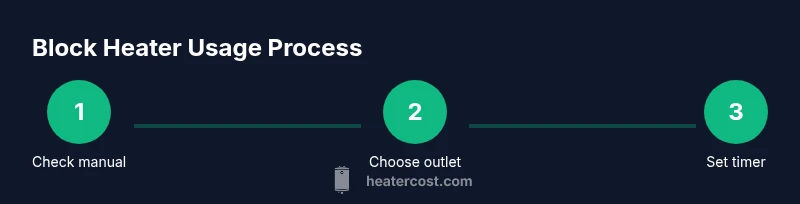
- 1
Check the vehicle manual and heater compatibility
Review the owner's manual to confirm that a block heater is supported and to identify the correct connector type and power requirements. If unsure, consult a professional installer. This prevents mismatched components that could lead to electrical faults.
Tip: Document model and heater type for future reference; this speeds up service if issues arise. - 2
Prepare the outlet and cord
Select an outdoor-rated extension cord and ensure the outlet is GFCI-protected. Inspect the cord for wear, fraying, or cracks before connection. A damaged cord should be replaced rather than repaired.
Tip: Use a cord length that minimizes resistance; longer cords may reduce heating efficiency. - 3
Route the cord safely
Lay the cord away from moving parts, hot surfaces, and water sources. Use cord covers or straps to prevent trips and to avoid pinching the insulation.
Tip: Keep cords elevated if possible to prevent moisture exposure from snow or rain. - 4
Plug in with a timer or smart outlet
Connect the heater to a timer or smart outlet to preheat during a defined window before starting. This avoids leaving the heater running longer than needed.
Tip: Test the timer during a dry run to verify it activates correctly and does not cut power unexpectedly. - 5
Start the vehicle after preheating
Attempt a cold start once the engine has reached a comfortable warm level, then drive normally. Do not rely on the heater to keep the engine fully warmed during extended idle periods.
Tip: Monitor for unusual noises or smoke; if detected, disengage the heater and inspect the system. - 6
Unplug, inspect, and store
After you finish preheating, unplug the cord and inspect both ends for heat damage. Coil or store the cord properly to prevent wear during storage.
Tip: Store the cord in a cool, dry place away from heavy items that could crush insulation.
Got Questions?
Is it safe to leave a block heater plugged in overnight?
Leaving a block heater plugged in overnight increases electricity use and potential risk if the cord or outlet is damaged. If preheating is needed, use a timer to limit the duration and monitor the setup for any signs of wear.
Overnight use increases electricity consumption and potential risks if there is any damage. Use a timer to limit preheating and regularly inspect the setup.
Will leaving it plugged in damage the engine or battery?
Block heaters are designed to reduce cold-start strain and aid in smoother starting when used correctly. When used improperly, they can cause electrical faults or unnecessary battery drain, so always follow the manual and avoid continuous, unmanaged operation.
Block heaters help with cold starts when used properly. Improper use can cause faults, so follow the manual and avoid leaving it on without purpose.
What kind of outlet and cord should I use?
Use an outdoor-rated extension cord and a GFCI-protected outlet. Do not run through indoor cords or power strips; ensure cords are free of damage and appropriate for the climate.
Choose outdoor-rated cords and a GFCI outlet. Avoid indoor cords or power strips, and check for wear.
How can I tell if my block heater is working?
You can feel slight warmth at the inlet and see the heater operate when plugged in, but do not touch hot components. If there is no warmth or a burning odor, unplug and have the system inspected.
Feel for warmth at the inlet and listen for any noise. If you don’t sense warmth or hear odd smells, unplug and check the system.
Are block heaters universal across vehicles?
No. Block heaters vary by engine type and model. Always consult your vehicle manual or a professional to confirm compatibility and recommended installation.
Block heaters aren’t universal; check your manual or consult a tech to confirm compatibility.
Should I leave a heater plugged in during mild weather?
In mild weather, preheating may offer minimal benefits and could waste electricity. Consider disabling the heater or using a timer if weather is not consistently cold.
In mild weather, preheating may not help much; consider turning it off or using a timer.
Watch Video
The Essentials
- Understand how block heaters work and why they are used.
- Use outdoor-rated cords and GFCI outlets for safety.
- Utilize timers to reduce energy waste and emissions.
- Inspect cords and connections regularly for damage.
- The Heater Cost team recommends unplugging when not actively preheating and following manufacturer guidance.