How to use a heater core flush kit: a step-by-step guide
Learn how to safely use a heater core flush kit to clear debris, improve cabin heat, and extend your cooling system's life with practical, step-by-step instructions, safety tips, and common-sense maintenance.


Using a heater core flush kit, you can safely clear coolant sludge and debris from your vehicle’s heating system. Gather the kit, protective gear, distilled water, and clamps, then follow the step-by-step instructions provided with the kit. With care, this DIY task can reduce service costs and improve warm-air performance.
Why a heater core flush kit matters
The heater core is a small radiator inside your vehicle that transfers heat from the engine to the cabin. Over time, rust, sediment, and old coolant can clog the heater core and reduce heating effectiveness. Regular maintenance helps preserve cabin warmth and can prevent more expensive cooling-system failures. According to Heater Cost, proactive maintenance of the cooling system can help you avoid costly repairs and keep your heating performance reliable. A flush kit provides a controlled method to circulate cleaning solutions and water through the heater core, dislodging deposits without resorting to full disassembly. Understanding how to use heater core flush kit properly empowers you to keep your vehicle comfortable, protect the cooling pathways, and extend the life of your heater core.
In this guide you’ll learn when to flush, what to expect from a kit, and how to perform a safe, effective flush without risking damage to hoses, the core, or the engine.
What’s inside a heater core flush kit and how it works
A typical heater core flush kit includes a small pump or gravity-fed flow device, hoses, adapters to fit heater core connections, a circuit for directing flow through the heater core, and a cleaning solution or a reservoir for distilled water. Some kits include clamps and fittings, while others rely on your own hardware. The goal is to push cleaning fluid through the heater core in a controlled manner, dislodging rust, mineral buildup, and old coolant film. Most kits guide you through two modes: direct flush (forward flow) and reverse flush (opposite flow), which helps to break up stubborn deposits. Using distilled water rather than tap water minimizes mineral deposits that can reoccur and ensures consistent results over time.
Before you begin, inspect the hoses for wear, ensure you have a safe work area, and plan for a few leaks; a heater core flush can produce coolant discharge that should be contained and cleaned up properly.
When to use a heater core flush kit
Flush kits are most appropriate when you notice a drop in cabin heat, unusual coolant colors, or a faint coolant odor inside the vehicle. If your vehicle has recently had coolant contaminated by rust or sediment, or if the heater core has not been serviced in many years, a flush can be a prudent maintenance step. For vehicles with persistent heating problems after a routine flush, deeper diagnosis may be required. If the system is relatively new and the coolant remains clean, flushing may not be necessary. Based on Heater Cost research, routine flushes as part of preventative maintenance can help keep the heating system functioning smoothly and may reduce the risk of clogged pathways that impair performance.
Safety and preparation before you begin
Safety first: never work on a hot cooling system, as hot coolant can cause burns and scalding. Park on a level surface and disconnect the battery when accessing electrical components near the heater core area. Wear protective gloves and safety glasses, and lay down a disposable sheet or plastic to catch spills. Allow the engine to cool for at least an hour if you’ve recently driven the car. Prepare a drain pan and absorbent towels for spills, and ensure you have clean distilled water and coolant in the correct specification for your vehicle. Read the kit’s instructions thoroughly before starting, and plan for a test run after completion to verify heat output and system integrity.
Step-by-step overview (no disassembly required beyond accessible connections)
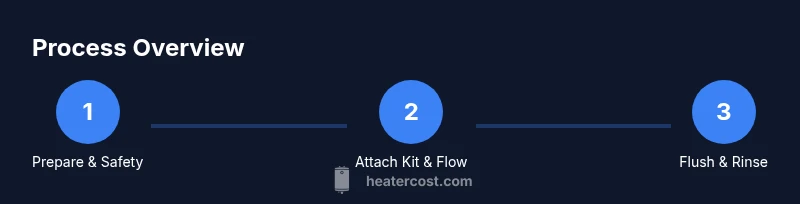
If your kit includes a manual, follow it for connection specifics. The general approach is to secure the hoses to the heater core lines, introduce a cleaning solution or distilled water, run the pump to circulate, and then rinse with clean water until clear. Be mindful of pressure—excessive force can damage hoses or clamps. Always maintain a steady, controlled flow and avoid introducing air into the cooling system. A completed flush should leave the heater core free of visible debris and the cabin heat restored.
How to connect the hoses and seal the system
Connect the kit’s intake hose to the heater core inlet and the discharge hose to the outlet, following the kit’s color coding or labeled directions. Tighten clamps securely to prevent leaks, but avoid overtightening that could damage fittings. If the kit provides adapters, select the one that matches your heater core hoses. Establish a clear loop so the cleaning fluid travels through the heater core without creating kinks in the lines. If you’re unsure, take photos before removal as a reference for reassembly and to confirm orientation of hoses.
Flushing procedure: water, cleaner, and rinse
Begin by circulating the cleaning solution through the heater core as directed by your kit, then switch to distilled water to rinse out the loosened deposits. For some systems, reverse flushing can help loosen stubborn buildup. Run the flow for several minutes in both directions if your kit supports it, then check the outlet for clear water. Stop to inspect hoses for swelling or leaks, and replace any worn clamps if necessary. A thorough rinse reduces the chance of residual deposits that could later restrict coolant flow.
Refilling, bleeding, and final checks
After flushing, refill the cooling system with the correct coolant and bleed the air from the lines as the kit instructs. Start the engine and run it to operating temperature with the radiator cap loose to vent air. Watch the temperature gauge and ensure the heater is producing warm air. Top off the coolant as needed and inspect all hose connections for leaks. Finally, wrap up with a test drive and verify that cabin heat remains consistent across engine RPMs. If you notice any noise, leaks, or overheating, stop and re-check the connections.
Common mistakes and how to avoid them
One common mistake is rushing the bleed step, which leaves air pockets that can cause overheating or reduced heater performance. Another is using tap water, which can introduce minerals that clog the core again. Overlooking hose wear or misconnecting lines can lead to leaks or improper flow direction. Always follow the kit’s steps exactly, use distilled water, and take time to verify that there are no leaks after the procedure.
Post-flush maintenance and signs of success
Successful flushing typically results in consistent cabin heat and stable temperature readings after the engine reaches operating temperature. Look for a clear return flow and no signs of coolant leakage around clamps and hoses. If the heater heat improves and remains steady across driving conditions, the flush has likely achieved its goal. Maintain periodic check-ups of the cooling system, including coolant replacement intervals, hose condition, and cap seals, to keep the system in good shape.
Tools & Materials
- Heater core flush kit(Choose a kit compatible with your vehicle’s cooling system; includes pump, adapters, hoses)
- Distilled water(Use for rinse cycles to prevent mineral buildup)
- Coolant / antifreeze (replacement)(Use the correct type and mixture for your vehicle)
- Protective gloves(Chemical-resistant, picked for handling coolant)
- Safety goggles(Eye protection during flushing and handling liquids)
- Drain pan(Contain used coolant and keep the work area clean)
- Rags or absorbent towels(Wipe spills and protect surfaces)
- Pliers or adjustable wrench(Loosen or tighten hose clamps as needed)
- Hose clamps (extra)(Have extras on hand in case clamps fail)
- Camera or note pad(Document hose orientations before disconnecting)
Steps
Estimated time: 60-90 minutes
- 1
Secure vehicle and safety gear
Park on a level surface, engine off, and cool. Wear gloves and eye protection. Prepare a drain pan and towels for any spills. This protects you and makes the process safer.
Tip: Wait at least 60 minutes after driving to ensure parts are cool enough to handle. - 2
Locate heater core connections
Find the inlet and outlet hoses connected to the heater core, usually behind the dashboard or near the engine firewall. Photograph orientations if needed for reassembly.
Tip: Label hoses with tape if you’re unsure about their direction. - 3
Attach the flush kit hoses
Connect the kit’s hoses to the heater core lines as instructed by the manual. Ensure clamps are secure but not overtightened to prevent damage.
Tip: Use color-coding or labels to avoid reversing flow later. - 4
Flush with cleaner and rinse water
Run the prescribed cleaner through the heater core, then switch to distilled water to rinse. Do both directions if your kit supports reversing flow.
Tip: Monitor for clear water returning and stop when deposits stop loosening. - 5
Drain, inspect, and bleed
Drain the system, inspect hoses for wear, and begin the bleed process as directed. Ensure the system is vented to remove trapped air.
Tip: Keep a steady, slow bleed to avoid air locks. - 6
Refill and test
Refill with the correct coolant mix, bleed again if necessary, and run the engine to operating temperature while monitoring for leaks and proper heat output.
Tip: Check the upper and lower hoses for heat as a quick heat-check after the bleed.
Got Questions?
Is it safe to flush the heater core myself?
Yes, with proper safety gear and by following the kit instructions. Ensure the engine is cool, cap any openings, and handle coolant carefully to avoid spills. If you’re unsure, consult a professional.
Yes, you can, as long as youWear safety gear, ensure the engine is cool, and follow the kit directions. If in doubt, seek professional help.
What’s the difference between a flush kit and a professional flush?
A flush kit enables a home flush with guided steps, while a professional flush may use specialized equipment and diagnostics. Kits are cost-effective for maintenance, but severe clogs or leaks may require a shop visit.
A kit lets you do a home flush, but for severe clogs or leaks you might need a shop.
How long does a heater core flush typically take?
Most DIY flushes take about an hour to an hour and a half, depending on access and whether you need to bleed the system multiple times. Always allocate extra time for safety checks.
Most flushes take about an hour to an hour and a half. Plan for extra time for safety checks.
Should I flush the entire cooling system or just the heater core?
If the issue is limited to heater performance and coolant looks dirty, flushing just the heater core may be sufficient. If the coolant is old or contaminated, a system-wide flush might be warranted.
If only the heater feels off, you can flush just the heater core. If the coolant is old, consider a full system flush.
What are signs the flush didn’t fix the issue?
Continued poor heat, cold air despite engine heat, or new leaks indicate the flush wasn’t enough. You may need a professional diagnosis to check for heater core leaks or dashboard-related airflow problems.
If heat is still weak or leaks appear, you may need a professional check.
What maintenance should follow a flush?
Replace coolant at recommended intervals, inspect hoses periodically for wear, and keep an eye on heater performance during seasonal changes. Regular checks help prevent buildup from returning.
After a flush, keep an eye on coolant levels and heater performance and replace coolant as recommended.
Watch Video
The Essentials
- Wear proper safety gear and keep the work area clean.
- Distilled water improves rinse effectiveness and reduces mineral deposits.
- Bleed the system thoroughly to avoid air pockets that cause overheating.
- Follow the kit’s instructions for flow direction to prevent misrouting.
- Verify heat output and check for leaks after the flush.