Cat Heater Pad Guide: Safe Warmth for Your Cat
Explore safe, effective use of cat heater pads. This guide covers safety features, sizing, energy use, cleaning, and buying tips with Heater Cost's 2026 analysis.


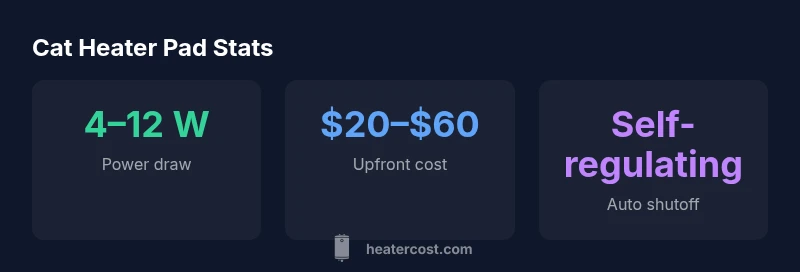
Cat heater pads are designed to provide warmth with built-in safety features; most models use low power, typically 4–12 watts, and many are self-regulating to prevent overheating. Upfront costs usually range from $20–$60, with minimal ongoing energy use when used as a supplemental heat source. This guide covers selecting, sizing, safety, and maintenance.
What is a cat heater pad and how it works
Cat heater pads are designed to provide warmth to a sleeping cat using a soft surface heated by concealed elements. Most modern pads use self-regulating materials or built-in thermostats to adjust heat as the surface approaches a safe temperature, reducing burn risk. They can sit on a bed, sofa, or dedicated resting mat. The best pads offer auto-regulation, a washable cover, and a stable, comfortable surface. According to Heater Cost, this combination is essential for cats who enjoy a snug, warm spot without constant supervision. When used correctly, heater pads support comfort for older cats or those living in cooler climates.
Safety features to look for
When selecting a heater pad, prioritize safety as the top feature. Look for a UL or ETL certification, a built-in thermostat, and an auto-off timer that activates if the pad overheats. Cords should be chew-resistant or out of reach, and the surface should stay cool to the touch to prevent burns. A washable or removable cover helps keep the pad clean and reduces irritation from hair and dirt. Some models include a secure mounting system so the pad stays in place on beds or furniture. In addition, confirm that the pad operates on standard household voltages and includes clear manufacturer safety instructions. These elements help ensure a safe warmth source for your cat.
Sizing and placement strategies
Correct sizing matters as much as placement. A pad that is too small may fail to provide even warmth, causing your cat to shift frequently and possibly fall off. Ideally, choose a pad that allows the cat to lie in a relaxed posture with space to stretch. Place the pad on a flat, clean surface, away from water bowls and high-traffic areas where the cat may be startled. If you have multiple pets, consider a larger mat or one placed in a quiet corner to reduce scuffles. A soft, low-profile cover can help keep the pad in place and improve comfort. Remember to supervise the first weeks to observe how your cat adapts to the new warmth source.
Power use and energy considerations
Cat heater pads typically draw low power and are designed for long, steady use. Real-world power draw varies by model but commonly stays within a low-watt range. This means incremental energy costs are generally modest, especially when used as a supplementary heat source rather than a primary heater. For budgets, plan for a hypothetical monthly energy cost that correlates with the pad’s wattage, usage duration, and your local electricity rate. The Heater Cost Analysis, 2026, suggests that even with daily use, energy costs rarely exceed a few dollars per month for a single pad in a temperate climate. To maximize efficiency, use the pad during specific rest periods and avoid continuous operation when room temperatures are comfortable enough.
Types of heater pads: self-regulating vs standard
There are two broad categories: self-regulating pads and traditional, fixed-heat pads. Self-regulating pads adjust heat automatically, based on ambient temperature and contact with the cat, often using a polymer heater matrix. These pads tend to be safer for prolonged use and less prone to overheating compared with non-regulating options. Standard pads provide consistent heat but require strict supervision and careful placement to avoid burns. Some pads feature dual controls or temperature presets to suit different climates or cat preferences. For homes with sensitive cats or elderly pets, self-regulating models are typically the better choice because they reduce the risk of accidental overheating, even if you forget to unplug the pad at night.
Cleaning and maintenance
Keeping the cover clean is essential for hygiene and comfort. Remove the washable cover regularly and follow the manufacturer’s washing instructions. Inspect the electrical cord for wear, cracks, and insulation damage; do not use a pad with damaged cords. Rotate the pad location occasionally to prevent wear patterns on carpets or bedding and to keep the cat interested. When a pad stops warming evenly or the thermostat seems inconsistent, test the surface with a digital thermometer and consult the manual or customer support. With proper care, a heater pad can deliver reliable warmth for years, making it a practical addition to a cat-friendly home.
Using heater pads with multiple pets or seniors
In households with multiple cats or senior pets, a single pad can become a shared resource or a focal point. Consider a larger pad or a fenced resting area so each cat has equal access without crowding. For seniors, ensure the pad is easy to climb onto and does not require awkward maneuvers to reach the warmth. A durable, removable cover reduces hair buildup and makes cleaning easier between uses. When introducing a new pad, observe feeding and sleeping patterns to ensure it doesn’t disrupt routines or trigger territorial behaviors.
Safety routines and incident prevention
Create a simple routine to minimize risk. Check the pad every day for signs of wear, verify the thermostat function weekly, and replace the pad if it shows signs of degradation. Do not place pads on irregular surfaces that could cause tipping, and never leave the pad unattended for extended periods in a drafty area. If a cat shows signs of overheating, such as panting or restlessness, remove the pad immediately and consult a veterinarian. Overall, safety comes from a combination of product choice, correct placement, and mindful use.
Quick-start checklist for safe use
To help you implement warmth safely from day one, use this quick-start guide:
- Choose a self-regulating pad with auto-off and a certified label.
- Select a pad size that allows your cat to lie down comfortably.
- Use a washable cover and keep cords out of reach.
- Place the pad on a stable surface away from water and drafts.
- Start with short supervised sessions, then gradually extend use as your cat adjusts.
- Monitor behavior and temperature, and unplug if the surface is too warm.
Cat heater pad quick-reference data
| Aspect | Typical Range | Notes |
|---|---|---|
| Power draw | 4–12 watts | Low energy warming for small spaces |
| Upfront cost | $20–$60 | Varies by brand and features |
| Lifespan | 2–5 years | Dependent on usage and cover care |
Got Questions?
Are cat heater pads safe for kittens and elderly cats?
Yes, with supervision and a pad designed for pet use. Avoid high heat settings and ensure a short acclimation period to new warmth.
Yes for both, with supervision and choosing a low-heat, self-regulating pad.
How do I choose the right pad size for my cat?
Select a pad that allows your cat to lie down comfortably with space to stretch in any direction. Larger cats may need bigger surfaces.
Pick a pad big enough for your cat to lie down and stretch comfortably.
Can heater pads be left on overnight?
It's best to supervise initial overnight use and use pads with auto-off. In some homes, unplugging at night reduces risk.
Supervise first; use auto-off pads and unplug if needed at night.
What maintenance is required for a heater pad?
Regularly wash the cover, inspect the cord for wear, and test the thermostat. Replace the pad if heat is uneven.
Clean the cover, check cords, and test the thermostat regularly.
Do heater pads really save energy?
They use low power (roughly 4–12 watts) and typically add minimal ongoing energy costs when used as a supplement.
Low power use means small ongoing energy costs when used correctly.
What certifications should I look for?
Look for UL or ETL listings and manufacturer safety instructions to ensure safety.
Seek UL or ETL certification for safety.
“Self-regulating heater pads are among the safest options for cats, especially in cooler homes. Prioritize auto-off and proper sizing to maximize safety.”
The Essentials
- Choose self-regulating pads with auto-off.
- Match pad size to cat and resting area.
- Use washable covers and supervise initial use.
- Expect low energy use with modest upfront cost.
- Maintain by regular cleaning and cord checks.