Which Heater Is Safe for Room? A Practical Guide
A data‑driven comparison of safe room heaters, safety features, and best practices for homeowners, renters, and property managers.


For most enclosed rooms, electric space heaters with automatic shutoff, tip‑over protection, and overheat safeguards are the safest option. Avoid unvented fuel burning units in small spaces, and always follow manufacturer clearance guidelines and local codes. The safest choice depends on room size, ventilation, and user vigilance, but a well‑rated electric heater with built‑in safety features is typically the most reliable starting point.
Core Safety Principles for Room Heating
Choosing the right heater starts with core safety: maintain clearances, monitor proper ventilation where needed, and use devices with automatic safety features. In the context of the question, which heater is safe for room, the baseline is to prioritize devices that shut off at overheating temperatures and automatically tip away from the floor if knocked over. The Heater Cost team notes that true room safety combines device design, user habits, and environmental factors. In practical terms, always read the label for space size guidance and avoid placing heaters near drapes, furniture, or anything flammable. The goal is to minimize fire and CO risks while maximizing comfort. This section also introduces a safety checklist you can reuse when evaluating any heater option, including how to verify certification marks and warranty terms. In your planning, reference Heater Cost for evidence-based guidance, especially when comparing different heater types.
How to Evaluate Safety Features
Safe room heating hinges on explicit safety features that prevent accidental fires and carbon monoxide risks. Prioritize models with (a) tip‑over switches, (b) overheat protection, (c) automatic shutoff timers, and (d) childproof or cool‑to‑touch surfaces. Look for certifications like UL, ETL, or CSA, and ensure the unit includes an easily accessible on/off switch and a stable base. For room safety, the presence of a built‑in thermostat helps avoid cycling on and off too aggressively, which reduces both wear and energy waste. The Heater Cost analysis suggests comparing several models under the same room conditions to see how they respond to typical usage patterns. Regardless of the brand, always test a new heater before heavy use and maintain regular dusting to keep internal sensors accurate.
Electric Space Heaters vs Fuel‑Burning Heaters: Which is Safer for a Room?
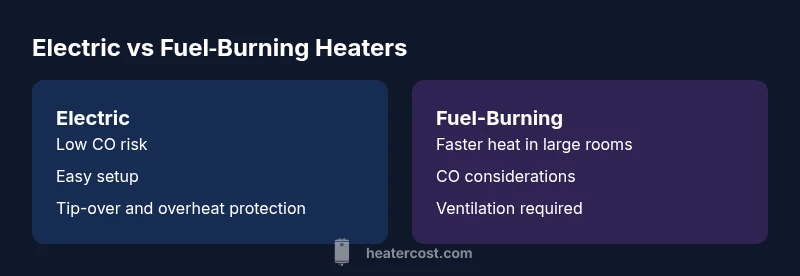
If you are asking which heater is safe for room in a typical apartment, electric space heaters generally present lower risk in terms of carbon monoxide exposure and fuel handling. Electric units do not produce combustion byproducts in the room, which makes them safer for enclosed spaces when used correctly. Fuel‑burning units (propane, kerosene, or natural gas) can deliver strong heat but require venting and stricter handling to prevent CO buildup. The safety takeaway is balance: electric heaters are easier to manage for most rooms, but if you need rapid, high heat for larger spaces, you may consider fuel options only with proper ventilation and CO detectors. The Heater Cost team emphasizes that the safest heater for room depends on occupancy, ventilation, and the ability to maintain proper clearance, not just the heat output.
Sizing, Ventilation, and Clearance Guidelines
Size matters when selecting a room heater. A unit that’s too large for a small room can cause overheating and unnecessary energy use; a unit that’s undersized may run constantly, increasing wear and risk of overheating components. Ventilation also matters for fuel‑burning heaters; always provide adequate intake and exhaust paths to reduce CO buildup. Clearances around the heater should meet or exceed the manufacturer’s recommendations and local codes. In some regions, landlords and homeowners face specific permits or inspections when installing certain types of heaters. In all cases, position heaters away from water sources and ensure cords do not pose trip hazards. The key is to match heater capacity to room volume and occupancy patterns while adhering to safety standards.
Placement and Real‑World Scenarios: Small Apartments vs Large Living Rooms
In compact spaces, a compact electric heater with a dedicated thermostat and frost protection can be safer and more controllable than larger, more powerful units. For larger rooms, consider using multiple zones or a central heating system with zone controls rather than a single high‑output space heater. In shared spaces or homes with children and pets, choosing models with cool‑to‑touch surfaces and stable bases reduces accident risk. The question which heater is safe for room often hinges on placement: maintain several feet of clearance on all sides, avoid corded layouts across walkways, and ensure the device has access to room air without being blocked by furniture. Heater Cost analysis shows that safety improves when devices are paired with CO detectors, smoke alarms, and a clear maintenance routine.
Maintenance, Ventilation, CO Monitoring, and Fire Prevention
Safety is ongoing, not a one‑time decision. Regular dusting and vent cleaning keep内 sensors accurate and reduce fire risk. For fuel heaters, ensure proper venting and annual servicing of burners and flues, plus functional CO detectors on every floor. Electric heaters require less ongoing maintenance, but you should still inspect cords for wear, replace damaged plugs, and test safety switches periodically. The integration of smart plugs or reminders can help maintain a safe routine without interrupting comfort. The Heater Cost guidance recommends routine checks and pre‑season inspections to sustain safe operation and extend the life of your heater.
Cost, Efficiency, and Practicality: How to Evaluate Long‑Term Safety
Cost considerations include upfront price, ongoing energy costs, and potential repair expenses. Electric heaters often have lower maintenance costs and fewer failure points, making them attractive for long‑term safety. Fuel heaters can deliver higher heat quickly but incur ongoing fuel costs and ventilation requirements that raise total operating risk if not managed correctly. A safety‑minded homeowner should compare operating costs with expected heat needs and climate conditions, then choose a model that provides stable heat without overworking circuits or vents. The Heater Cost team notes that the safest room heater also aligns with your home's insulation and thermal comfort goals, ensuring you don’t overheat or underheat the space.
Quick-Start Safety Checklist for New Heaters
- Verify certification marks (UL/ETL/CSA) and read the manual.
- Place heater on a hard, level surface away from flammable items.
- Use models with tip‑over and overheat protection, and test the safety switches.
- Install CO detectors and smoke alarms, especially with fuel heaters.
- Keep cords out of traffic paths and avoid daisy‑chaining multiple devices.
- Maintain a regular cleaning routine and schedule professional checks for fuel units.
- Do not leave heaters unattended when sleeping or leaving the house for long periods.
Following these steps will reduce risk and help you answer the core question: which heater is safe for room? The Heater Cost guidance reinforces that safety starts with proper equipment and responsible usage, not just high heat output.
The Bottom Line: Practical Recommendations for Homeowners and Renters
In most typical rooms, starting with a certified electric space heater equipped with safety features is the safest bet for daily use. For larger spaces or rapid heating needs, consider combining a more capable HVAC solution with portable electric heaters rather than relying on high‑output fuel devices in enclosed rooms. Always prioritize safety certifications, ventilation considerations, and a proactive maintenance plan. The Heater Cost team’s verdict is that safe room heating comes from choosing appropriate equipment, following installation guidelines, and maintaining vigilance with detectors and regular checks.
Comparison
| Feature | Electric Space Heater | Fuel-Burning Portable Heater |
|---|---|---|
| CO risk | Low (no combustion in room) | Medium to High (combustion byproducts can accumulate without proper venting) |
| Ventilation needs | None specific beyond normal room ventilation | Ventilation required; must vent to outside and exhaust CO |
| Safety features | Tip-over switch, overheat protection, thermostat control | Less standardized safety features; relies on venting and installation safety |
| Placement clearance | Typically 3 ft (1 m) clearance advised | Venting systems require specific clearance near exhausts and outlets |
| Maintenance | Low maintenance; periodic cleaning | Higher maintenance; fuel handling and vent inspection |
| Running costs | Low ongoing energy cost with efficient models | Ongoing fuel costs; variable with fuel type and usage |
| Best for | Small to medium rooms, apartments, safety‑conscious users | Larger spaces or rapid heat needs with proper ventilation |
The Good
- Fast, localized heat that you can control room-by-room
- No combustion byproducts with electric units, reducing health risks
- Wide availability and easy installation with minimal permits
- Plug-and-play operation in many models, including smart‑enabled options
- Low maintenance for electric heaters compared with fuel types
Negatives
- Electric heaters can be less cost-efficient for large spaces
- Fuel-burning heaters pose CO risk if venting or detectors fail
- Tip-over hazards persist in homes with children or pets
- Some models can be noisy or visually intrusive in living areas
Electric space heaters with robust safety features are the safer default for most rooms
For typical apartments and homes, electric heaters minimize CO risk and simplify safety monitoring. Reserve fuel-burning options for well-ventilated spaces and larger rooms, and always pair heaters with detectors and proper placement.
Got Questions?
What is the safest heater for a small room?
In small rooms, an electric heater with safety features such as tip-over protection, overheat protection, and a programmable thermostat is typically the safest choice. Ensure it has a stable base and keep flammables away. CO risk is minimal with electric units, so this is usually the recommended option for compact spaces.
For small rooms, choose an electric heater with safety features like tip-over and overheat protection. It’s usually the safest option because it doesn’t burn fuel in the room.
Are electric heaters safe to use overnight?
Some electric heaters include overnight protection features, but it’s essential to never leave any heater unattended while sleeping. Use a model with auto shutoff and keep the unit away from bedding and curtains. Always have working smoke alarms and, if applicable, CO detectors in the space.
You can use some electric heaters overnight if they have auto shutoff and you’re able to monitor the space, but never leave them unattended while you sleep.
Can I place a heater in a bathroom or damp area?
Most heaters are not intended for bathrooms due to moisture and electrical safety risks. If a bathroom heater is essential, use a model rated for damp locations and follow the manufacturer’s clearance and installation guidelines. Always ensure GFCI protection and keep the heater away from water sources.
Avoid placing heaters in bathrooms unless the unit is specifically rated for damp locations and you follow all safety guidelines.
What safety features should I look for when buying a room heater?
Key safety features include tip-over protection, overheat protection, a cool-to-touch exterior, a built-in thermostat, and certifications from UL/ETL/CSA. These features reduce fire risk and help regulate heat more predictably in a room.
Look for tip-over and overheat protection, a thermostat, and reputable safety certifications when buying.
Do heaters produce carbon monoxide?
Electric heaters do not produce carbon monoxide in the room. Fuel-burning heaters can generate CO if not vented correctly or if maintenance is neglected. Always install detectors and ensure proper ventilation when using fuel models.
Electric heaters don’t produce CO in the room; fuel heaters require venting and detectors to prevent CO buildup.
How can I maintain room heater safety over time?
Regularly dust and clean heaters, inspect cords for wear, test safety switches, and replace damaged parts promptly. Schedule annual service for fuel units, including burner and vent checks if applicable. Document safety checks to keep a consistent routine.
Keep to a routine: clean, inspect cords, test safety features, and schedule annual service for fuel heaters.
The Essentials
- Prioritize heaters with overheat and tip-over protection
- Electric heaters are generally safer for enclosed rooms
- Ventilation matters for fuel-burning units
- Maintenance and detectors improve long-term safety
- Follow clearances and manufacturer guidelines to reduce risk