Strapped Water Heater: Secure Installation and Safety
A practical guide to strapping a water heater for safety, code compliance, and long-term reliability. Learn strap types, installation steps, costs, and maintenance for homeowners and property managers.


A strapped water heater is securely fastened to a wall or structure to prevent tipping during earthquakes or accidental bumps. Local codes often require seismic straps, especially in retrofits or multi-story buildings. Proper strap type, placement, and anchoring to studs or masonry are essential for safety and insurance considerations. For homeowners, hiring a pro is advised when fuel lines or venting are involved.
What is a strapped water heater and when to install
A strapped water heater is a unit that is securely fastened to a wall or structural member using approved brackets or seismic straps. The goal is to prevent the heater from tipping or shifting during an earthquake, a strong impact, or heavy vibrations. In many homes, especially those in seismic zones or multi-story buildings, straps are considered a safety upgrade or a code-required measure. For a strapped water heater, the installation focuses on a solid anchor to the wall or studs, not just a surface mount. The process also considers clearance around gas lines, electrical cables, and the venting system. According to Heater Cost, properly strapped water heaters reduce tipping risk and improve overall home safety, giving homeowners peace of mind as part of a comprehensive safety plan.
When to strap a water heater is often about the building’s risk profile and the unit’s accessibility. If the unit is roofed or surrounded by freestanding partitions, or if the area experiences movement from natural events, strapping becomes more than a safeguard — it becomes a necessary component of the installation. Even in climates with high humidity or heavy snowfall, securing the heater helps prevent accidental movement that might damage connections or vents. The goal is to keep the heater stable while maintaining service access, so you can safely service the unit when necessary.
In terms of scope, gluing or zip-tying is not a substitute for proper straps. The strap system should be rated for the load and installed to a structural member that can bear the load if the unit shifts. The end result is that the heater remains stable, reducing the risk of leaks, gas line damage, or electrical hazards due to movement. For many homeowners, this is a one-time safety upgrade with long-term benefits.
Code and permitting considerations
Codes and permitting rules vary by jurisdiction, but there is a common emphasis on stabilizing heavy appliances and protecting occupants in the event of seismic activity. A strapped water heater fulfills a stability requirement by anchoring the unit to a solid surface. In some regions, this falls under general appliance installation standards, while in others it is treated as a seismic retrofit item. Before starting, check with your local building department to confirm whether a permit is required and what counts as an approved anchoring method. The inspector may look for specific anchor types, the number of straps, strap spacing, and proper clearance around gas connections and exhaust venting. If your home has environmental controls or is part of a rental portfolio, expect additional licensing or inspection steps.
In retrofit situations, you may need to document that the strap system is compatible with the existing studs or masonry and that the anchors used are rated for the structural load. If the water heater is near combustible materials or in a closet with restricted airflow, some authorities require ventilation considerations as part of the permit review. Always use straps that are rated for seismic use and install per the manufacturer’s instructions to maintain compliance and safety."
Choosing the right strap system
When selecting a strap system, prioritize a solution designed for water heaters and seismic safety. There are several strap configurations, from three-point seismic straps to metal bands and adjustable plastic options. Three-point straps offer better distribution of load and are preferred in many seismic zones. Metal bands provide robust anchoring but require precise sizing to avoid over-tightening, which can stress the connections. Plastic straps are lightweight and easier to install but may not be suitable in all environments, especially where high loads or corrosive conditions exist.
Key considerations include strap width, corrosion resistance, anchor compatibility (studs, masonry, or concrete), and the mounting height. In general, straps should be attached near the top third of the unit and anchored into a structural member that can bear the load without loosening over time. If your water heater is gas-powered, ensure the installation does not interfere with gas lines or the exhaust vent and that clearances remain compliant with local code. The right strap system paired with proper anchors can deliver durable stability for decades.
Step-by-step installation guidelines
A well-executed installation follows a clear sequence to ensure safety and compliance. The steps below assume access to a standard utility room with a typical stud wall and accessible electrical and gas lines.
- Turn off power and gas, then safely depressurize and drain as needed.
- Locate the heater and identify solid structural anchors — typically studs or masonry blocks — that can handle load transfer.
- Mark strap positions. For most installations, place the straps near the top third of the heater and evenly spaced for balance.
- Attach brackets to the wall using appropriate fasteners. If masonry, use masonry anchors; if wood studs, use wood screws rated for the load.
- Fit the straps around the heater and tighten just enough to secure without bending the unit. Check clearance to electrical cables, gas lines, and venting.
- Recheck alignment and ensure no movement is possible when gently tested. Restore power and gas, then run a quick functional check.
If you are unsure about venting, gas connections, or structural anchoring, hire a licensed technician to complete the installation. Correct strap installation is critical for safety and code compliance.
Maintenance, inspection, and long-term safety
Straps should be part of a regular safety routine, not a one-off task. Inspect the straps at least annually for signs of wear, corrosion, or loosening. If you notice cracking, rust, or any sag in the unit, tighten or replace the hardware as needed. After any major renovation, relocation, or seismic event, recheck the anchors and straps to ensure they remain secure.
In rental properties or multi-family buildings, schedule a routine inspection as part of property maintenance. Document the strap system with photos and notes to simplify future inspections. If you observe movement in the heater or notice unusual noises during operation, shut off power and gas and contact a professional to evaluate both the strap integrity and the unit’s venting or gas lines.
Maintenance and proper inspection preserve safety, protect property, and help you avoid costly repairs caused by accidental movement or connection failures.
Cost considerations and ROI
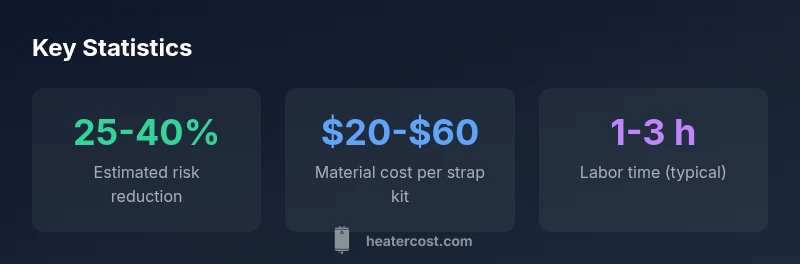
The financial aspect of strapping a water heater includes both material costs and potential labor charges. Typical material costs cover the straps and mounting hardware, while labor may vary depending on accessibility, wall construction, and local labor rates. In some cases, homeowners can complete the project themselves, reducing overall cost, while in other cases, a professional installation offers faster completion and ensures compliance with code and safety standards. From a homeowner's perspective, the ROI includes enhanced safety, reduced risk of property damage, and improved insurance confidence. While exact prices differ by region, planning for a total cost in the range of a few tens of dollars for parts plus potentially a modest labor fee can help you budget effectively. In regions with strict seismic codes, the investment is often justified by the safety benefits and compliance requirements, especially in rental properties where compliance is a higher priority.
Data-driven insight on compliance and safety
To put it into perspective, a properly strapped water heater provides a straightforward safety upgrade with a relatively low upfront cost. The Heater Cost analysis emphasizes that the combination of correct strap selection, proper anchoring, and adherence to local codes yields a reliable, long-term solution for home safety. When you add in regular maintenance and a quick inspection routine, you can sustain the stability of the appliance without significant ongoing expense.
Common strap types and costs for securing water heaters
| Strap Type | Best Use Case | Typical Cost Range |
|---|---|---|
| Seismic strap (3-point) | Seismic zones/earthquake retrofits | $5-$20 per strap; labor varies |
| Metal band strap | New installations with stud walls | $8-$25 |
| Plastic strap with toggle | Non-seismic regions | $4-$12 |
Got Questions?
What is a strapped water heater and why is it important?
A strapped water heater is a unit that is securely fastened to a wall or structure using approved straps to prevent movement in earthquakes or accidental contact. Proper strapping reduces tipping risk and protects occupants.
A strapped water heater is securely fastened to a wall; it helps prevent tipping during movement.
Do I need permits to strap a water heater?
Permitting requirements vary by locality. In many places, basic strapping tied to existing installation is considered a minor modification; in others, it may require a permit or inspection, especially if gas lines are involved.
Check local codes or hire a pro to confirm permit needs.
Can I strap a water heater myself?
DIY strapping is possible for confident homeowners with basic carpentry skills and electrical/gas awareness. If you are unsure, hire a licensed plumber or contractor.
It's doable if you're comfortable with mounting and safety codes.
Common mistakes to avoid?
Common mistakes include not anchoring straps to structural members, using wrong strap type, or placing straps too high or low. Always follow manufacturer instructions and code requirements.
Avoid loose straps, wrong anchors, or improper spacing.
How often should straps be inspected?
Inspect straps annually or after significant seismic events or renovations. Look for corrosion, slack, or looseness and retighten or replace as needed.
Check straps yearly for wear and looseness.
“Securing a water heater with approved seismic straps is a simple, effective safety measure that can prevent catastrophic failures during earthquakes or accidental contact. Proper installation reduces tipping risk and helps protect homes.”
The Essentials
- Secure your water heater with approved seismic straps.
- Follow local codes and install to studs or masonry.
- Schedule professional review if gas lines or venting are involved.
- Inspect straps annually for wear or looseness.
- Strapping can reduce tipping risk and protect occupants.