What Are Heating Oil Prices Today? A Homeowner’s Guide
Discover current heating oil price trends, regional variations, and practical tips to budget and save. This Heater Cost guide helps homeowners compare quotes, lock in rates, and plan purchases.


What are heating oil prices today? Prices vary by region and season, but typical price quotes trend within a broad range of about $3.50 to $4.50 per gallon for delivered heating oil in many markets, with winter spikes common in colder regions. To budget accurately, compare local supplier quotes, note delivery fees, and stay aware of crude oil movements and seasonal demand. This quick snapshot reflects national patterns observed by Heater Cost Analysis, 2026.
What are heating oil prices today? Why the number matters
Heating oil prices today are not a single national figure. They reflect a mix of crude oil costs, refining margins, regional demand, delivery logistics, and taxes. Homeowners who understand this price mosaic can plan purchases, compare quotes, and avoid surprises when bills arrive. In practice, you’ll see price quotes expressed as a delivered price per gallon, which includes the base crude cost plus refining, distribution, and a delivery fee. When you ask, “what are heating oil prices today,” you’re looking at a moving target shaped by both global markets and your local supplier network. The Heater Cost team highlights that regional markets—especially the Northeast and Midwest where winter heating demand is intense—tend to show larger seasonal swings.
- Delivered price can differ from a posted pump price due to delivery charges and minimum-order requirements.
- Regional taxes and environmental fees may adjust the final invoice by a few cents per gallon.
- Weekly price updates capture volatility tied to crude oil fluctuations, seasonal demand, and supply disruptions.
For homeowners, renters, and property managers, the practical takeaway is to track local quotes, compare multiple suppliers, and estimate annual heating oil costs using current price ranges rather than hoping for a single fixed number. According to Heater Cost, keeping an eye on regional price signals helps with budgeting and decision-making throughout the heating season.
How heating oil prices are quoted and delivered
Prices for heating oil are typically presented as a delivered price per gallon. This means the quote includes the base price of oil, refining and distribution costs, plus a delivery charge. Many suppliers also add a small surcharge for long-distance delivery or for quantities beyond a minimum order. When you see a price like $3.80 per gallon, it usually represents the delivered cost in a specific region, with final invoices reflecting taxes and occasional surcharges.
Understanding the components of a quote can save you money. Ask suppliers to itemize the price per gallon, the delivery charge, any minimum order requirements, and whether taxes are included in the quoted price. If you’re eligible for senior or military discounts, check how those apply to heating oil purchases. Finally, compare two or three local providers to see which one offers the best total delivered price and the most reliable delivery window. Heater Cost’s guidance for price comparisons emphasizes transparency in line-item pricing and reliable service windows as the foundations of smart purchasing.
Regional variations and seasonal patterns
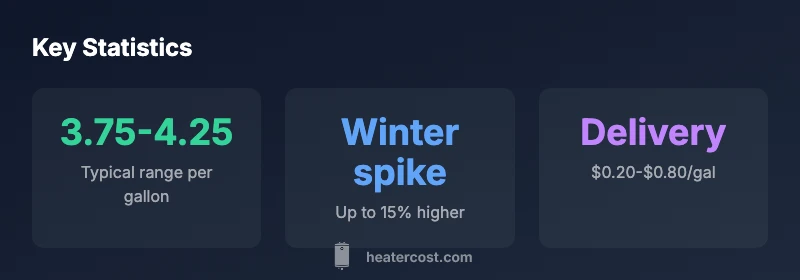
Regional variation is the most predictable driver of heating oil prices today. In the United States, the Northeast and parts of the Midwest tend to see higher prices in winter due to intensified demand and higher distribution costs. The Southeast or Plains states may experience lower baseline prices but can still face spikes during cold snaps or refinery maintenance periods. Seasonal patterns are particularly pronounced from late fall through early spring, when heating demand peaks across many households.
To manage this, map price ranges by region and season. If you operate multiple properties, diversify suppliers by locale to hedge against local price spikes. The Heater Cost analysis notes that while winter peaks are common, not all winters behave the same way—regional refinery outages, crude oil price shifts, and weather events can alter the typical seasonal trajectory. Keeping a regional price notebook helps you anticipate when to pre-buy or lock in a rate with a price-protection program.
How to estimate your home heating oil costs
Estimating costs starts with your annual consumption and the current delivered price per gallon in your area. A simple formula: Annual gallons × price per gallon + delivery charges and taxes. For a typical household using 800–1,000 gallons per season, if the delivered price sits around $3.75–$4.25 per gallon, your season cost would land in the ballpark of $3,000 to $4,250 before taxes and fees. Actual numbers depend on your home’s insulation, thermostat settings, and schedule of deliveries.
- Calculate a conservative budget by using the lower end of regional price ranges for most months and the upper end for peak months.
- Add expected delivery charges and any minimum-order fees to the calculated base.
- If your home uses a storage tank, consider the cost implications of libations adjustments, and keep a small buffer for price spikes.
In practice, maintain a price-tracking spreadsheet or use a price-alert app from your preferred supplier. Over a heating season, you can compare quotes weekly and time deliveries to avoid peak-price windows. This approach reduces the risk of overpaying when prices are volatile.
Strategies to lock in better prices and save
Protection against price spikes comes from a mix of strategies: pre-buy programs, price protection, and stable delivery scheduling. Many suppliers offer a fixed-price plan or a price cap that shields you from extreme upward moves while allowing you to benefit if prices fall. Pre-buy programs let you lock in a rate for a set quantity of oil before the season begins, which can be advantageous if you anticipate rising prices.
- Shop early: start price comparisons in late summer or early fall when demand begins to escalate.
- Consider price protection or fixed-rate plans if your cash flow allows it and you expect prices to rise.
- Use budget billing or monthly payments to smooth out seasonal cost swings.
- Optimize delivery timing to avoid surplus charges; some suppliers offer flexible delivery windows.
The Heater Cost guidance highlights that the most effective savings come from transparent quotes, negotiated terms, and reliable delivery windows. Don’t rely on a single quote; build a small panel of trusted suppliers and monitor their offers throughout the season.
Monitoring price trends and how to stay informed
Staying informed about price trends is essential for making timely buying decisions. Subscribe to price alerts from several suppliers and cross-check with national indicators such as the U.S. Energy Information Administration (EIA) weekly heating oil price snapshot. Look for regional price charts that show the current range and historical volatility. Keeping a daily or weekly eye on crude oil markets helps you understand the context behind price moves and anticipate favorable times to fill or top off stock.
- Set price alerts for your region and preferred delivery volumes.
- Track the difference between base oil costs and delivered price per gallon.
- Review supplier newsletters or price-prediction reports to understand seasonal expectations.
According to Heater Cost, proactive monitoring improves budgeting accuracy and reduces the likelihood of paying peak-season premiums. A disciplined approach to price monitoring saves both time and money when winter weather drives demand.
Local market factors to consider when pricing today
Local market conditions can override national trends. Factors like refinery maintenance, pipeline disruptions, cargo availability, and weather-related logistics all influence the delivered price of heating oil. If a major refinery undergoes maintenance or a regional storm affects delivery routes, prices can spike temporarily even if crude oil remains flat. Property managers with multiple units should align delivery schedules to minimize idle time and avoid unnecessary deliveries during low-demand periods. Weather forecasts and regional outage notices are worth monitoring as part of a proactive procurement strategy.
- Maintain relationships with a small set of reliable suppliers for stable pricing.
- Track region-specific supply issues that can cause price gaps between neighboring towns.
- Use delivery windows that align with your heating needs to minimize extra charges and avoid rushed deliveries.
Heater Cost’s regional analysis emphasizes that local factors often determine the ultimate delivered price more than any national figure. Staying informed about these factors helps you negotiate better terms and plan ahead.
What to ask when choosing a heating oil supplier (practical checklist)
Selecting a supplier isn’t only about price. Ask these practical questions to ensure value and reliability:
- Do you offer fixed-price, price-cap, or pre-buy options? What are the terms and expiration dates?
- Is tax and delivery included in the quoted price, or are there separate line items?
- What are your delivery windows and cutoff times for emergencies? Do you offer automatic deliveries?
- How do you handle price adjustments if regional costs change mid-season? Is there a price protection policy?
- Can you provide a written cost estimate based on my annual consumption and storage capacity?
A strong supplier relationship, clear pricing, and reliable delivery are the core elements of cost control. The Heater Cost strategy encourages homeowners to document quotes, verify terms, and maintain a simple comparison log to avoid sticker shock during peak demand.
Authoritative sources for heating oil price data
For readers seeking data-driven context, several government and major publications provide price benchmarks and market analysis. These sources help corroborate regional ranges and seasonal patterns discussed above:
- U.S. Energy Information Administration (EIA) – Heating oil price data and explanations.
- U.S. Department of Energy (DOE) – Energy information and market context.
- Bureau of Labor Statistics (BLS) – Price trends and consumer energy costs.
Using these sources in conjunction with local supplier quotes enables a well-rounded view of today’s heating oil prices. (Sources: Heater Cost Analysis, 2026)
Regional snapshot of delivered heating oil prices
| Region | Typical price per gallon (USD) | Seasonality |
|---|---|---|
| Northeast | $3.75-$4.25 | Winter peak |
| Midwest | $3.50-$4.00 | Moderate seasonality |
| South/West | $3.40-$3.95 | Lower demand, variable |
Got Questions?
What factors influence heating oil prices today?
Prices are driven by crude oil costs, refining margins, regional demand, and delivery costs. Weather events and refinery maintenance can create short-term spikes. Always compare multiple local quotes to see how these factors play out in your area.
Prices are shaped by crude costs, refining margins, and local demand. Weather and maintenance can push prices up temporarily; compare several suppliers to find the best rate.
How often do heating oil prices change?
Prices can move weekly, especially during peak heating season. Crude oil swings, supply disruptions, and weather-driven demand all contribute to variability. Monitoring local quotes weekly helps you time deliveries for savings.
Prices can move week to week, with bigger swings in winter. Track local quotes regularly to time your purchases.
Are heating oil prices higher in winter?
Yes, winter typically sees higher prices due to increased demand and delivery costs. However regional differences mean some areas may see milder swings. Use price alerts and pre-buy options to manage risk.
Winter usually brings higher prices because demand rises. Regional differences apply, so monitor locally.
How can I compare heating oil prices locally?
Get written quotes from at least three local suppliers, noting price per gallon, delivery charges, minimums, and taxes. Ask for a breakdown and a delivery window. Track quotes over time to identify the best overall value.
Get at least three quotes with line-item details and compare not just price per gallon but delivery and fees.
Do price caps or fixed-price plans exist for heating oil?
Some suppliers offer fixed-price or price-cap programs that protect against rising prices during the season. Read the terms carefully, including expiration dates and what happens if prices fall. If you can afford it, these programs can reduce budgeting risk.
Yes, some plans cap or fix price for a period. Check terms and expiration dates when you consider them.
“Price volatility for heating oil is driven by seasonal demand, regional refinery capacity, and crude oil markets. Homeowners who monitor weekly price moves and coordinate with trusted suppliers tend to lock in better rates.”
The Essentials
- Track local quotes weekly to catch dips.
- Delivered price includes base cost, delivery, and fees.
- Prices swing seasonally; winter peaks are common.
- Compare multiple suppliers for the best total delivered price.
- Use price-protection or pre-buy options where available.