Portable Car Heater: Costs, Features, and Buying Guide
Discover how portable car heaters work, what features matter, and how to compare costs. This Heater Cost guide covers power options, safety, usage tips, and practical buying advice for homeowners, renters, and property managers.


A portable car heater is a compact, plug-in device that provides supplemental warmth inside a vehicle using 12V power or USB-C, ideal for quick warm-up during cold starts. It does not replace the vehicle’s built-in heating system, but it can reduce wait time and improve comfort in short trips. For safety, choose models with overheat protection and automatic shut-off.
What a portable car heater is and when it shines
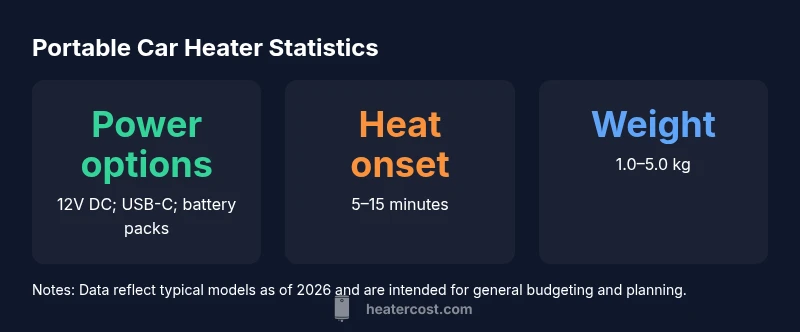
A portable car heater is a compact device designed to provide supplemental warmth inside a vehicle. It typically runs off a 12V car power outlet or via USB-C with a compatible battery pack. The goal is to deliver quick warmth to the cabin, especially when the engine is cold or when you want faster comfort on a short drive. For homeowners, renters, and property managers evaluating heater costs, a portable car heater can offer a practical stopgap while you wait for the vehicle’s HVAC system to stabilize. According to Heater Cost, the most valuable aspects are their ease of use, portability, and the ability to warm up specific zones or seats without running the entire heating system. This makes them appealing for winter commutes or emergency preparedness. When considering a portable car heater, also think about space, heat delivery, and safety features to ensure you get reliable warm air without added risk to passengers.
Key criteria for evaluating portable car heaters
Selecting the right portable car heater hinges on several factors. Start with power compatibility: does the unit work with your vehicle’s 12V outlet, or can you run it from a USB-C power bank? Next, assess heat output and distribution: some devices provide targeted warmth while others claim broader cabin coverage. Size matters for storage in a glove box or center console. Look for safety features such as overheat protection, auto shut-off, and a secure mounting option to prevent movement during driving. Noise levels may be a concern for long trips. Finally, verify warranty length and customer support. By framing your decision around power, heat delivery, and safety, you’ll minimize buyer’s remorse and find a model that complements your car’s existing heating system.
How energy and power affect operating costs
Power draw and how you run a portable car heater influence operating costs far more than sticker price alone. If your vehicle is turned off, a heater plugged into the 12V outlet could drain the battery with extended use, so it’s wise to use it during running engine conditions or with a stabilized external battery. For USB-powered models, battery bank capacity dictates run time. In practice, most owners use these devices for short sessions to avoid excessive battery drain and to keep fuel consumption reasonable. As part of Heater Cost research, we emphasize choosing models with clear power specifications and safety protections to prevent unexpected battery strain, especially in cold climates where warmth is needed most.
Safety-first: features to prioritize
Safety should be the top priority when using a portable car heater. Look for automatic shut-off when overheating or when tipped, a robust housing to resist vibration, and a secure mounting system to prevent movement. Avoid placing hoses or vents near airbags or in a way that blocks clear visibility of the road. Check for certifications or compliance marks and read user manuals carefully before operation. Regular inspection of power cables, plug integrity, and the device’s exterior can prevent hazards on busy commutes. Keeping a car manual in the glove box can also help you troubleshoot issues without compromising safety.
Real-world use cases and maintenance tips
In practice, a portable car heater shines for cold-start scenarios, quick cabin warmth for short trips, and as a backup heat source during winter emergencies. For renters or owners on a budget, it offers a low-commitment upgrade to the car’s comfort level without permanent modifications. Maintenance is simple: wipe down exterior surfaces, inspect power cables for wear, and store the unit in a dry place when not in use. If you notice reduced warmth or strange noises, stop using the device and consult the manual or customer support. With proper care, a portable car heater delivers reliable warmth with minimal fuss.
Cost considerations and value over time
Price for portable car heaters varies by design, heat output, and power source. Expect a broad price spectrum that reflects build quality and safety features. When evaluating value, consider not only the up-front cost but potential energy usage and the usefulness of the device across multiple vehicles or seasons. The Heater Cost team emphasizes balancing upfront price with practical benefits like faster cabin warm-up, improved comfort on short trips, and emergency preparedness. If you drive several cold-weather days each year, a modestly priced model with solid heat delivery and safety protections can be a worthwhile investment.
Checklist: how to compare models quickly
- Power options and battery compatibility
- Claimed heat output and coverage area
- Safety features and certifications
- Weight, size, and storage fit
- Warranty and customer support
- Noise levels and user reviews
- Price and total cost of ownership
- Return policy and testing period
Using this checklist helps you narrow down options to a few candidates that best fit your vehicle and climate.
Quick-start buying guide and next steps
- Define budget and needs: do you want USB-C-powered convenience or robust 12V performance? 2) Check the vehicle power compatibility and available space inside the cabin. 3) Read safety features and warranty. 4) Compare energy use and running time per session. 5) Test the device in a controlled environment to confirm warmth delivery and comfort. 6) Keep safety basics in mind, such as not obstructing vents or airbags. By following these steps, you’ll be ready to choose a portable car heater that genuinely adds value to your winter driving.
Putting it all together: your buying plan
A well-chosen portable car heater serves as a practical upgrade for many drivers. It’s especially valuable for short trips, morning commutes, and emergency preparedness. By prioritizing power compatibility, heat delivery, and safety features, you’ll maximize warmth without compromising vehicle performance. Remember to consider the total cost of ownership, including price, energy use, and potential battery impact when the engine is off. With the right model, a portable car heater becomes a reliable ally in cold weather.
Portable car heater comparison by design class
| Feature | Compact | Standard | Heavy-duty |
|---|---|---|---|
| Power options | 12V DC only | 12V DC + USB-C | 12V DC + USB-C + battery pack |
| Estimated heat output | Low to moderate | Moderate | High |
| Run time per use | 15–25 min | 25–45 min | 45–60 min |
| Weight | 1.0–2.0 kg | 2.0–3.5 kg | 3.5–5.0 kg |
| Ideal use | Short trips, quick warmth | Everyday commuting | Emergency preparedness |
Got Questions?
Are portable car heaters safe to use in vehicles?
Yes, when used according to the manufacturer’s instructions and with built-in safety features such as overheat protection and auto shut-off. Always ensure the device is stable and not obstructing airbags or vents. Regularly inspect cables and plug connections for wear.
Yes. Use them per the manual and ensure safety features are active to prevent overheating or loose cables.
Can a portable car heater drain my car battery?
Using a heater from the car’s 12V outlet can drain the battery if the engine is off for extended periods. It’s best to use the device while the engine is running or connect to an external battery with sufficient capacity.
Yes, extended use when the engine is off can drain the battery; use wisely.
Do these devices require installation?
Most portable heaters are plug-and-play and do not require permanent installation. Some models may need a mounting accessory for stability in the cabin.
Usually no installation; just plug in and use.
What safety features should I look for?
Look for overheat protection, automatic shut-off, stable mounts, and a clean power cord. Certifications and a solid warranty also indicate reliability and safety.
Seek units with overheating protection, auto shut-off, and a good warranty.
Are portable car heaters energy-efficient?
Energy efficiency varies by model. Compare power draw and intended use, focusing on models that deliver warmth without excessive run time. Short sessions in winter are often the best compromise.
Efficiency varies—check power draw and intended use.
Will a portable heater heat the back seat effectively?
Most portable car heaters are designed to warm the driver and front passenger area first. They can help nearby seats, but full cabin warmth typically requires the car’s HVAC system.
They mainly warm the front area; full cabin warmth is usually from the car HVAC.
“The Heater Cost team believes portable car heaters are a practical supplement for cold-weather driving when used with proper safety features and power planning.”
The Essentials
- Identify power compatibility before buying
- Prioritize safety features and warranty
- Expect short session warmth with 12V devices
- Balance upfront cost with long-term value
- Use a simple checklist to compare models