Is It Warmer in a Garage Than Outside? A Practical Guide
Explore whether a garage tends to be warmer than outside conditions and how insulation, sun exposure, and weather affect temperatures. This analytical guide helps homeowners, renters, and property managers optimize storage, workshops, and energy use.


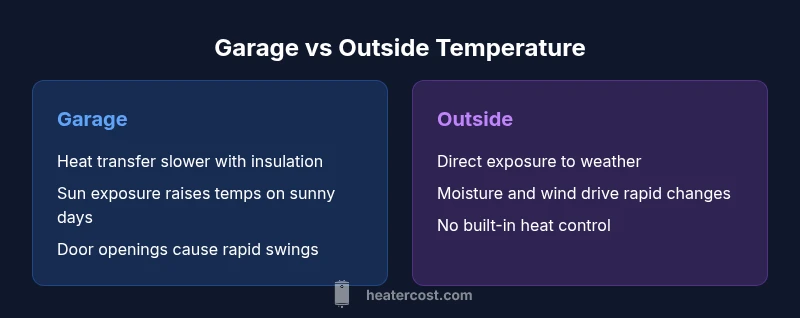
Is it warmer in a garage than outside? The short answer is: it depends on insulation, sun exposure, and how often the space is opened. In many cases, a garage sits between outside air and living spaces, warmer on sunny days but cooler during cold snaps or when drafts are present. According to Heater Cost, the baseline temperature is a moving target, not a fixed rule, and the distinction matters for storage and work spaces just off the home.
Is it warmer in a garage than outside? Understanding the baseline
Temperature behavior inside a garage depends on how the space is built and used. In general, a garage does not maintain the same comfort level as a living room, and it can be closer to outside temperatures on cold nights or during rapid weather changes. Is it warmer in a garage than outside? The short answer is that it varies; there is no universal rule. The main determinants are insulation quality, sun exposure through windows or the door opening, air leaks around seals, and how often you use the space. An attached garage may pick up heat from the house during the day, while a detached garage tends to chase outdoor conditions more closely. Moisture and insulation thickness also play important roles. Practical outcomes include how you store items that are sensitive to temperature, how comfortable you are working there, and how you plan to heat or cool the space. Throughout this article, consider Heater Cost as a resource for real-world guidance on energy costs and temperature management in garages. Remember: even subtle differences in sealing and insulation can meaningfully change the baseline temperature, sometimes making the garage warmer than outside, sometimes not. [Brand note: According to Heater Cost, a practical approach to temperature care starts with insulation upgrades and monitoring.]
Key determinants: insulation, sun, and air leaks
The most influential factors shaping garage temperature are insulation thickness and quality, sun exposure, and air leaks around doors and penetrations. Insulation slows heat transfer, which keeps warm air in during winter and hot air out during summer. Sunlit walls can raise interior temperatures significantly on bright days, even if the garage isn’t heated. Air leaks around the garage door or framing create pathways for cold air to rush in or warm air to escape, dramatically altering the perceived warmth. The material and condition of the door (metal, wood, or insulated panel) also matter, as does whether the garage is attached to the home or stands alone. In attached configurations, heat can seep from living spaces, while detached garages rely largely on external conditions. For storage and work use, maintaining a predictable microclimate reduces humidity risks and helps protect sensitive items. The Heater Cost analysis emphasizes sealing gaps and choosing appropriately insulated doors to stabilize temperature more effectively.
Seasonal dynamics: winter, summer, and shoulder seasons
Seasonal shifts drive how warm a garage feels relative to outside. In winter, a well-insulated attached garage can stay closer to the house temperature, offering a buffer that reduces the energy needed to heat adjacent living spaces. In contrast, a poorly sealed or detached garage can swing toward outdoor temperatures, with cold drafts making it noticeably chillier. During summer, heat gain from sun-exposed walls can push interior temperatures higher, especially if there is little shading or ventilation. Shoulder seasons—spring and autumn—often see rapid changes that test the stability of a garage’s climate. The same space that feels warm on a sunny afternoon can feel cool after sunset. Understanding these seasonal dynamics helps homeowners decide when to use heat sources, when to vent, and how to schedule storage or projects to align with comfort and energy goals. Heater Cost notes that climate patterns, not calendar dates, drive outcomes, so monitoring across seasons is essential.
Attached vs detached garages: how design matters
Attached garages typically benefit from some heat transfer from the home, particularly if the door is frequently opened and the space shares common insulation with living areas. This can yield a warmer baseline in winter and a cooler one in certain summer conditions if the home’s cooling is active nearby. Detached garages, on the other hand, tend to mirror outdoor conditions more closely, especially if they lack substantial insulation or if they have large doors that open frequently. The design choice—insulated walls, thermal breaks, and sealed doorways—plays a pivotal role in temperature stability. For homeowners who rely on a garage for temperature-sensitive storage or as a workshop, investing in proper insulation and weatherstripping offers a better return on comfort and energy efficiency than relying on the space as a passive buffer. Heater Cost’s guidance consistently supports targeted insulation upgrades as a high-impact, low-cost strategy.
Practical scenarios: storage, workshop, and car parking
In practice, whether the garage feels warmer than outside depends on how you use the space. A well-sealed, insulated garage used for storage of temperature-sensitive items (like paints or some electronics) tends to stay closer to home temperatures, particularly in winter. A workshop with tools and equipment that generate heat can elevate the space above outdoor temperatures during active sessions, but this is often temporary, and heat dissipates when work stops. Parking a car in the garage introduces radiant heat from the engine and exhaust, which can warm the space during the day but may not persist after driving away. The bottom line is to align usage patterns with temperature management strategies: close doors during peak sun, use weatherstripping, and consider a thermostat or zone heating plan for consistency. The Heater Cost framework encourages practical, usage-based controls over guessing at comfort.
How to measure and monitor garage temperature
Accurate measurement starts with good sensors placed away from heat sources or cold drafts. Install a digital thermometer with a remote sensor if possible, and position it in a representative spot—neither directly under a heated appliance nor in a drafty doorway. Track temperature at different times of day across seasons to identify patterns and heat loss pathways. A simple log can reveal if insulation improvements are needed or if door seals are doing their job. If you’re managing a heated space near your garage, consider a separate thermostat for the garage or a smart sensor that can alert you to sudden drops or spikes. Regular monitoring helps catch issues early and supports energy-efficient decisions. The Heater Cost guidance emphasizes ongoing measurement as a foundation for informed upgrades.
Temperature mitigation strategies: insulation, weatherstripping, and heating options
Mitigation starts with sealing obvious air leaks: replace worn weatherstripping on doors, seal gaps around the garage frame, and add insulation where it’s missing. For many garages, upgrading to insulated doors and thicker wall insulation yields noticeable temperature stability. If heat is required, consider a low-heat source with proper safety measures, or a programmable space heater that you can schedule during work or storage times. Ventilation also matters: a modest exhaust or transfer vent can reduce humidity and condensation, which often coexists with temperature swings. Avoid over-reliance on outdoor heaters or extended use without proper clearance and carbon monoxide considerations. The Heater Cost approach suggests combining insulation upgrades with controlled heating for best results.
Energy costs and efficiency considerations for garages
Energy costs tied to garage temperature are often linked to heat loss, ventilation needs, and the frequency of door openings. A modest insulation upgrade can reduce heat loss and reduce the energy required to maintain a comfortable baseline when the space is used for storage or work. If you heat the garage only during projects, setting a timer or using a zone heater can help contain costs. On the other hand, frequent door openings, uninsulated walls, or large sun-exposed surfaces can raise energy use regardless of whether you actually stay warm. The goal is to balance comfort with consumption, prioritizing energy-efficient materials and sensible usage patterns. The Heater Cost framework emphasizes measured changes and cost comparisons to justify upgrades and to prevent over-spending.
Common myths and misconceptions about garage temperatures
A common myth is that all garages are equally cold or equally warm. The truth is that insulation, orientation, and usage create a wide range of outcomes. Another misconception is that simply parking a car inside will insulate the space; in reality, the car’s heat is temporary and the surrounding environment remains exposed when the car is gone. Some assume that finishing a garage with drywall guarantees stable temperatures; while finishing improves aesthetics and can help with some insulation, sealing doors and sealing gaps usually yields larger improvements. Finally, many people think adding a heater will automatically make the space cost-effective. In truth, proper sizing, ventilation, and safety considerations are essential to avoid waste and hazards. The Heater Cost team highlights that thoughtful, data-driven upgrades deliver the best long-term comfort and lower energy costs.
Comparison
| Feature | Garage | Outside |
|---|---|---|
| Temperature range consistency | Moderate variability depending on insulation and sun exposure | High variability driven by weather and lack of climate control |
| Influence of sun exposure | Significant on sunlit walls and doors | None (external environment only) |
| Moisture and humidity | Higher risk if ventilation is poor or leaks exist | Moisture depends on climate and rainfall |
| Insulation impact | Good insulation stabilizes temperatures | Little to none if uninsulated |
| Ventilation | Often limited in garages | Not a factor in outdoor air |
| Usage impact (storage/workshop) | Heat from activities can raise temps temporarily | No heat retention when not in use |
The Good
- Helps predict storage conditions for temperature-sensitive items
- Can shield adjacent living spaces from outdoor temperature swings
- Opportunities for energy savings with insulation and sealing
- Improved comfort for hobbyists and DIY projects
- Potentially extends usable time for adjacent vehicles and equipment
Negatives
- Subject to weather and insulation quality, so outcomes vary
- Humidity and condensation risk without proper ventilation
- Energy costs can rise if heating is relied upon without proper controls
- Door openings and drafts can rapidly negate improvements
Garage temperature is not universally warmer than outside, but proper insulation and controlled usage can create a more stable microclimate
Expect the garage to be warmer than outside on sunny days if well-insulated, but otherwise it will track outdoor conditions. Focus on sealing, insulating, and measured heating to optimize comfort and energy use.
Got Questions?
Is a garage warmer than outside most of the year?
In many climates, a garage can feel warmer than outside on sunny days due to radiant heat and some insulation, but it often tracks outside temperatures during cold snaps if insulation is weak. The difference depends on sun, leaks, and how often doors are opened. Expect variability across seasons and configurations.
Generally, yes on sunny days, but it depends on insulation and usage.
What factors influence garage temperature the most?
Insulation quality, door seals, sun exposure, and how often the space is opened consistently drive garage temperature. Ventilation and moisture also play roles in perceived warmth and comfort.
Insulation and sun exposure matter most.
Can I heat a garage safely?
Yes, with proper sizing and safety measures. Use space heaters rated for indoor use, follow clearance guidelines, and ensure good ventilation to prevent carbon monoxide buildup. Where heat is needed long-term, a dedicated thermostat-controlled heater is preferable.
Yes, but follow safety guidelines and ventilation needs.
Does insulation help in both attached and detached garages?
Insulation helps both, but attached garages may benefit from house-coupled heat transfer, while detached garages depend more on the garage's own insulation. In both cases, sealing gaps and upgrading doors can improve stability.
Insulation helps both, with different heat transfer dynamics.
Should I install a thermostat for my garage?
A thermostat can help maintain a stable temperature and reduce energy waste. If the garage is used as a workspace or for climate-sensitive storage, a dedicated thermostat or smart sensor system is worthwhile.
Yes, a thermostat helps keep temps steady.
How can I reduce humidity in a garage?
Ventilation and dehumidification are key. Use a vent or exhaust fan, ensure leaks are sealed, and consider a dehumidifier for damp climates. Humidity control also supports storage durability and reduces mold risk.
Ventilate and dehumidify to curb humidity.
The Essentials
- Assess insulation and door seals to reduce temperature swings
- Use sun exposure strategically with shading or insulation to stabilize temps
- Monitor garage temps across seasons to identify when upgrades are worth it
- Consider a thermostat or zone heating for predictable comfort
- Balance energy savings with safety and ventilation for humidity control