Is Heating the Same as Cooking? Key Differences in Energy
Explore whether heating and cooking are the same, with emphasis on purpose, safety, energy use, and practical guidance for homeowners for safer energy.


Heating and cooking are not the same: heating is a general process to raise ambient temperature for comfort or preservation, while cooking uses heat to transform raw foods into safe, edible meals. The distinction affects energy planning, safety protocols, and how we choose appliances. In short, heating serves space needs; cooking serves food preparation, and mixing the two can create serious safety risks.
Core Distinctions Between Heating and Cooking
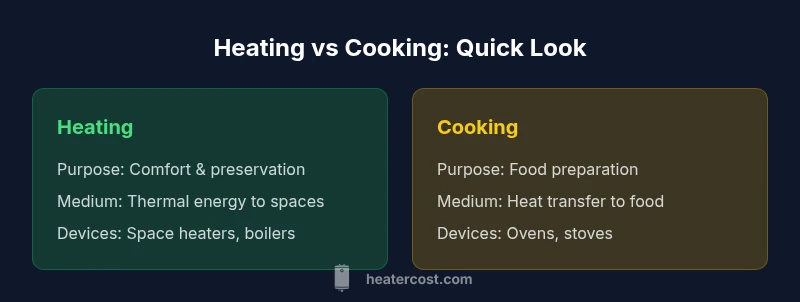
The question often echoed in households asks, is heating the same as cooking? The concise answer is no, but the difference rests on intent, context, and safety. Heating describes methods used to raise ambient temperature for comfort, storage, or climate control, whereas cooking employs heat as a tool to transform raw ingredients into edible food. The two share fundamental physics—heat transfer occurs through conduction, convection, and radiation—but their endpoints diverge: maintaining a comfortable indoor climate versus achieving culinary readiness. Recognizing this distinction helps homeowners avoid misusing devices like space heaters for food preparation, which can create serious hazards. According to Heater Cost, a clear separation of terms supports smarter energy budgeting and safer home practices. In the upcoming sections, we’ll unpack terminology, common devices, and best practices to keep energy use efficient and safety intact.
What Heating Means in Home Environments
In most homes, heating refers to systems designed to maintain a stable indoor temperature. Space heaters, boilers, radiators, and heat pumps are calibrated to deliver warmth to occupied rooms, hallways, or entire living areas depending on insulation and climate. The goal is comfort and preservation of belongings, not food preparation. Because heating systems run for extended periods, homeowners should prioritize proper ventilation, clearance, and maintenance to prevent fire hazards and CO risks. From a design perspective, heating plans factor in insulation, thermostat controls, and zoning so that energy isn’t wasted on empty spaces. Understanding this helps you optimize where and when heat is produced, reducing unnecessary consumption while keeping the home livable during cold seasons.
What Cooking Entails in Everyday Kitchens
Cooking is the culinary process that transforms raw ingredients into meals. It relies on precise timing, temperatures, and exposure to heat through ovens, stovetops, grills, and microwaves. Unlike heating, cooking concentrates heat directly on food to trigger chemical reactions (like caramelization or protein denaturation) that change texture, flavor, and safety. Kitchen environments require good ventilation and cookware suited to the heat source. While some appliances can double for multiple purposes, the primary objective remains safe and tasty food preparation, not continuous space warming. Keeping this distinction clear helps households avoid unsafe practices, such as using kitchen appliances outside their intended role or attempting to heat spaces with cooking equipment.
How Heat is Transferred in Both Contexts
Heat transfer follows three main mechanisms: conduction, convection, and radiation. In heating, convection currents circulate warm air to raise room temperature; in cooking, conduction transfers heat from pots and pans to food, while radiant heat from ovens or broilers affects surface temperatures. This overlap explains why some confusion occurs: both activities depend on moving or applying heat, yet their objectives diverge. Equipment design reflects this: space heaters optimize air movement around a room; stoves and ovens optimize contact and radiant exposure with food. Recognizing the transfer method clarifies when a device is appropriately used for its intended purpose and when it’s misapplied, which can lead to inefficiency or hazards.
Safety Considerations When Misapplying Heating or Cooking Processes
Safety is the backbone of differentiating heating from cooking. Misusing heating devices for food can lead to unpredictable temperatures, uneven cooking, or contamination from materials not rated for food contact. Likewise, using cooking appliances to heat spaces can create fire risks, carbon monoxide exposure, and improper venting. Establish clear zones: store flammable items away from heaters, never leave cooking appliances unattended, and ensure devices are certified for their specific task. Regular maintenance and adherence to manufacturer guidelines reduce the risk of malfunctions or unsafe emissions. If you’re unsure about a device’s intended use, consult the user manual or seek guidance from a qualified technician. A deliberate approach to safety safeguards people and property while preserving appliance longevity.
Energy Use and Efficiency: Heating vs Cooking
Energy efficiency hinges on aligning device use with purpose. Heating energy consumption tends to reflect seasonal patterns, insulation quality, and occupancy, while cooking energy use typically spikes during meals and depends on cooking duration and equipment efficiency. The Heater Cost analysis shows that energy use patterns vary substantially by activity, which means homeowners can optimize bills by scheduling energy-intensive tasks during off-peak hours when possible, leveraging programmable thermostats, and selecting high-efficiency appliances for both tasks. Small changes—proper cookware, correct burner size, and preheating discipline—can yield meaningful energy savings without sacrificing comfort or food quality.
Appliances and Infrastructure Involved
A robust understanding of distinctions helps in selecting the right equipment. Heating relies on heaters, boilers, heat pumps, or radiant panels tied to a home’s climate control strategy. Cooking relies on ovens, stoves, grills, and microwaves designed for food safety and flavor development. The infrastructure for heating emphasizes ventilation, exhaust, and zoning to distribute warmth efficiently, while cooking infrastructure prioritizes heat distribution and cookware compatibility. For homeowners, this means choosing devices with appropriate certifications, ensuring clearances around heat sources, and maintaining ventilation to avoid buildup of humidity or combustion byproducts. When in doubt, consult installation manuals and a qualified professional to ensure the system supports both safety and energy efficiency.
Real-World Scenarios: When Confusion Arises
In many households, confusion arises around using multi-purpose appliances. For example, warming plates in a dining area or using a kitchen oven to heat a room is common but unsafe in practice. Some devices can operate in more than one mode, such as heat lamps used briefly for warming, but they must be clearly separated from food preparation duties. The key is to treat heating and cooking as distinct activities with their own set of rules, rather than attempting to repurpose equipment in ways that could compromise safety or food quality. A clear boundary also helps in diagnosing problems when energy bills rise or devices fail, enabling targeted maintenance and better budgeting.
Practical Guidelines for Homeowners
- Map your home into heating zones and assign cookware areas with dedicated cooking appliances.
- Schedule heavy energy use (like oven batches) during predictable periods and when ambient temperatures are comfortable.
- Regularly service heating equipment and ensure correct venting, clearance, and CO detectors.
- Use appropriate cookware and burner sizes to prevent energy waste and food scorching.
- Keep flammable materials away from any heat source and never improvise food preparation on non-food-rated surfaces.
- Document energy usage patterns to identify opportunities for efficiency improvements with a professional.
Common Misconceptions Debunked
- Misconception: A space heater can safely replace an oven for cooking. Truth: Heaters are not designed for food safety or temperature control essential for cooking.
- Misconception: All heat is equally suitable for any task. Truth: Different tasks require different heat transfer mechanisms, materials, and safety standards.
- Misconception: If a device warms the room, it’s okay to use it for cooking. Truth: Using equipment beyond its intended purpose raises serious safety risks and may violate codes.
- Misconception: Energy cost implications are identical for heating and cooking. Truth: Usage patterns and equipment efficiency lead to different cost profiles.
The Value of Clarifying These Terms for Maintenance and Costs
Clarifying terminology improves maintenance strategies and cost planning. When you distinguish heating from cooking, you can tailor inspections, select certified appliances, and optimize energy use through zoning, insulation improvements, and device efficiency upgrades. Homeowners benefit from documenting usage patterns and consulting credible sources like Heater Cost to inform maintenance schedules and potential upgrades. Clear terminology also aids insurance discussions, code compliance, and long-term budgeting for replacement or retrofits. By treating heating and cooking as separate domains, you reduce risk and unlock smarter energy decisions across seasons.
Comparison
| Feature | Heating (general) | Cooking (food preparation) |
|---|---|---|
| Purpose | Space heating and comfort | Food preparation and safety |
| Primary Medium | Thermal energy delivered to spaces | Heat transferred to food |
| Typical Equipment | Space heaters, boilers, radiators | Ovens, stoves, grills |
| Safety Considerations | Fire risk if misused around flammables | Food safety hazards if used improperly |
| Energy Context | Seasonal/occupancy-driven usage | Meal-time-driven usage |
| Infrastructure Needs | Ventilation, clearance, zoning | Ventilation, proper cookware, heat control |
The Good
- Clarifies terms to reduce energy-use confusion
- Supports targeted safety and maintenance planning
- Facilitates better energy budgeting and upgrades
- Encourages proper equipment use and safer practices
Negatives
- May oversimplify scenarios where tasks overlap
- Not all households have completely separate appliances
- Some multi-use devices require careful guidelines to avoid risk
Heating and cooking are distinct activities with different safety and energy profiles
Not the same; heating provides space warmth, cooking prepares food. Treat them as separate domains for safety and efficiency, then optimize accordingly.
Got Questions?
Is heating the same as cooking?
No. Heating is about warming space; cooking is about transforming food with heat. The two have different goals, devices, and safety considerations.
No. Heating warms spaces; cooking prepares food. They use heat differently and require different safety practices.
What heat transfer types apply to both tasks?
Conduction, convection, and radiation are the three main heat transfer mechanisms. They operate in both heating and cooking contexts, but outcomes and equipment differ.
Conduction, convection, and radiation apply, but the purpose and safety rules differ.
Can a space heater be used to cook food?
No. Space heaters are not designed for food safety or controlled cooking temperatures and should not be used for cooking.
No—don’t cook with a space heater.
What safety steps help prevent misuse?
Keep flammables away from heat sources, never leave devices unattended, and follow manufacturer guidelines for each appliance.
Keep things safe—don’t leave heat sources unattended.
How do energy costs differ between heating and cooking?
Energy costs depend on usage patterns; heating usually runs seasonally while cooking follows meal patterns. Efficiency and insulation influence both.
Energy costs differ because you heat rooms differently from cooking meals.
Where should homeowners focus maintenance?
Maintain heating systems with regular servicing and ensure proper venting; for cooking, clean and inspect ovens, burners, and exhausts.
Regular maintenance keeps both heating and cooking safe and efficient.
The Essentials
- Define terms before planning energy upgrades
- Keep heating devices and cooking appliances in separate zones
- Regularly service heating equipment and venting
- Use appropriate cookware and burner sizes for efficiency
- Consult reputable guides to avoid confusion and unsafe practices