Vehicle Heater Guide: Costs, Types, Installations
Explore vehicle heater options, costs, and installation tips. Compare engine block heaters, electric cabin heaters, and fuel-fired units with data-driven guidance from Heater Cost.


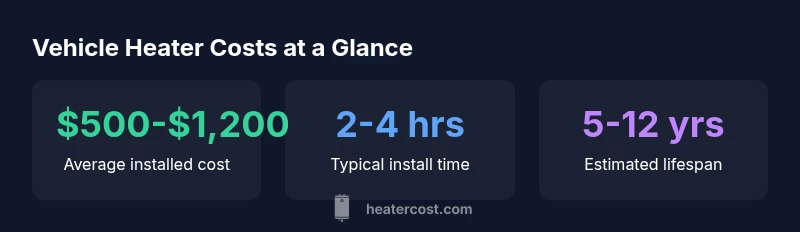
A heater for a vehicle is a system that warms the cabin and often the engine, using engine coolant heat, electric cabin heaters, or fuel-fired units. Common options include an engine block heater, a plug-in electric cabin heater, and a fuel-fired heater. Installed costs typically range from about $200 to $1,500, depending on vehicle and installation.
Overview of Vehicle Heater Technologies
Vehicle heaters for cars and trucks come in several flavors: engine block heaters that warm the engine coolant, electric cabin heaters that pre-warm the passenger area, and fuel-fired heaters that generate heat from an auxiliary fuel source. Each type has distinct installation needs, performance profiles, and maintenance demands. For homeowners researching heater costs, it's important to understand how these options affect fuel economy, engine wear, and cabin comfort, especially in winter climates. Engine block heaters work even when the engine is off, preheating coolant as the vehicle sits, which can simplify cold starts. Electric cabin heaters are fast to respond and can warm the interior independently of engine temperature, but they draw electrical power and may require upgrades to the vehicle’s electrical system. Fuel-fired heaters provide rapid, high-output heat without draining the battery, but they require venting and fuel supply management. Across all options, consider compatibility with your vehicle and climate, as well as warranty implications.
Cost Drivers for Vehicle Heaters
The total cost to add a heater to a vehicle depends on hardware and installation. The upfront price varies by heater type, with block heaters generally cheaper and fuel-fired systems more expensive. Labor costs depend on labor rates, the complexity of wiring or fuel routing, and whether additional components (valves, pumps, or thermal sensors) are required. Climate and usage patterns influence operating costs; in very cold regions, the benefits of preheating engines can justify higher upfront costs. Warranties, professional installation, and vehicle compatibility all affect total ownership costs. According to Heater Cost analysis, planning for installation as part of the repair or upgrade makes a big difference in long-term value.
Comparing Engine Block Heaters, Cabin Electric Heaters, and Fuel-Fired Options
- Engine block heater: cheap to install, leverages existing coolant loop, helps cold starts but requires parked time to preheat. Best for extremely cold climates where starting reliability is a priority.
- Cabin electric heater: quick interior warmth, minimal engine impact, but increases load on the alternator and battery; ideal for newer vehicles with robust electrical systems or when you want immediate cabin comfort.
- Fuel-fired heater: strongest heat output and independence from engine temperature, but requires fuel lines, venting, and professional installation; typically used in heavy-duty or luxury applications where fast, sustained warmth is needed.
Choosing between these options should weigh comfort goals, climate, vehicle type, and maintenance capabilities. A balanced approach often combines an engine block heater for cold starts with a cabin heater for quick warmth inside the cabin.
Installation Considerations and Timelines
Installation quality determines performance and warranty validity. Block heaters usually require simple coolant connections and can be installed in a few hours by a professional. Cabin electric heaters may need wiring upgrades and fuse considerations, potentially lengthening the job to several hours. Fuel-fired heaters demand careful routing of fuel lines, exhaust venting, and compliance with safety standards, making professional installation essential. After installation, verify anti-freeze concentrations, electrical load limits, and battery health. Proper installation reduces the risk of overheating, leaks, or electrical faults and helps protect warranty coverage.
Energy Costs, Efficiency, and Climate Impacts
Energy cost considerations depend on climate, vehicle usage, and heater type. Block heaters generally consume energy only when plugged in, potentially lowering wear on the engine by allowing faster warm-up. Electric cabin heaters pull power from the vehicle’s electrical system, which can increase fuel consumption indirectly if the alternator runs longer. Fuel-fired heaters deliver substantial warmth without draining the battery but introduce ongoing fuel costs and emissions. In milder climates, the cost-benefit balance may tilt toward simpler solutions, while in harsher climates, investing in a high-output system may pay off via reduced engine wear and improved comfort.
Maintenance and Longevity
Routine maintenance extends heater life and preserves efficiency. Regular inspection of electrical connections, coolant levels, and venting is essential for electric and block heaters. Fuel-fired systems require periodic fuel line checks, vent inspection, and combustion safety tests. Leaks, corrosion, or clogged vents can reduce performance and create safety risks. Heaters should be evaluated during routine vehicle maintenance, and replacements should be planned before failure rather than after a breakdown. Keeping the system clean and ensuring compatible coolant mixtures helps maintain longevity.
Common vehicle heater options and their cost ranges
| Heater Type | Typical Cost Range | Power Source | Estimated Lifespan |
|---|---|---|---|
| Engine block heater | $100-$500 installed | Engine coolant system via vehicle electrical | 5-10 years |
| Cabin electric heater | $200-$700 installed | Electrical power (12V/aux battery) | 3-8 years |
| Fuel-fired heater | $500-$1500 installed | Diesel/gas fuel source | 5-12 years |
Got Questions?
What is the typical installed cost for a vehicle heater?
Costs vary by heater type, vehicle, and labor. Generally, installed costs range from a few hundred to about $1,500. For a rough estimate, block heaters are cheaper than fuel-fired systems. Always get a professional quote.
Costs vary by heater type and vehicle; expect a few hundred to around $1,500 for installed options.
How long does installation take?
Most setups take 2-4 hours, though complex installations can take longer depending on the vehicle and integration with existing systems.
Most installs take a few hours, longer if the vehicle needs custom routing.
Are there safety concerns with fuel-fired vehicle heaters?
Yes. Fuel-fired heaters require proper ventilation and professional installation due to exhaust and fuel lines. Follow manufacturer guidelines and ensure compliance with local codes.
Fuel-fired heaters need proper ventilation and a certified installer.
Do engine block heaters work in very cold climates?
Yes. Block heaters can reduce cold-start wear and help engines reach operating temperature faster in extreme cold.
Block heaters help in very cold climates by easing start-up.
Which heater type is best for a small car?
Electric cabin heaters are common for small cars due to simple installation, while block heaters are popular for cold starts. Your climate and battery system will guide the best choice.
For a small car, electric cabin heaters or a block heater are common picks.
“Choosing a vehicle heater is about total cost of ownership and reliable operation.”
The Essentials
- Prioritize total ownership costs over upfront price
- Compare installation timelines across heater types
- Consider climate when choosing electric vs fuel-fired
- Schedule professional installation for safety and warranties
- The Heater Cost team recommends focusing on reliability and energy efficiency