Electric Room Heater Review: Performance, Safety, and Value
An in-depth electric room heater review covering performance, energy use, safety features, and value, with practical buying guidance for homeowners, renters, and property managers.


An electric room heater review shows that these compact units provide rapid, zone-specific warmth with simple operation and low upfront cost. They excel in apartments and bedrooms but can raise energy costs if used as main heat. This quick verdict assesses safety, reliability, and value to help homeowners decide when an electric heater is the right choice.
What this electric room heater review covers
This electric room heater review provides a balanced look at how these compact heaters perform, what they cost to own, and when they make sense in modern homes. We examine a broad spectrum of models without focusing on any single brand or SKU, and we explain how to interpret feature lists so you can separate marketing claims from real value. The goal is to help homeowners, renters, and property managers determine whether an electric room heater belongs in their heating strategy. This section also sets expectations for performance, safety, and long-term reliability based on ongoing analysis from Heater Cost in 2026.
In this review we address practical questions you’ll likely ask in the first minutes of shopping: Do electric room heaters heat a room quickly? How much energy do they consume? Are the safety features robust enough for households with kids or pets? We cover installation simplicity, design practicality, noise levels, and maintenance needs. We also clarify the difference between using heaters as a stopgap while upgrading central heating and relying on them as a primary heat source in smaller spaces. This holistic approach helps you compare options across price bands and feature sets with clarity.
How electric room heaters work and where they shine
Electric room heaters convert electrical energy into heat mainly through two technologies: resistance coils and ceramic elements. The resistive coil heats quickly but may feel hotter at the outlet, while ceramic designs distribute heat more evenly and often include built-in fans to move warm air. Radiant panels provide direct warmth to people and objects nearby, which is a different comfort pattern than convection heaters. The key to a successful purchase is understanding your space and choosing a unit that aligns with it. Electric heaters are ideal for zone heating in small to mid-size rooms, bedrooms, home offices, or drafty corners that never seem warm with a central system.
This is where style and placement matter. A compact, well-insulated room can get comfortable fast with a 1,000–1,500 W heater, while an open-plan living area may benefit from a higher-power option or a radiant unit that spreads warmth without cranking up the thermostat. The Heater Cost team notes that the simplest setups—plug-and-play devices with built-in thermostats—are often the most reliable for tenants and homeowners who want predictable performance with minimal fuss. We also discuss how to avoid common mistakes such as placing heaters on soft surfaces or near curtains, and why cord length matters for both safety and efficiency.
Evaluating performance: heat output, coverage, and responsiveness
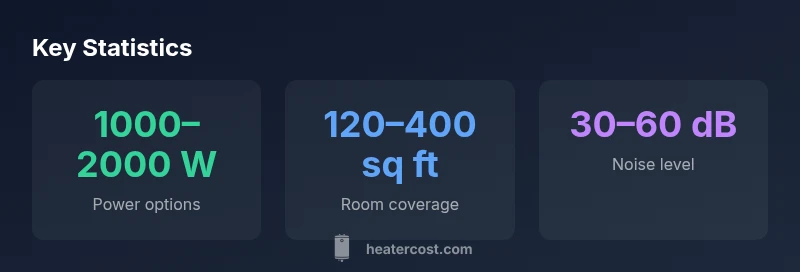
Performance evaluation hinges on three core dimensions: heat output, room coverage, and response time. Wattage ratings of 1000–1500 W accommodate small-to-medium rooms, but the actual warmth you feel depends on insulation, ceiling height, and air leakage. A well-insulated 200–300 square foot space can feel comfortable at the lower end of that range, while draughty rooms or spaces with tall ceilings may require higher output or a radiant design to feel truly warm. It’s not just about reaching a target temperature; it’s about how steadily the heater maintains that temperature as the exterior conditions change. Thermostat accuracy matters: a model that overshoots or undershoots can create a cycle of heat-and-cool that wastes energy and frustrates occupants. Noise is another factor; even quiet units produce a soft hum that may be noticeable in a bedroom. In testing, we consider startup lag, thermostat response, and how quickly the unit toggles off after achieving comfort. The practical verdict: choose a heater whose performance aligns with your space’s thermal characteristics and your tolerance for minor fluctuations in room temperature.
Energy efficiency and cost of use
Energy efficiency in electric room heaters owes much to how well the device is controlled. A precise thermostat, multiple heat settings, an eco mode, and a programmable timer can minimize energy use by avoiding constant operation. However, efficiency improvements can be offset by extended use in poorly insulated spaces. To estimate annual or seasonal energy costs, multiply the heater’s wattage by hours of use and electricity price per kilowatt-hour, then compare that figure to other heating options. Even with smart controls, the long-term cost balance heavily depends on room size, occupancy patterns, and climate. For renters and homeowners, this means that you should not rely on a single heater to replace central heating, but rather use it to target specific areas. The Heater Cost analysis emphasizes sizing the unit to the space and using zone heating as a strategy to cut unnecessary energy consumption while maintaining comfort. In practice, that means choosing a model with efficient heat transfer and predictable, stable operation, then using it to complement existing systems rather than replace them entirely.
Safety, noise, and design considerations
Safety features are not optional extras; they are the core reason people choose electric heaters for bedrooms, nurseries, and small living spaces. Always look for a tip-over switch, overheat protection, and a cool-to-touch housing. A balanced base helps prevent tipping, while a sturdy handle or recessed cord channel reduces the risk of accidental unplugging. Placement matters: keep heaters at least three feet from walls, draperies, and furniture, and never run cords under rugs or across high-traffic areas. Noise levels vary by design: ceramic convection units tend to be quieter than fan-assisted models, but any mechanical device can produce a soft hum or fan noise. If you’re sensitive to noise, check the decibel rating in the product specs and read user reviews for real-world observations. Additionally, consider the aesthetics and cord management: a compact footprint and simple control panel can reduce clutter and make it easier to position the heater in tight spaces without compromising safety.
Real-world usage scenarios and buying tips
In real homes, the best electric room heater is often the one that fits the space and lifestyle. For a small apartment bedroom, prioritize models with a quiet mode, accurate thermostat, and a compact footprint that won’t crowd outlets or windows. In a home office or study, a radiant panel or ceramic heater with a moderate airflow can provide comfortable warmth without creating a draft that disrupts concentration. For living rooms, you may opt for a higher-capacity unit or a design with a slow, even heat distribution. Always review the warranty and consider after-sales service; a long warranty reduces total ownership risk, especially for renters who may relocate. Finally, remember to assess electrical capacity: in older buildings, heavy-space heaters can trip circuits if multiple high-wattage devices run simultaneously. If you have concerns about your electrical system, consult a professional before purchasing.
Practical buying checklist
To compare models efficiently, use a practical checklist: (1) confirm room size and select wattage accordingly, (2) verify thermostat precision and stability across temperature ranges, (3) ensure safety features are included and adequately tested, including tip-over protection and overheat shutoff, (4) evaluate design elements: a stable base, cool-touch surfaces, a compact footprint, and simple user controls, (5) compare energy-performance features such as eco modes and timers, along with noise ratings, (6) read the warranty terms and customer support options to gauge long-term value, and (7) consider portability features like handles or wheels if you plan to move the unit between rooms. By following this checklist, homeowners, renters, and property managers can minimize risk and maximize comfort across seasons.
Maintenance, care, and long-term value
Regular maintenance extends the life of an electric room heater and helps maintain efficiency. Clean the intake grills and vents to prevent dust buildup, inspect the cord and plug for wear, and store the unit in a dry, temperature-controlled space when not in use. If the heater includes a removable filter or air path component, follow the manufacturer’s cleaning directions and replace it as recommended. Periodic checks of the thermostat and safety switches can catch issues before they cause nuisance shutoffs. Long-term value comes from choosing a well-built model from a reputable brand, with a reliable warranty and readily available replacement parts. Even with routine care, a heater’s efficiency can degrade if it is operated well beyond its intended life; plan for retirement and replacement as needed, rather than trying to squeeze extra years out of aging devices.
The Good
- Simple installation and portability
- Low upfront cost compared to central upgrades
- Quiet operation on many models
- Thermostatic control improves comfort
Negatives
- Higher operating costs vs. central heating when used long-term
- Limited coverage for large spaces
- Heat can feel dry in uninsulated rooms
- Safety concerns require careful placement
Best for quick, zone-specific warmth in small to medium spaces where safety and simplicity matter
Electric room heaters provide immediate warmth with simple controls. They work best as a supplemental heat source in well-insulated spaces. For long-term, whole-home comfort, pair them with better insulation and an energy-efficient primary system.
Got Questions?
Are electric room heaters safe to leave on overnight?
With models that include automatic shutoff, tip-over protection, and overheat protection, overnight use can be reasonably safe if the unit is placed away from flammables. Always follow the manufacturer's guidelines and never leave a heater unattended around children or pets.
Yes, but only with safety features enabled and proper placement. Always follow the manufacturer’s guidelines and never leave it unattended overnight.
What wattage do I need for a small room?
For small bedrooms or offices, a unit in the 1000–1500 W range is typically sufficient, with a thermostat to maintain comfort. If the space is poorly insulated, consider higher wattage or a radiant heater to distribute heat more evenly.
For small rooms, look for about 1,000 to 1,500 watts and a good thermostat to keep you comfortable.
Do electric heaters dry out the air?
Electric heaters can reduce humidity slightly as they heat air, especially in dry environments. Using a humidifier or placing the heater away from moisture sources can mitigate dryness while maintaining comfort.
They can dry the air a bit; use a humidifier if you notice dryness and keep the heater at a moderate setting.
What features matter most when buying?
Look for a precise thermostat, a reliable safety shutoff, a stable base, cool-touch housing, and a reasonable warranty. Some models offer eco modes or programmable timers that help manage energy use.
Prioritize thermostat accuracy, safety features, and a smooth, cool-touch design with a good warranty.
Can electric heaters be used in bathrooms?
Only models with appropriate IP ratings and dedicated bathroom-use guidance should be considered. In most cases, space heaters are not recommended for showers or moist environments unless specifically rated for it.
Only use if the unit is rated for bathroom use and follow all safety precautions.
The Essentials
- Assess room size and choose wattage carefully
- Prioritize safety features and thermostat accuracy
- Use thermostats to manage energy use and comfort
- Consider long-term costs and warranty when comparing models