Dyson Hot Cool Link: Costs, Features, and a Practical Guide
Explore the Dyson Hot Cool Link’s costs, energy use, and practical guidance for homeowners. Heater Cost analyzes setup, maintenance, and ownership to help you make an informed decision about this versatile climate control device.


Dyson Hot Cool Link is a dual-function space heater and fan that uses air multiplier technology to heat or cool rooms. It offers year-round climate control in a compact footprint and can be controlled via remote and app. This non-ducted unit fits in living spaces without complicated installation. It is positioned for flexible placement and quick temperature adjustments.
What is the dyson hot cool link and where does it fit in today’s homes?
The dyson hot cool link embodies Dyson’s approach to compact climate control: it blends heating and cooling in a single, stylish unit that relies on air multiplier technology to move air gently but efficiently. For homeowners seeking flexible year-round comfort, this device promises quick temperature adjustments without bulky ductwork or installation. In practice, many households use it as a supplementary heater in smaller living rooms or as a fast-acting cooler during transitional seasons. According to Heater Cost, the dyson hot cool link is best understood as a versatile, space-saving solution rather than a full replacement for central HVAC in larger homes. Its compact footprint makes it easy to place near seating areas for targeted comfort, while its rounded design minimizes visual impact. For anyone weighing this option, consider room layout, insulation quality, and occupancy patterns, since these factors strongly influence performance and perceived warmth or coolness.
For residents who value simplicity, the dyson hot cool link can be a compelling choice. It provides a quick-response climate adjustment with minimal setup, a feature many renters appreciate. The combination of heating and cooling in one device can reduce the number of standalone appliances in small apartments, potentially saving space and improving overall comfort. In sum, the dyson hot cool link represents a modern, flexible approach to personal climate control that fits well with contemporary living spaces.
How the dyson hot cool link works and why its design matters
At its core, the dyson hot cool link leverages air multiplier technology to create a smooth, uninterrupted flow of air for both heating and cooling. The unit draws ambient air, accelerates it through a compact impeller, then channels it into a wide, gentle stream that can be directed toward seating areas or across a room. This approach reduces the need for high-volume, noisy blowers and contributes to a perceived comfort that feels more evenly distributed than some conventional heaters. In practical terms, users can switch between heating and cooling modes with minimal effort, adjust oscillation, and set a preferred temperature using the onboard controls or a connected app. Heater Cost analysis suggests that, while the upfront cost can be higher than traditional heaters, the dual-functionality and absence of ductwork often translate into lower long-term energy use for small-to-medium spaces. As always, performance depends on real-world conditions such as room size, ceiling height, and ventilation quality. The dyson hot cool link’s design prioritizes portability and ease of use, which can make it a favorable option for temporary setups or seasonal adjustments.
Costs and ownership considerations for the dyson hot cool link
When evaluating the dyson hot cool link, homeowners should differentiate between purchase price and total cost of ownership. The upfront price may be higher than many conventional space heaters, but the device provides year-round use, potentially offsetting seasonal costs. Heater Cost’s analysis highlights that energy consumption varies by mode, fan speed, and room dynamics. In principle, the dyson hot cool link can reduce open-window cooling needs in warm months and provide supplemental heat in cooler months, which may lower standby energy losses. For households using the device predominantly for short-duration comfort, ongoing electricity costs are generally manageable, especially when compared to running multiple single-function devices. Regional energy rates, climate, and how aggressively the unit is used will influence overall expenses. It’s prudent to track energy use over a typical month to gauge true costs, rather than relying on sticker prices alone.
Energy efficiency, sound, and climate control with the dyson hot cool link
Energy efficiency in the dyson hot cool link stems from its efficient motor design and the absence of ducts, which reduces heat loss in transit. Users commonly report fast warm-up times and the ability to fine-tune airflow to achieve comfortable temperatures with lower energy draw than older heaters at identical room sizes. Noise levels are generally low to moderate, particularly at mid-range fan speeds, which makes the device suitable for bedrooms and living rooms alike. The dyson hot cool link also supports oscillation and targeted directional airflow, enabling more uniform temperature distribution. From a data perspective, efficiency gains are most evident when the unit is used for localized comfort rather than as a surrogate for central heating in larger spaces. For purchasers, the key takeaway is that efficiency hinges on correct placement, appropriate mode selection, and awareness of energy pricing in their region.
Setup, placement, and placement considerations for optimal performance
Setting up the dyson hot cool link is straightforward: it plugs into a standard outlet and requires no permanent installation. For optimal performance, place the unit on a stable surface away from heat sources and out of direct drafts from windows or doors. The height of the unit should align with the seating area to maximize airflow; in smaller rooms, a corner placement may be preferable to avoid obstructions. Routine maintenance is minimal—wipe the grill and check for dust buildup on the intake vents. In larger rooms or open-plan living spaces, you may find it beneficial to run the device in tandem with ceiling fans or portable air circulators to augment air distribution. Consistency in room usage and routine cleaning will help ensure the dyson hot cool link maintains consistent performance through seasonal changes.
Comparisons with alternatives and where the dyson hot cool link fits in a modern toolkit
Compared with traditional heaters, the dyson hot cool link emphasizes flexibility and air distribution rather than sheer heat output. For cooling, it offers a fast, directional airflow that can be more pleasant than a standard fan in hot rooms, while for heating it provides rapid warm-up with localized comfort. Against central HVAC, it does not replace long-term climate control for whole-house comfort, but it can reduce reliance on baseboard heaters in smaller spaces. When evaluating alternatives like portable heaters or window air conditioners, weigh factors such as noise levels, energy efficiency, footprint, and maintenance. The dyson hot cool link stands out for its dual functionality, compact footprint, and ease of use, making it a strong candidate for apartments, home offices, and rooms that benefit from quick climate adjustments. For renters and property managers, its portability can be a major advantage, especially in rooms with varying occupancy.
How to choose the right model and best practices for using the dyson hot cool link
Choosing the right model for the dyson hot cool link starts with room size, desired year-round use, and whether you want app-based control. Review the product line to identify which features matter most—remote operation, smart home integration, or enhanced airflow patterns. In practice, the best approach is to map typical occupancy periods and climate expectations to a few scenarios: winter heating of a small living room, summer cooling in a sunlit office, and transitional-season comfort. Even with price considerations, prioritize placement, energy pricing, and the ability to adapt airflow to avoid overcooling or overheating. By combining thoughtful placement with realistic usage patterns, homeowners can maximize comfort while managing energy costs. Throughout the process, keep in mind that ongoing energy costs are a function of both appliance efficiency and how often it is used.
Conclusion and actionable recommendations from the Heater Cost team
For homeowners evaluating the dyson hot cool link, start with a clear use-case assessment: identify rooms that benefit most from fast, localized heating or cooling. Then weigh the upfront cost against the flexibility and potential energy savings. The Heater Cost team recommends simulating typical daily usage for your space, reviewing energy prices, and considering how often you’ll need both heating and cooling across seasons. In many cases, a dyson hot cool link can be a valuable complement to existing systems, offering rapid comfort without the need for major renovations. As always, prioritize safe placement and routine maintenance to ensure reliable performance across seasons. For a comprehensive assessment, refer to our data-driven guide and energy-use benchmarks.
Feature comparison: Dyson Hot Cool Link vs. conventional heaters
| Aspect | Dyson Hot Cool Link | Conventional Heater |
|---|---|---|
| Primary function | Heater + Fan with Air Multiplier | Single-function heater |
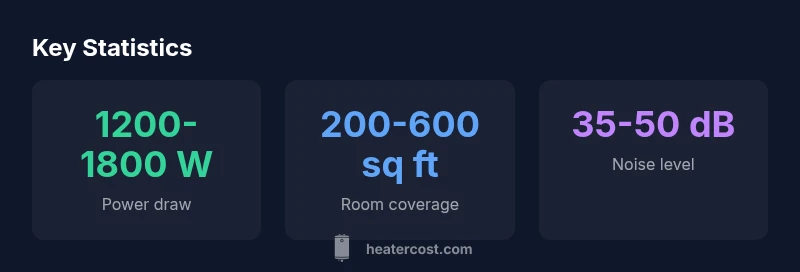
| Energy usage (typical heating) | 1200-1800 W | 600-1500 W |
| Room coverage | 200-600 sq ft | 250-500 sq ft |
| Noise level (dB) | 35-50 dB | 40-60 dB |
Got Questions?
Is the Dyson Hot Cool Link suitable for large rooms?
The unit excels in small to medium spaces. For larger rooms, you may need more than one unit or a different cooling/heating strategy.
Best for smaller spaces; consider multiple units for larger rooms.
Can it operate year-round for heating and cooling?
Yes. It provides both heating and cooling, which can reduce the need for separate devices but may affect energy use based on mode and settings.
Yes, it works in all seasons.
Does it require professional installation?
No permanent installation is required. It’s plug-and-play, making it suitable for renters and flexible layouts.
No professional installation needed; just plug in.
How does its cost compare to a traditional heater?
Upfront costs may be higher, but dual-function use can lower running costs in some scenarios. Review energy usage data for your space.
Often higher upfront, potential energy savings with daily use.
Is it safe to run overnight?
Follow the manufacturer’s guidelines. It has safety features, but continuous overnight use should align with your space and safety practices.
Use according to guidelines for safety.
Does it integrate with smart home systems?
Some models offer app control and scheduling. Check current specs for compatibility with your ecosystem.
App control and scheduling may be available.
“The Dyson Hot Cool Link offers a compact, versatile solution for year-round climate control, but homeowners should weigh upfront costs against ongoing energy use.”
The Essentials
- Assess room size before buying for optimal heating/cooling.
- Compare energy use and comfort across modes.
- Factor in total ownership costs, not just price.
- Place the unit for optimal airflow and safety.