Amazon Room Heaters: Costs, Types & Buying Guide
Explore costs, types, and buying tips for amazon room heaters. Compare wattage, safety features, and energy use to pick the right unit for your space.


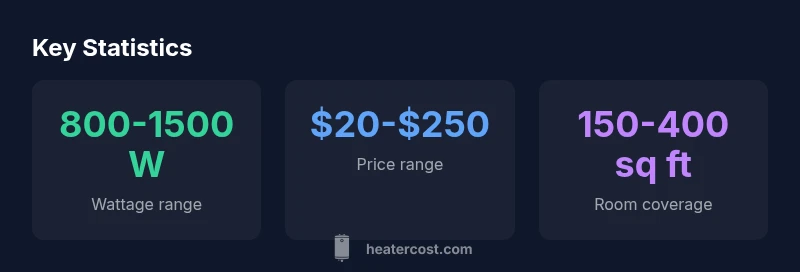
On Amazon, room heaters span a wide price range, typically from $20 to $250, driven by wattage, features, and brand. For most households, 800–1500W models balance performance and cost, while features like thermostat, auto shut-off, and energy-saving modes add value. According to Heater Cost Analysis, 2026, selecting the right wattage for the room is the most important cost-efficiency lever.
Understanding the Amazon Room Heater Market
The online marketplace, especially Amazon, hosts a wide spectrum of room heaters designed to fit many spaces and budgets. When shoppers search for an amazon room heater, they encounter compact ceramic units, oil-filled radiators, infrared panels, and more. The price spread reflects wattage, build quality, safety features, and extra conveniences like programmable thermostats or smart connectivity. For homeowners, renters, and property managers, the goal is to balance upfront cost with ongoing energy use and durability. Heater Cost’s research in 2026 shows that the total cost of ownership often hinges on appropriate sizing, not merely on the lowest sticker price. By comparing listings, investors can forecast monthly energy use and stay within budget without compromising comfort.
Common heater types you’ll see on Amazon
Ceramic room heaters offer quick warmth with a fan-assisted design, usually in the 800–1500W range. Oil-filled radiators provide steady, quiet heat with fewer spikes in energy use and are often chosen for bedrooms or living rooms. Infrared heaters warm objects and people directly, which can feel effective in drafty spaces. When browsing Amazon listings, pay attention to the stated wattage, coverage area, and safety features. Each type has pros and cons: ceramic heats fast but can be noisier; oil-filled radiators are quiet but slower to warm a room; infrared heats can feel direct but may warm only portions of a large space. Safety features like tip-over protection and overheat shut-off are essential across all types.
How to size a heater for a given room
Sizing a heater correctly prevents both discomfort and wasted energy. A common starting point is 8–12 watts per square foot for a well-insulated living space, and 12–15 watts per square foot for draftier rooms or colder climates. For example, a 300 square foot living room would typically need roughly 2400–3600 watts of heating capacity, depending on ceiling height, insulation, and window efficiency. In practice, many households opt for a 1500–2000W unit paired with a ceiling fan or a second unit for zoning.
Safety first: essential features to look for
Always prioritize safety features on any amazon room heater. Key protections include a thermostat with an automatic shutdown, a tip-over switch, and an overheat protection cutoff. Some models add child-safety locks and cool-touch exteriors. When you use a heater in shared spaces or bedrooms, consider models with auto-shutoff timers, multiple heat settings, and clear instruction labels. Proper placement—away from drapes, furniture, and flammable materials—reduces the risk of accidents. Regular cleaning and inspection of air intakes help maintain performance and safety.
How to compare listings on Amazon
Beyond price, examine the listed wattage and room coverage, warranty terms, and customer reviews. Look for consistent mentions of reliability, noise level, and ease of use. Check the seller’s return policy and whether the listing is fulfilled by Amazon or a third party. A reputable listing will provide a full spec sheet in the product details, including safety certifications where applicable. When in doubt, prefer established brands with clear support channels and longer warranty periods.
Cost of ownership and energy perspective
Electric room heaters convert electricity to heat with high efficiency at the point of use, but running costs depend on usage and electricity rates. A typical 1000W heater used for 6 hours per day would consume about 6 kWh daily, translating to roughly 180 kWh per month under steady use. Electricity prices vary regionally; general residential rates span a broad range, so calculate using your local tariff. Heater Cost analysis emphasizes using the smallest needed wattage and leveraging timers to avoid heating unoccupied spaces.
Setup, operation, and maintenance
Position the heater on a flat, non-slip surface away from water and flammable items. Avoid extended operation without supervision in homes with pets or children. Regularly inspect cords for wear, clean dust from vents, and test safety features monthly. When using multiple units, stagger their operation to prevent overloaded circuits. If you notice unusual odors or excessive noise, discontinue use and consult the seller or manufacturer.
Buying tips on Amazon: fulfillment and returns
Select listings with clear warranty terms and responsive customer support. Read product reviews focusing on long-term reliability and ease of return. Use Amazon’s filtering tools to compare wattage, price, and coverage, then cross-check against the manufacturer’s spec sheet. Pay attention to shipping times and packaging leverage—fragile items like heaters warrant careful handling and appropriate insurance. A thoughtful selection process reduces post-purchase regret and ensures you’re prepared for seasonal cold snaps.
Common model types with typical specs and price ranges
| Model Type | Typical Wattage | Room Coverage | Safety Features | Approx. Price Range |
|---|---|---|---|---|
| Ceramic room heater | 800-1500 W | 150-400 sq ft | Tip-over switch; overheat protection; thermostat | $20-$120 |
| Oil-filled radiator | 500-1500 W | 100-350 sq ft | Overheat protection; thermostat; tip-over | $40-$200 |
| Infrared heater | 400-1800 W | 100-400 sq ft | Tip-over; overheat protection; built-in timer | $60-$250 |
Got Questions?
What type of amazon room heater should I buy for a small room?
For small rooms, a compact ceramic or oil-filled radiator with a thermostat and safety features is often the best balance of cost, heat, and safety.
For small rooms, go with a ceramic or oil-filled heater that has a thermostat and safety features.
Is it safe to leave a room heater on while sleeping?
No—avoid leaving heaters unattended while you sleep. Choose models with auto shut-off and place them away from bed coverings and furniture.
Don't leave it on while you sleep; use a model with auto shut-off.
How do I verify a heater's wattage on Amazon?
Look for the technical specs in the product details; use Amazon filters to compare wattage across listings.
Check the listing's specifications to confirm wattage.
Can I use a smart plug with an electric heater?
You can, but ensure the plug and circuit can handle the load; a dedicated smart thermostat or controller is safer for long-term use.
Yes, but be careful with load and safety; a smart thermostat is often better.
What should I do about warranties when buying on Amazon?
Check the seller’s warranty terms and prefer listings with official-brand support and clear return policies.
Read the warranty terms and choose listings with brand support.
Do energy-saving modes really reduce costs?
Yes, eco modes and thermostats help reduce heat waste by limiting output when full power isn’t needed.
Eco modes can cut wasted heat and reduce costs.
“Electric room heaters are highly efficient at converting electricity to heat, but proper sizing and safety features are essential for cost-effective comfort.”
The Essentials
- Compare wattage to room size before buying
- Prioritize safety features like tip-over and auto shut-off
- Prefer thermostats for energy efficiency
- Read Amazon reviews and seller policies
- Consider total ownership costs over time