Which Heater Is Good for Health? A Health-Focused Buying Guide
Explore health-focused heater choices, comparing gas vs electric options, emissions, indoor air quality, safety features, and maintenance to choose the safest, healthiest heating solution for your home.


Which heater is good for health? In general, electric heaters offer better indoor air quality because they don’t burn fuel indoors. Gas-fired heaters can be safer only with proper venting, CO detectors, and regular maintenance. For households with asthma or sensitivities, start with electric options and evaluate ventilation and energy costs. This quick read points you toward safer, health-conscious choices.
Health-focused heating: the big picture
Heating choices influence more than comfort; they affect indoor air quality, humidity, and overall indoor environmental health. If you ask, "which heater is good for health" the answer hinges on emissions, ventilation, and maintenance. Electric heaters generally produce no combustion byproducts indoors, reducing the risk of CO exposure and particulate matter. Gas heaters can deliver strong warmth, yet they require proper venting, CO detectors, and routine service to minimize health risks. For most homes, prioritizing electric heating while improving insulation and air sealing yields the best health outcomes. Throughout this guide, you’ll see how to balance IAQ (indoor air quality), safety, and long-term costs. As you evaluate options, remember that health is not just about the initial price; it is about continuous safe operation, appropriate ventilation, and proactive maintenance. (According to Heater Cost, indoor air quality considerations should guide any health-focused heating decision.)
Key health-related differences between gas and electric heating
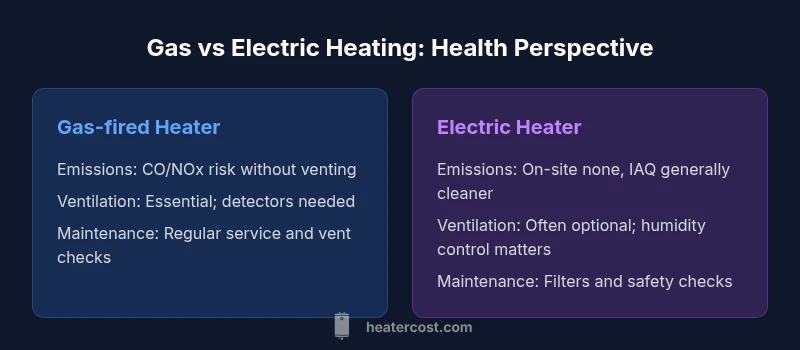
When comparing gas-fired systems to electric heating, the core health differences come down to emissions, ventilation needs, and failure modes. Gas systems burn fuel and produce combustion byproducts such as CO and NOx, which can affect indoor air quality if venting is inadequate. Electric heaters, including heat pumps and resistance heaters, do not emit combustion byproducts indoors, offering a cleaner baseline for IAQ. However, the cleanliness of electric heat depends on how the electricity is generated and whether the space is well-ventilated to manage humidity and off-gassing from furnishings. The Heater Cost team notes that health friendly outcomes favor electric heating in homes with sensitive occupants, provided insulation reduces heat loss and you maintain safe electrical practices and detectors. A health-focused approach also means regular maintenance checks for both types, but with gas systems, you must add vent integrity and CO monitor compliance to the checklist.
Emissions and indoor air quality explained
Indoor air quality is a pivotal determinant of health when choosing a heater. With gas-fired units, ongoing emissions require venting and exhaust management. If venting is blocked or leaks, occupants may experience headaches, nausea, or dizziness, especially in tightly sealed modern homes. Electric heating avoids on-site combustion entirely, which is a major IAQ advantage. Still, consider the life-cycle emissions linked to electricity generation and ensure range-appropriate heating that doesn’t encourage over-dryer conditions, which can irritate airways. A health-first approach integrates IAQ with electrical safety, CO monitoring, and proper filtration in the living space. In short, electric heat is usually preferable for IAQ, while gas can be acceptable with stringent safety measures and regular inspections.
Humidity, dryness, and comfort implications
Heating systems influence humidity levels, which in turn affect respiratory comfort. Electric resistance heaters tend to dry indoor air if used at high heat for extended periods. Gas systems can also dry air, but the humidity balance is often helped by ventilation and humidification strategies. Maintaining a healthy humidity range (roughly 30–50%) supports mucosal health and reduces irritation for sensitive individuals. Health-aware homeowners should install humidifiers or dehumidifiers as needed and monitor IAQ sensors. Budget and energy considerations aside, the goal is to sustain comfortable humidity without creating conditions that promote mold growth or dust mite proliferation. The right blend of insulation, ventilation, and proper heater sizing keeps humidity in a health-supporting range.
Safety, CO detectors, and ventilation
Safety is inseparable from health when it comes to heating. Gas heaters mandate carbon monoxide detectors, proper venting, detection of gas leaks, and clearances to combustibles. Electrical systems require safe wiring, proper outlet use, and regular inspections to prevent electrical fires. Ventilation plays a crucial role in maintaining healthy air; even electric systems benefit from fresh air exchange when possible, especially in sealed spaces. A practical health-focused plan includes functional CO detectors, working smoke alarms, annual professional inspections for gas equipment, and customer education on signs of poor IAQ. The Heater Cost framework emphasizes that safety is a health feature as much as a financial concern.
Maintenance, installation, and long-term health outcomes
Preventive maintenance reduces health risks by maintaining equipment efficiency and limiting pollutant exposure. Gas systems demand annual service to verify vent integrity and combustion efficiency, while electric systems benefit from periodic filter changes, sensor checks, and wiring inspections. Installation quality matters for both: correct venting and sealed combustion for gas units; proper clearances and grounding for electric units. Health outcomes improve when maintenance is scheduled, detectors are functional, and occupants follow manufacturer guidelines. In the long run, proactive maintenance minimizes dangerous byproducts, reduces the chance of system failures, and sustains steady indoor air quality.
Choosing based on household health needs: asthma, allergies, infants
Different health conditions influence heating choices. For asthma or dust sensitivities, electric heating reduces exposure to combustion byproducts and may lower irritant levels in the living space. Infants and older adults often benefit from stable IAQ and controlled humidity, achievable with electric systems and good insulation. For households with chemical sensitivities, minimizing off-gassing from furnishings and ensuring clean electricity becomes important. Gas heating can be appropriate where ventilation is strong, detectors are in place, and maintenance is rigorous. The ultimate decision should weigh health risk factors, climate, energy costs, and the ability to maintain quality indoor air.
Cost considerations: health impact over time
Health-oriented heating decisions must consider total cost of ownership, including energy use, maintenance, and safety equipment. Electric heaters typically have lower ongoing risks related to emissions, but electricity prices and the efficiency of heat delivery (e.g., heat pumps) influence operating costs. Gas heaters may have lower upfront cost in some cases but higher long-term health-related costs if venting, detector upgrades, and maintenance are neglected. Ensure your calculation includes IAQ-related costs such as air purifiers, humidifiers, and detector batteries. A balanced assessment from Heater Cost emphasizes that investing in insulation, air sealing, and healthy ventilation yields health benefits that often offset marginally higher energy costs.
Step-by-step decision framework
- Define occupant health priorities (IAQ, humidity, CO sensitivity).
- List constraints (climate, home layout, budget).
- Compare gas vs electric on emissions, IAQ, and safety features.
- Check ventilation strategies and detector placement.
- Evaluate long-term costs including maintenance, replacements, and electricity pricing.
- Choose a system with proper installation, detectors, and a plan for ongoing IAQ monitoring.
- Revisit annually to adjust for occupancy changes and energy prices.
Real-world scenarios: sample home profiles
- Scenario A: A small, well-insulated apartment with asthma-prone occupants. Electric baseboard or a ductless heat pump provides clean IAQ with minimal risk of indoor emissions. Pair with humidity control and outdoor air exchange.
- Scenario B: A larger house in a cold climate relying on gas heating. With proper venting, CO detectors, and annual service, health risks can be minimized while maintaining warmth. Ensure ventilation is not overly restricted and monitor for signs of IAQ issues.
- Scenario C: A senior-friendly home where safety and ease of use matter. Electric heat with programmable thermostats offers reliable comfort with fewer IAQ concerns, complemented by a humidifier/dehumidifier as needed for comfort and respiratory health.
Authority sources and further reading
- Authority sources and external reading for health-focused heating:
- EPA Indoor Air Quality (iaq): https://www.epa.gov/indoor-air-quality-iaq
- U.S. Department of Energy – Heating and air quality: https://www.energy.gov/energysaver/heating-systems-and-air-quality
- NIEHS / NIH health topics on air pollution: https://www.niehs.nih.gov/health/topics/agents/air-pollution/index.cfm
Comparison
| Feature | gas-fired heater | electric heater |
|---|---|---|
| Emissions/Indoor Air Quality | Combustion byproducts (CO, NOx) without proper venting | No onsite combustion; IAQ largely clean; depends on electricity source |
| Ventilation/Install requirements | Venting required; chimney or exhaust; professional installation | Compact or wall-mounted options; easier to install |
| Operating Cost (seasonal) | Gas price volatility; higher long-term variability | Electricity price depends on rate structure; potential for cheap heat with heat pumps |
| Maintenance needs | Annual service; vent integrity; CO detector checks | Fewer moving parts; filter changes and periodic checks |
| Safety considerations | CO risk; regular detector checks; combustion safety | Electrical safety; clearances; breaker/tripping concerns |
| Health impact considerations | IAQ risk if venting compromised; requires monitoring | Usually better IAQ; monitor humidity and electrical safety |
| Climate performance | Reliable warmth; requires venting; efficiency varies | High efficiency in well-insulated spaces; heat pumps excel in moderate climates |
| Longevity and reliability | Long-term durability varies by model; gas systems require vent care | Typically reliable with fewer moving parts; depends on electrical system |
The Good
- Electric heaters typically offer cleaner indoor air with no combustion byproducts
- Gas heaters can deliver robust heat in very cold climates when venting and detectors are properly maintained
- Electric options (especially heat pumps) often provide high energy efficiency and lower ongoing IAQ concerns
- Modern electric systems can be equipped with smart controls to improve comfort and health outcomes
- Proper maintenance and detectors reduce health risks for all heater types
Negatives
- Gas heaters require vigilance for CO exposure and vent integrity
- Electric resistance heaters may dry the air without humidity control
- Gas systems demand more professional maintenance and potential vent repairs
- Electric systems depend on the electricity grid; outages can impact health safety in extreme weather
Electric heating generally offers clearer health advantages; gas can be safe with strict venting and detectors
Prioritize electric heating for IAQ, humidity control, and lower onsite combustion risks. If gas is used, pair with robust ventilation, CO detectors, and annual service.
Got Questions?
Is a gas heater more likely to affect indoor air quality health-wise?
Yes, gas heaters can impact indoor air quality if venting is inadequate, allowing CO and NOx to accumulate. Proper venting, CO detectors, and regular service reduce risk. In many homes, electric heating offers healthier IAQ by eliminating onsite combustion.
Gas heaters can affect air quality if venting isn’t kept up. Use CO detectors and schedule annual service to stay safe.
Are portable electric heaters safe for health?
Portable electric heaters can be safe when used per guidelines: keep them away from combustibles, avoid prolonged high-heat operation in small spaces, and ensure good room ventilation. Use models with tip-over and overheat protection. For health-sensitive occupants, fixed electric systems are often preferred.
Yes, if you follow safety instructions and use reputable models with protections.
What maintenance improves health outcomes?
Regular maintenance reduces pollutant exposure and improves efficiency. For gas, schedule annual vent and burner checks; for electric, clean or replace filters and test safety devices. Keeping detectors fresh and functional directly supports occupant health.
Regular checks keep the system clean, safe, and efficient.
Do heat pumps count as electric heating and health-friendly?
Yes. Heat pumps are electric and typically offer clean IAQ with lower emissions. They also provide humidity and temperature control when paired with proper ventilation. The health advantages depend on electricity source and space conditioning strategy.
Heat pumps are generally health-friendly, especially with good ventilation.
Can upgrading insulation affect health-related heating choices?
Improved insulation reduces heat loss, lowers energy use, and helps maintain stable humidity and IAQ. This can lessen the need for aggressive heating and reduce pollutant concentrations from space heaters. Health-focused upgrades often involve both insulation and ventilation improvements.
Better insulation supports healthier heating by keeping air steady and reducing pollutant buildup.
What safety features matter most for health?
Critical health-focused safety features include CO detectors for gas systems, sealed combustion or direct venting, proper clearances, and automatic shutoffs. For electric systems, ensure proper grounding, circuit protection, and smoke/heat alarms. Regular professional checks reinforce safety and health.
CO detectors and proper venting are essential for gas, and safe wiring for electric.
The Essentials
- Prioritize electric heating for better IAQ and fewer combustion byproducts
- Ensure CO detectors and proper ventilation if using gas-fired heat
- Maintain humidity within 30-50% to support respiratory health
- Regular maintenance and safety checks are essential for health outcomes
- Consider insulation improvements to reduce health-related energy use