Walmart Heater Costs: A Homeowner Buying Guide 2026
A data-driven guide to Walmart heater costs, types, efficiency, safety, and buying tips for homeowners, leveraging Heater Cost analysis.


Walmart heaters vary widely in price and efficiency, with low-cost plug-ins and higher-efficiency ceramic and infrared models; upfront price is only part of the cost. The Heater Cost analysis emphasizes considering running costs, safety features, and room size to avoid wasted energy. It also highlights total cost of ownership over the heater's lifetime.
Walmart Heater Overview
Walmart heater options span a wide range of styles, prices, and features sold through national retailer channels. For homeowners, the decision is not simply the upfront sticker price but total cost of ownership, energy use, and safety. According to Heater Cost, Walmart carries plug-in space heaters, ceramic and infrared panels, and oil-filled models that target different room sizes and climates. The move toward energy-efficient designs means choosing models with thermostats, tip-over protection, and auto shut-off can reduce running costs over the winter. The Heater Cost team found that the best value often comes from balancing initial price with operating costs, especially if you plan to run a heater daily. In addition, Walmart’s return policies, warranty terms, and accessibility can influence long-term cost and peace of mind. If you’re shopping online or in-store, compare model specifications, read safety certifications, and check whether the heater is appropriate for the intended space. The goal is to buy a unit that delivers steady heat without overheating or wasting electricity. Keep in mind that local electricity rates, insulation, and room size all shape the true cost of owning a Walmart heater.
Key Considerations When Buying a Walmart Heater
When selecting a Walmart heater, several factors determine value and safety. Start with room size and heating goals: choose a heater with adequate wattage for the space, and avoid oversized units that cycle on and off inefficiently. Look for safety features such as tip-over switches, overheat protection, and automatic shut-off. Thermostats and programmable timers help manage running costs by avoiding unnecessary heating. Energy efficiency certifications and a durable build matter for long-term savings. Finally, verify warranty terms, return policies, and customer service options from Walmart or the manufacturer to protect against defects or early failures. By comparing specs across models, you’ll identify heaters that balance upfront price with long-term energy costs.
Energy Costs and Efficiency
Energy costs are a key driver of total ownership price for any Walmart heater. The general rule is that higher efficiency models deliver lower running costs over time, even if their upfront price is higher. Factors such as ambient room temperature, insulation quality, and local electricity rates alter the economics. For instance, a well-insulated room will require less heat to maintain comfort, reducing monthly energy use. Conversely, using a heater in a drafty room or leaving it on at high settings for long periods increases electricity consumption. The Heater Cost analysis emphasizes selecting models with adjustable thermostats and energy-saving modes, and avoiding continuous operation in unoccupied rooms. If you’re comparing two units, estimate annual running costs using your local rate per kilowatt-hour and the unit’s wattage, then weigh that against the upfront price difference over a typical heating season.
Types of Heaters Commonly Sold at Walmart
Walmart stocks several heater types to fit different needs:
- Plug-in space heaters: compact and inexpensive, suitable for small areas.
- Ceramic heaters: provide steady heat and quick warm-up with good safety features.
- Infrared heaters: warm objects in the room directly, often perceived as faster heat.
- Oil-filled radiators: steady, gentle heat ideal for bedrooms or living rooms, but slower to heat up.
- Panel heaters: slim, wall-mounted solutions that can save space in tight layouts.
Choosing among these depends on room size, noise tolerance, and preferred heat delivery. Consider noise levels, heat distribution, and how the device handles power surges or tip-overs when evaluating options at Walmart. Pair any heater with proper ventilation and avoid using extension cords for higher-wattage units to prevent fire hazards.
Safety, Installation, and Maintenance
Safety should never be an afterthought. Place heaters on level, non-flammable surfaces away from curtains, bedding, or furniture. Use grounded outlets and avoid daisy-chaining multiple devices through the same extension cord. Never operate heaters in damp areas or near water sources, and keep pets and children clear of hot surfaces. Regular maintenance includes cleaning dust from grilles, checking cords for wear, and testing safety features monthly. Follow the manufacturer’s instructions for installation and storage when the heater is not in use. A proactive safety plan reduces the risk of accidental fires and extends the device’s lifespan.
Price Trends and Value for Homeowners
Walmart heater prices typically reflect a tiered value proposition: budget models for occasional use, mid-range units for consistent performance, and premium options with enhanced features. Price alone doesn’t determine value; the operating costs, safety features, and durability determine long-term savings. Heaters with programmable thermostats, auto shut-off, and energy-saving modes often deliver better value by reducing electricity use. When evaluating price trends, consider the total cost of ownership: upfront price plus expected energy costs over several heating seasons. Seasonal sales and bulk discounts can influence the perceived value but verify warranty terms and after-sales support. For homeowners, renters, and property managers, the right choice balances reliability, safety, and cost over time.
How to Compare Models: A Quick Checklist
- Confirm the room size and match it to the heater’s wattage range.
- Check safety features: tip-over protection, overheat shut-off, and stable bases.
- Compare thermostats and programmable options for energy savings.
- Review Energy star or other efficiency certifications where available.
- Read Walmart reviews and warranty terms, and inspect return policies.
- Assess noise levels and heat distribution to avoid hotspots or cold corners.
Common Pitfalls When Buying at Walmart
- Overlooking safety certifications in favor of price alone.
- Choosing a model with insufficient wattage for the room size.
- Underestimating running costs due to high wattage and poor insulation.
- Not considering warranty coverage or retailer return policies.
- Relying on one feature (like speed) without evaluating long-term energy efficiency.
Model comparisons for common Walmart heater categories
| Category | Use Case | Pros | Cons |
|---|---|---|---|
| Plug-in space heater | Small rooms | Low upfront cost | Higher running cost / safety concerns |
| Ceramic heater | Mid-size rooms | Even heat distribution | May be noisy or bulky |
Got Questions?
Are Walmart heaters safe to use indoors?
Yes, when used as directed; follow manufacturer guidelines, keep away from liquids, and never leave unattended.
Yes, but use indoors only as directed and follow safety guidelines.
Do Walmart heaters come with warranties?
Many Walmart heaters come with a manufacturer's warranty; check the product page and register within the warranty period.
Most have a warranty—check the specifics for your model.
What features matter most for energy efficiency in Walmart heaters?
Look for adjustable thermostat, auto shut-off, tip-over protection, and energy-saving modes.
Thermostats, auto shut-off, and energy-saving modes matter most.
Is it cheaper to run a Walmart heater or central heating for supplemental heat?
Supplemental heaters can be cheaper for small spaces; central heating costs depend on insulation and usage. Use heat zones when possible.
For small areas, space heaters can be cheaper; for whole-home heating, central systems matter more.
How should I pick the right wattage for a room?
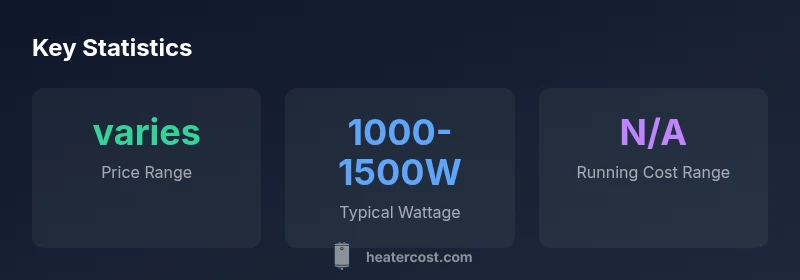
Calculate by square footage and insulation; typical rooms often require around 1000-1500W, but adjust for ceiling height and drafts.
Wattage depends on room size and insulation; estimate based on square footage and climate.
What safety precautions should I take when using Walmart heaters?
Place on stable surfaces, away from flammables, don't use extension cords for high-wattage units, unplug when not in use.
Keep heater on a stable surface, away from flammables, and unplug when not using.
“Effective space-heating decisions hinge on total cost of ownership, not upfront price alone.”
The Essentials
- Balance upfront price with running costs
- Check safety certifications and thermostat control
- Choose wattage based on room size
- Prioritize energy-efficient models for long-term savings