Wall Hanging Heaters: The Space-Saving Heating Solution
Learn how wall hanging heaters work, evaluate models, estimate costs, and maximize safety and efficiency with our buying guide for homeowners, renters, and property managers.


A wall hanging heater is a compact electric space heater designed to mount on a wall, saving floor space while delivering focused heat to living areas. It typically includes a mounting bracket, adjustable thermostat, and safety features like tip-over protection and overheat shutoff.
What is a wall hanging heater?
According to Heater Cost, a wall hanging heater is a compact electric unit designed to mount directly to a wall, freeing floor space and enabling targeted heating. It is particularly popular in small apartments, sunrooms, and home offices where traditional radiators or baseboard heaters would crowd living space. Most models plug into a standard electrical outlet, while some higher-end units may require a dedicated circuit. In practice, a wall hanging heater can be a practical substitute or supplement for air-source heat pumps in mild climates, or a cost-effective option in homes without central heating. When installed correctly, it delivers consistent warmth with minimal footprint, allowing you to keep an open floor plan while maintaining day-to-day comfort.
Public health and safety are central to any heating choice. Always install according to manufacturer instructions and local building codes. Use a wall hanging heater that features a robust thermostat, a cool-touch exterior, and automatic shut-off after a set period. This is especially important in rooms used by children or pets. For renters, choosing a model with simple mounting hardware and no permanent changes can ease future moves while preserving safety and performance.
Space efficiency and heat distribution
A wall hanging heater leverages vertical space to maximize living area, which is especially valuable in compact rooms. By placing heat higher than typical floor-level devices, you can reduce heat stratification and improve airflow. Many models include oscillation or directional grills to spread warmth evenly across a room. However, high placement may also require careful cable management and guarding to prevent accidental contact. Consider ceiling height, insulation, and window placement when estimating how a unit will perform in your space. In well-insulated rooms, a wall hanging heater can maintain a comfortable temperature with modest wattage, while poorly insulated spaces may require higher output or supplementary heat sources.
Key features to compare in wall-hanging heaters
Not all wall hanging heaters are created equal. When comparing models, prioritize safety certifications (UL or CE), adjustable thermostats, multiple heat settings, and clear display indicators. Look for features like tip-over safety switches, overheat protection, and automatic shutoff timers. Some units include remote controls, programmable schedules, and Wi-Fi connectivity for smart-home integration. Energy efficiency matters too: higher efficiency means more heat per kilowatt hour and less running cost. Units with compact form factors or slim profiles can blend into décor more easily while delivering reliable warmth.
Safety and code considerations
Safety should come first. Verify that your wall mounting uses sturdy brackets rated for the heater’s weight, and ensure proper clearance from curtains or furnishings. Check the manufacturer’s instructions for minimum clearance from walls, outlets, and combustibles. If you live in areas with power outages, consider models with built-in battery backup or easy access to an alternate heat source. In some jurisdictions, electrical work requires a permit or an electrician’s inspection. Always check local codes before installation and avoid attempting DIY fixes beyond basic maintenance.
Installation considerations and common pitfalls
Before installation, map out a wall where the heater can be mounted at a safe height and away from heavy traffic. Confirm that your electrical circuit can handle the load or run a dedicated circuit if required. Use the supplied mounting bracket and hardware, and test the unit with a short warm-up cycle to check for unusual noises or vibration. Common pitfalls include over-tightening wall screws, blocking air vents, or placing the heater near drapes. Proper clearance and clean ventilation help maintain efficiency and safety.
Operating costs and energy efficiency strategies
To maximize cost savings with a wall hanging heater, use it as a zone heater rather than a primary heat source. Pair it with good insulation and a programmable thermostat to reduce runtime. Keep doors closed to contain heat, and use a timer to avoid overnight operation in unused spaces. If possible, choose an energy-efficient model with a high coefficient of performance (COP) or energy-star certification. Compare running costs by calculating watts used per hour and multiplying by your electricity rate; a small, well-placed unit can be far cheaper than heating an entire space with central systems.
Maintenance, longevity, and warranty expectations
Regular maintenance extends the life of a wall hanging heater. Dust vents and grills weekly, wipe the exterior with a damp cloth, and inspect the power cord for visible wear. Replace or clean filters if the model includes them, and have a technician check wiring connections if you notice flickering lights or intermittent operation. Warranty coverage typically varies by model; opt for a heater with at least a 1- to 2-year warranty on mechanical parts and a longer coverage on electrical components. Proper storage when not in use can further improve longevity.
Wall hanging heater wattage and area guidelines
| Model Type | Avg Wattage | Estimated Heat Area |
|---|---|---|
| Vertical Wall Mount | 1000-1500 W | 250-350 sq ft |
| Dual-Element Wall Mount | 1500-2000 W | 200-400 sq ft |
| Low-Profile Slim | 800-1200 W | 150-250 sq ft |
Got Questions?
What size wall hanging heater do I need for a 200 sq ft room?
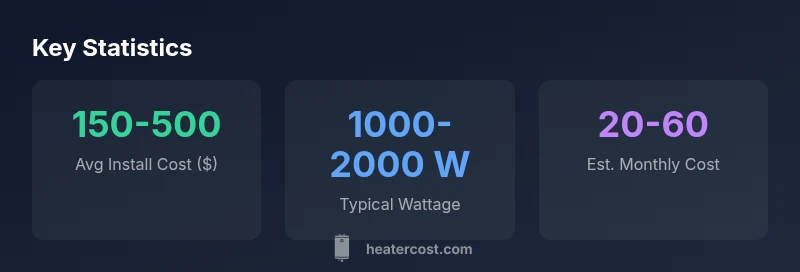
For most small rooms, a 1000-1500 W unit is typical; larger rooms require 1500-2000 W. Always measure room volume and insulation.
For a 200 square foot room, you’ll typically want a 1000 to 1500-watt heater.
Are wall hanging heaters safe to use in bedrooms?
Yes, if you choose models with cool-touch cabinets, tip-over switches, and automatic shutoff, and avoid covering heat vents.
Yes—look for safety features like tip-over and auto shutoff.
Do wall hanging heaters require special electrical wiring?
Most plug-in or hard-wired units can be installed by a qualified electrician or by following manufacturer instructions; ensure circuit capacity.
Most are plug-in, but some require a dedicated circuit—check the label.
Can I use a wall hanging heater as my primary heat source?
It's best as a supplementary, zone-heating option; for full-home heating, rely on a central system.
Usually not your main heat source; use it for zones.
What maintenance is needed for wall hanging heaters?
Dust regularly, clean air vents, check cords, and replace filters if present.
Keep it clean and unplugged when not in use.
How do energy costs compare with baseboard heaters?
Costs vary by usage; wall-hanging heaters can be efficient for spot heating when used correctly, but electric baseboard costs depend on tariffs.
It depends on usage and electricity rates—zone heating is usually cheaper.
“Wall hanging heaters provide quick, localized warmth without sacrificing floor space, but safety features and proper sizing are essential for efficiency.”
The Essentials
- Assess room size to choose appropriate wattage.
- Prioritize safety features like tip-over and overheat protection.
- Account for installation costs in your budget.
- Use wall-hanging heaters for zone heating efficiency.
- Check warranties and schedule regular maintenance.