Offer Letter for Apartment: Step-by-Step Guide
Learn how to craft an effective offer letter for an apartment, including structure, sample language, and practical tips to improve landlord confidence and your rental chances.


Create a clear, landlord-friendly offer letter for an apartment that communicates serious intent, outlines proposed rent and move-in date, and highlights your reliability. This quick guide summarizes essential components, document attachments, and a straightforward, stepwise approach to present yourself as a desirable tenant in competitive markets.
What is an offer letter for apartment?
An offer letter for an apartment is a concise, professional note from a prospective tenant that communicates intent to rent a specific unit under stated terms. It supplements a rental application and can help a landlord compare candidates more quickly, especially in competitive markets. A well-crafted offer letter is clear, polite, and tailored to the landlord’s property, highlighting your reliability, financial readiness, and flexibility on timing. It sets the tone for negotiations and can be the first meaningful impression you make as a tenant.
When to use an offer letter
Use an offer letter when the rental market is tight, when several applicants are vying for the same unit, or when a landlord asks for more information beyond a standard application. It’s particularly effective for long-term tenants, applicants with stable income, or when you have favorable move-in timing or specific terms you can accommodate. Always pair the offer letter with a clean rental application and supporting documents to avoid delays. In some cases, the landlord will prefer a formal inquiry by email or a mailed letter; adapt your format accordingly.
Essential components of a strong offer letter
A solid offer letter includes: a professional header with your contact information, the landlord or property address, a brief introduction expressing interest, a clear statement of proposed rent and move-in date, any contingencies (e.g., credit approval, income verification), a note about references, and a closing with a call to action. Attach supporting documents like proof of income, employment verification, and personal references. A signature line completes the document. Keeping it to one page is ideal for readability.
Crafting the opening paragraph
Open with a courteous greeting to the landlord or property manager, followed by a brief statement of interest in the unit and neighborhood. Mention any unique selling points—the unit’s layout, proximity to work or transit, or stable tenancy history. A strong opening signals you’re serious and prepared. If you have a preferred move-in date, state it early, along with a brief rationale (e.g., current lease ending on a given date).
Detailing rent, terms, and contingencies
Clearly specify your proposed monthly rent, security deposit, and the intended move-in date. Include any contingencies, such as credit approval, income verification, or references, and state acceptance of building rules or pet policies if applicable. If you are flexible on terms, indicate your openness to discussion while still presenting your preferred scenario. Being explicit reduces back-and-forth and speeds up decision-making.
Including references and proof of income
Landlords value reliability. Offer to attach pay stubs, an employer letter, or a recent bank statement to demonstrate income stability. Include a list of references who can vouch for your character and reliability, preferably former landlords or supervisors who can speak to your tenancy and punctuality in payments. Redact sensitive data where appropriate and provide contact details so the landlord can verify quickly.
Tone and formatting tips
Maintain a professional, courteous tone throughout the letter. Use a clean, easy-to-read font and a one-page layout. Use bullet points sparingly for rent and terms, but keep the letter cohesive with short paragraphs. Personalize the message by referencing specific features of the unit, but avoid overfamiliar language. A well-formatted letter signals respect for the landlord’s time and makes your key terms easy to scan.
Sample language snippets you can adapt
Opening paragraph: “Dear Ms. Ramirez, I am writing to express strong interest in the two-bedroom unit at 123 Maple St. I am prepared to move on July 1 and propose a monthly rent of $1,800, with a $1,800 security deposit, contingent upon standard credit and income verification.”
Rent/terms section: “Proposed terms: rent $1,800/month, security deposit $1,800, move-in July 1, 2026, 12-month lease, no pets.”
Contingencies: “Contingent on satisfactory credit check, income verification, and landlord references.”
How to send and follow up
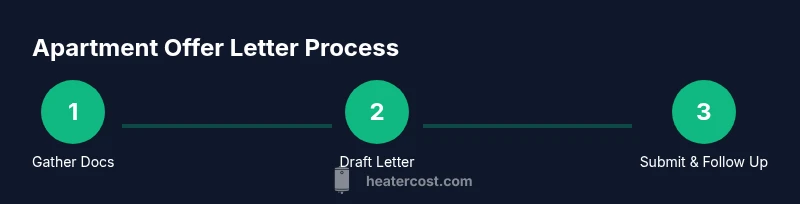
Choose the delivery method the landlord prefers—email, portal upload, or hard copy by mail. If emailing, attach the offer letter as a PDF to preserve formatting and include a brief note in the body. After sending, follow up within 2–3 business days with a polite check-in to confirm receipt and openness to discussion. Track responses and be prepared to adjust terms if you receive a counteroffer.
Common mistakes to avoid
Avoid vague terms, overly casual language, or unclear move-in dates. Don’t omit attachments such as income verification or references. Refrain from including overly personal information or irrelevant details. Finally, avoid aggressive negotiation language; emphasize flexibility and collaboration rather than ultimatums. A clear, respectful approach increases your credibility and chances of acceptance.
Quick checklist before sending
- [ ] Confirm unit address and landlord name
- [ ] Include proposed rent, move-in date, and lease length
- [ ] Attach income proof, employment letter, and references
- [ ] Proofread for grammar and tone
- [ ] Choose the preferred delivery method and a follow-up plan
- [ ] Add a brief note about flexibility on terms and contingencies
Tools & Materials
- Computer or notebook(For drafting and editing the offer letter; maintain a clean, professional format)
- Template or sample letter(Use a polished template to ensure all components are included)
- Proof of income(Recent pay stubs or employer letter)
- Rental references(Contact information for previous landlords or roommates, if applicable)
- Identification(Photo ID for verification if requested)
- Printed copies and envelope(If delivering in person or by mail)
Steps
Estimated time: 45-90 minutes
- 1
Gather your documents
Collect proof of income, references, and any supporting documents you plan to attach. Having everything ready prevents delays and shows preparedness.
Tip: Organize documents in a single folder or PDF bundle for easy sharing. - 2
Choose a unit-specific template
Select a template tailored to the apartment you're applying for, and customize it to reference the exact unit, address, and landlord name.
Tip: Avoid generic language; personalize the letter to the property and landlord. - 3
Draft the opening paragraph
Write a concise opening that states your interest, move-in date, and a brief reason the unit suits your needs. Include a respectful tone.
Tip: Lead with credibility, such as stable employment or a reliable tenancy history. - 4
Detail rent, terms, and contingencies
Clearly state proposed rent, security deposit, lease length, and any contingencies like credit or income verification.
Tip: Be explicit but not rigid; show willingness to discuss reasonable adjustments. - 5
Attach supporting documents
Include income verification, references, and any required forms. Ensure sensitive data is redacted where appropriate.
Tip: Label attachments clearly so the landlord can verify quickly. - 6
Proofread and format
Check for errors, ensure consistent formatting, and keep the document to one page if possible.
Tip: Have a trusted friend review for clarity and tone. - 7
Choose the delivery method
Send via the landlord's preferred channel (email, portal, or mail) to maximize the chance of timely review.
Tip: If emailing, convert to PDF to preserve layout. - 8
Include a brief follow-up plan
Outline when you will follow up if you do not hear back, and remind them of your preferred next steps.
Tip: Set a calendar reminder to prompt a courteous follow-up. - 9
Prepare for negotiation
Anticipate counteroffers and determine your non-negotiables (e.g., move-in date, security deposit).
Tip: Know your bottoms line in advance to avoid rushed decisions. - 10
Track responses
Keep a log of when letters were sent, read receipts, and landlord replies to stay organized.
Tip: Use a simple spreadsheet or notes app for visibility. - 11
Refine for future applications
learn from the experience; adjust language or terms for future renters if needed.
Tip: Note landlord feedback to improve future offers.
Got Questions?
What should be included in an apartment offer letter?
An offer letter should include a header with contact information, a brief introduction, proposed rent and move-in date, any contingencies, references, and a closing with a call to action. Attach income verification and references to support your terms.
Include your contact details, proposed terms, contingencies, and references. Attach proof of income to strengthen the offer.
Can I offer rent below asking price?
Yes, you can propose a lower rent if you justify it with market data or personal circumstances, but be prepared for a counteroffer. Always present a reasonable range and focus on non-monetary benefits you offer as a tenant.
You can propose a lower rent, but expect some negotiation. Support your offer with documentation and good references.
Is an offer letter legally binding?
An offer letter is typically not legally binding unless it explicitly states binding terms. It is best viewed as a negotiation starting point and should be followed by a formal lease agreement.
Usually not binding on its own; it starts the negotiation and should lead to a formal lease.
What if the landlord rejects my offer?
If rejected, ask for feedback, adjust terms if possible, or consider other units. Maintain professionalism and keep lines of communication open for future opportunities.
Ask for feedback, adjust terms if possible, and stay in touch for other options.
Should I still complete a formal rental application?
Yes. A completed rental application speeds the approval process and gives landlords the information they need to verify income, credit, and references.
Yes—complete the rental application to streamline verification and approval.
Watch Video
The Essentials
- Define clear rent and move-in terms in writing
- Attach verifying documents to strengthen credibility
- Personalize the offer letter for each unit
- Follow up politely to accelerate decisions