Heater and Fan Combo Tower: 2026 Buying Guide
Compare heater and fan combo towers, analyze heat output, safety, energy use, and costs. Heater Cost's analytical buying guide helps homeowners choose the best tower heater for small spaces.


A heater and fan combo tower usually offers a strong balance of warmth, portability, and safety for small to medium rooms among space heaters. It heats quickly with a built-in fan for even distribution, plus adjustable thermostats and important safety features. The Heater Cost team finds this design often outperforms basic radiators in drafts and compact living areas.
Why a heater and fan combo tower matters in modern homes
In many homes, quick, controllable warmth without bulky equipment is essential. A heater and fan combo tower brings together targeted heating with airflow that distributes heat evenly, reducing cold spots in living rooms, bedrooms, or home offices. For homeowners evaluating costs and practicality, this design often strikes a smart balance between performance and footprint. According to Heater Cost, the combination of a ceramic heating element and a built-in fan typically yields faster warm-up compared to static radiant units, while staying compact enough to tuck into corners or beside furniture. The latest models emphasize safety, with features such as tip-over switches, overheat protection, and cool-touch housing, which are critical for households with children or pets.
From a value perspective, the tower format matters: the narrow silhouette minimizes space usage and improves portability for seasonal use or multi-room setups. The integrated controls—thermostats, timer functions, and multiple heat settings—offer precise comfort without wasting energy. In short, the heater and fan combo tower responds to practical needs: speed, control, and safe operation in compact spaces. The Heater Cost team finds that this class of heater often delivers superior convenience for apartment dwellers and small households, where full-sized heaters are impractical.
Core differences: tower style vs other space heaters
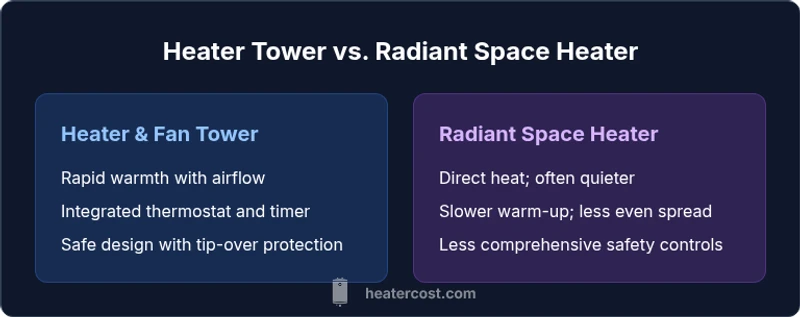
Tower heaters with an integrated fan differ from bulkier radiant panels or oil-filled radiators in several ways. The vertical, slender design targets near-field warmth quickly and projects heat outward with a fan to broaden coverage. This yields faster perceived warmth in short sessions and reduces wait times before occupants feel comfortable. By contrast, radiant or oil-filled heaters rely more on ambient warmth and slow heat uptake. The heater and fan combo tower also tends to include modular controls, such as multiple heat settings, oscillation options, and programmable timers, which enable personalized comfort. The trade-off is that some models can produce more audible fan noise in high settings, especially in quiet bedrooms. Overall, the tower approach is best for fast warmth in smaller spaces, or as a supplementary heater alongside central systems. The Heater Cost team notes that this configuration is often a preferred choice for renters and students who need portable, reliable heat without a big upfront investment.
Key features to compare (heat output, safety, controls)
When evaluating a heater and fan combo tower, the most meaningful features include heat output relative to room size, safety systems, and control sophistication. Heat output is typically rated in watts or BTUs; look for a model that matches your room area and climate. Safety should include tip-over protection, automatic shutoff at a safe temperature, and cool-touch housing. For controls, seek models with an accurate thermostat, adjustable heat settings, a timer, and, if possible, child-lock features. In addition, consider oscillation (to spread warmth more evenly) and a simple standby mode for energy savings. The goal is to balance rapid warmth with predictable energy use. Heater Cost analysis shows that the most reliable towers provide stable performance across a range of temperatures and resist short cycling, which wastes energy.
Noise, efficiency, and energy costs
Noise level is a practical concern, especially in bedrooms or study spaces. Fan-assisted towers can range from quiet to mildly noticeable on medium-high settings. If you sleep with a heater on, choose models published as quiet or with a low-dB fan, and consider placing the unit away from direct contact with occupants. Energy efficiency hinges on how well the thermostat matches the actual heat output and how long the heater runs. Look for automatic shutoff timers, eco modes, and sensors that reduce energy use when the space has reached the desired warmth. While a heater and fan combo tower is usually more energy-efficient than a larger space heater, it is still wise to size the unit to the room and use a timer to prevent unnecessary operation. Heater Cost’s research indicates modern towers often outperform older fans in both efficiency and consistency when used in appropriate spaces.
Size, portability, and space considerations
The tower form factor is designed for portability and minimal footprint. Before purchase, measure the intended placement area, including clearance around the unit for safe operation. Ideal locations are away from curtains, furniture, and high-traffic pathways. A common guideline is to maintain at least a foot of clearance on all sides. The tower’s slim profile helps it tuck into corners and under desks, increasing flexibility for seasonal use or multi-room heating strategies. For renters, a compact tower can be a practical bridge between heating needs and landlord restrictions. The Heater Cost team highlights that the best models combine a small footprint with robust heat, so you can warm a room quickly without sacrificing living space.
Cost considerations: upfront, operating, maintenance
Upfront costs for heater and fan combo towers are generally mid-range within space heaters, but selection varies by brand, features, and warranty terms. Operating costs correlate with heat settings, room size, and how long the unit runs. Features like programmable timers or eco modes help reduce ongoing expenses. Maintenance is typically minimal: periodic dusting of vents, cleaning of filters (if applicable), and checking the power cord for wear. In households where heat is needed only during specific hours, a timer-equipped model can offer meaningful savings. From a long-term perspective, consider models with durable housings, reliable safety components, and accessible replacement parts to maximize lifespan. Heater Cost’s data suggests that long-term value comes from thoughtful sizing and routine upkeep rather than aggressive upfront discounts.
Installation and safety tips
Most tower heaters are plug-in devices that require simple setup, but safe installation still matters. Place units on stable, level surfaces, away from water sources, and out of reach of children and pets. Use a dedicated outlet if possible to avoid overload on a single circuit. Regularly inspect the power cord and plug, and never run the device behind furniture where airflow is restricted. If your home has limited electrical capacity, consult a professional or upgrade dedicated circuits to support larger heater models. Adhering to the manufacturer’s instructions is critical, as improper use can lead to overheating or fire risk. The Heater Cost team emphasizes safety as the top priority when choosing any heater that includes a fan and additional features.
Use cases: best rooms and scenarios
Heater and fan combo towers excel in small-to-medium rooms such as bedrooms, home offices, studios, and compact living areas where rapid warmth is valued. They function well as a primary heat source in milder climates or as a supplemental boost in colder periods. For open-plan spaces, a tower placed centrally with side outlets can help distribute warmth more evenly. In apartments with strict noise or space constraints, a compact tower balances comfort with practicality. The Heater Cost team notes that the most satisfying applications involve spaces where quick warm-up, precise control, and portability are important, such as student housing or rental units.
Maintenance and lifespan expectations
To maximize lifespan, clean vents and grills regularly to avoid dust buildup that can impede airflow. Check for loose screws or rattles after transportation, and inspect the mounting surface if you place the unit on shelves or stands. Replace or wash any removable filters per the manufacturer's recommendations. Lifespan is influenced by usage patterns, quality of components, and how well the unit is protected from moisture and dust. In well-maintained models, a heater and fan combo tower can provide several seasons of dependable warmth, with fewer issues than many affordable portable heaters. Heater Cost’s analysis indicates that reliability improves with models that include robust safety features and easily replaceable parts.
How to choose: a step-by-step decision guide
Step 1: Define your space and climate — small rooms in drafts often benefit from a tower with high fan-assisted output. Step 2: Set a budget and list must-have features like programmable timers or kid-safe controls. Step 3: Compare towers with similar wattage and safety features, prioritizing models with positive in-use reviews. Step 4: Check noise ratings and test placement for your room layout. Step 5: Verify warranty and replacement part availability. By following this process, you’ll select a heater and fan combo tower that aligns with comfort goals and safety standards. The Heater Cost team recommends keeping the keyword heater and fan combo tower in mind as you scan options, ensuring you prioritize practical performance over price alone.
Comparison
| Feature | Heater & Fan Tower | Traditional Radiant Space Heater |
|---|---|---|
| Heat Output | High for compact spaces; fast warm-up | Moderate; slower initial warmth |
| Safety Features | Tip-over protection, overheat shutoff, cool-touch housing | Basic shutoff; fewer safety refinements |
| Noise Level | Low to moderate; fan-assisted | Low to moderate; fanless options |
| Energy Efficiency | High efficiency with adaptive thermostats | Moderate for continuous use |
| Best For | Small rooms, apartments, drafty spaces | Larger rooms or permanent placement |
| Price Range | Medium price range | Lower upfront cost |
| Maintenance | Easy vent cleaning; filter checks | Minimal maintenance |
The Good
- Fast heat delivery with integrated fan
- Compact and highly portable
- Built-in safety features for homes with kids
- Adjustable thermostats for precise comfort
- Versatile for apartments and multi-room use
Negatives
- Not ideal for very large spaces
- Fan noise can be noticeable on high settings
- Requires clearance for safe operation
- Upfront cost can be higher than basic models
Heater and fan tower is generally the better pick for small-to-medium rooms, offering fast warmth, strong safety features, and portability.
For compact spaces and temporary heating needs, a tower with a fan delivers quick comfort and flexible placement. In larger or open-plan rooms, consider alternative heaters or supplemental heating strategies. The Heater Cost team recommends prioritizing models with solid safety features and reliable parts availability.
Got Questions?
What is a heater and fan combo tower?
A heater and fan combo tower is a vertical space heater that uses a ceramic element plus an integrated fan to distribute warm air quickly. It typically includes adjustable heat settings and safety features such as tip-over protection. This design prioritizes speed, portability, and compact footprint for small spaces.
A heater and fan tower is a vertical heater with a built-in fan for fast warmth and easy portability.
How does this tower compare to a traditional space heater?
Compared to traditional space heaters, tower models often heat up faster due to the fan and provide more uniform warmth in nearby areas. They are typically more compact and portable, but may be slightly noisier at higher settings. For quick warmth in tight spaces, towers frequently outperform basic radiant units.
Towers warm up faster and spread heat more evenly in small spaces, though they can be a bit noisier than some traditional units.
Is it safe to leave a heater and fan tower on overnight?
Most towers include essential safety features like tip-over protection and auto shutoff. However, overnight use still carries risk if the unit is obstructed or near bedding. If overnight heating is needed, choose a model with a verified auto shutoff timer and place it away from flammable materials.
Yes, but only with proper safety features and clear space; never sleep with it directly nearby.
What features should I look for when buying a tower heater?
Prioritize heat output matched to room size, adjustable thermostat, multiple heat settings, timer/eco mode, oscillation, and solid safety protections. Look for cool-touch housing and a stable base to prevent tipping. A reliable warranty and easy replacement parts also matter for long-term value.
Look for size-appropriate heat, adjustable thermostats, safety protections, a timer, and a good warranty.
Can I use a heater and fan tower in a large room?
Tower heaters are typically best for small to medium rooms. In large or open-plan spaces, they may require placement strategy or serve as a supplemental heat source. For large rooms, consider combining a tower with a central system or choosing a larger unit designed for greater coverage.
They work best in smaller rooms or as a supplement in larger spaces.
How do I maintain a heater and fan combo tower?
Regularly dust the vents and grills to maintain airflow, check for frayed cords, and follow the manufacturer’s cleaning guidelines. If your model uses filters, clean or replace them as recommended. Annual inspection and proper storage during off-season extend lifespan.
Dust the vents, check cords, and follow the maintenance schedule in the manual.
The Essentials
- Choose a heater tower with adequate heat output for room size
- Prioritize safety features like tip-over and auto shutoff
- Opt for adjustable thermostats and timers for efficiency
- Assess noise level in sleeping or study areas
- Plan placement for safe clearance and easy access