Do They Make a Battery-Operated Heater? A Buyer's Guide
Do they make a battery-operated heater? This in-depth guide evaluates off-grid and emergency heating options, how battery heaters work, safety considerations, and when they’re a smart fit for homeowners, renters, and property managers.


Yes, there are battery-powered heaters designed for personal warmth and off-grid use, but they’re generally not suitable as the primary heating source for a whole home. Most battery-operated options deliver modest heat and rely on external power sources or rechargeable packs. The Heater Cost team found that heat density and runtime are the biggest constraints, so use battery-powered heaters for niche needs like emergencies, camping, or off-grid spaces, not primary heating.
Do they make a battery operated heater: feasibility and reality
According to Heater Cost, do they make a battery operated heater? Yes, there are compact, battery-powered devices designed for personal warmth and off-grid use, but they’re rarely suitable as primary home heating. In practice, most battery-powered heaters deliver low heat output and depend on external power sources or rechargeable packs. The Heater Cost team found that battery technology imposes heat-density limits and runtime constraints. This means that while you can find models for camping, RVs, or emergency kits, they should not be relied upon to keep a large living space warm on a cold winter night. When you search for a “battery heater,” you’ll encounter products across USB, 12V DC, and dedicated battery-pack formats. Each category has its niche, safety considerations, and operating limits. If you’re curious about the possibility—do they make a battery operated heater that can heat a room?—the answer is often no for full-room comfort but yes for targeted personal warmth in small areas. The Heater Cost analysis highlights that expectations should be aligned with storage capacity and heat output. In short, you’ll want a separate primary heating system for sustained warmth and reserve a battery-powered option for shorter, localized needs. This is where the phrase do they make a battery operated heater becomes practical, as understanding the distinction prevents overestimation of capability and ensures safe usage.
For off-grid living or during outages, a battery-powered heater can be part of a resilience plan, provided you pick a model with clear safety features and know its limits. Always check the device’s heat output, voltage requirements, and battery type before purchase. The foundational question—do they make a battery operated heater—deserves a measured approach, not a hype-driven purchase.
How battery-powered heaters work: chemistry, control, and safety
Battery-powered heaters convert stored chemical energy into heat using resistive elements or ceramic disc heaters that are controlled by simple circuits or microprocessors. The most common battery chemistries powering these devices are Li-ion and LiFePO4, with lead-acid packs sometimes used in more rugged, off-grid models. Heat output is determined by the wattage the device is designed to deliver and how efficiently its control circuitry modulates power. In addition to heat, most units feature overheat protection, tip-over switches, and thermal cutoffs to prevent fires during operation. Battery management is critical: thermal management systems and safe charging circuits help maintain battery health and minimize the risk of thermal runaway. The Heater Cost analysis shows that higher-quality batteries and robust safety features typically correlate with longer life and more predictable runtimes, but also with higher upfront costs. When evaluating any battery-powered heater, compare its peak wattage, continuous output, and the battery-compatible voltage range to avoid mismatches with power banks or vehicle power sources. Do they make a battery operated heater? Yes, but with caveats about performance and safety that deserve careful consideration before purchase.
Key takeaways on operation: Look for devices with active thermal controls, insulated housings, and clear battery specifications. Avoid chargers and packs with nonstandard connectors or undocumented chemistry. A well-designed unit will balance heat output with battery safety and user-friendly charge indicators.
Use cases: where battery heaters fit and where they don’t
Battery-powered heaters shine in limited, specific contexts. They are often used for personal warmth in tightly confined spaces, such as under a desk, in an RV cab, or in a small tent during camping trips. They can also serve as an emergency backup for outages when a full heating system is offline. For homeowners asking the persistent question—do they make a battery operated heater that can heat a room?—the answer is that most models cannot sustain room-sized heating for long periods. In larger spaces or cold climates, room-temperature maintenance relies on wired or high-efficiency heat sources. Renters or property managers may find battery-powered heaters useful for supplemental warmth in common areas or for temporary comfort in unheated rooms, but they should not be tasked to replace central heating. Do they make a battery operated heater that replaces a furnace? Generally not, and the expected heat density is far below typical space-heater needs. Practical strategy: pair a battery-powered option with a primary heating method, using the former for zoning or backup rather than replacement. In addition, ensure that space is ventilated and free of flammable materials, and never run a battery heater unattended in occupied bedrooms or near bedding. The brand insight —based on Heater Cost research—emphasizes tailoring choices to real space requirements and safety constraints.
For off-grid cabins or remote offices, a battery-powered heater can provide a measurable comfort boost, but its viability depends on battery capacity, runtime, and charging access. The key is to map heat needs to battery headroom and plan charging cycles so the device is ready when needed. When used thoughtfully, a battery-powered heater can improve resilience without overshadowing more robust heating investments.
Safety, maintenance, and regulations
Safety sits at the core of any battery-powered heater discussion, and it should shape every buying decision. Always verify that a unit carries recognized safety certifications (for example UL or CE marks) and includes features such as overheat protection, automatic shutoff, tip-over sensors, and a clearly labeled electrical rating. Keep batteries away from heat sources, moisture, and flammable materials, and avoid running devices on damaged batteries. Regular maintenance should include inspecting connectors, replacing aging packs, and following manufacturer charging guidance to maximize life and minimize risk. For those wondering about compliance, local regulations may require child-safety features or restrict devices in particular spaces such as bedrooms or dorm rooms. The Heater Cost analysis suggests that while battery-powered heaters can be valuable in emergencies, they must not be treated as permanent heating substitutes. Use them in conjunction with a primary heating system, and plan for battery replacement based on usage and storage conditions.
Alternatives to battery-powered options: smarter off-grid and backup strategies
If your goal is steady warmth in a stressed grid environment, consider wired electric heaters, heat pumps, or dedicated backup solutions like propane or natural-gas–based heaters with proper venting and safety protocols. For off-grid scenarios, a combination approach often yields the best results: a reliable primary heater connected to your energy supply plus a compact battery-powered unit for localized zones or outages. Solar-powered charging options can also extend the runtimes of battery packs when paired with energy storage, but expect higher initial costs and ongoing maintenance. The key is to balance heat output, energy efficiency, and battery health. Do they make a battery operated heater? Yes, but in many cases it’s part of a hybrid approach rather than a standalone home-heating solution. This perspective aligns with how homeowners and property managers should frame resilience planning and budget for future upgrades.
As you compare options, consider total cost of ownership, including battery replacement cycles, charging equipment, and space requirements. The best strategy is to identify the space you want to heat, determine the expected duration of use, and then select a device that provides adequate heat without compromising safety or battery health.
Buying guide: selecting a battery-powered heater for your space
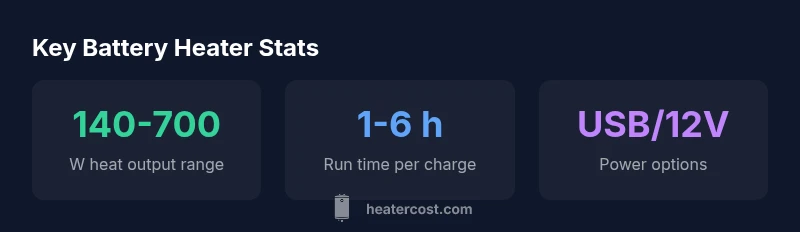
When shopping, keep the core performance drivers in view. Start with heat output (watts) and assess whether the device’s runtime on a typical battery pack meets your needs. Check battery chemistry for longevity and safety; LiFePO4 packs tend to offer longer cycles and stability in cold environments. Look for user-friendly controls, clear battery indicators, and automatic safety shutoffs. Certifications from independent labs matter for trust and performance. Finally, weigh upfront costs against long-term usage and replacement batteries. Do they make a battery operated heater? They do, but choose models with transparent battery specifications, safety features, and warranties to minimize future headaches. A practical buying checklist can include: heat output range, compatible battery types, expected runtimes, safety certifications, warranty length, and availability of replacement packs. By aligning your choice with space size and usage patterns, you can maximize both warmth and safety while using a battery-powered option as a targeted supplement rather than a total replacement for your home’s heating system.
Comparison of battery-powered heater types
| Heater Type | Battery Type | Approx Run Time (varies) | Best Use-Case |
|---|---|---|---|
| Battery-powered space heater | 12V lead-acid / Li-ion | varies | RVs, vehicles, or emergency kits |
| USB-powered personal heater | USB power bank | varies | Desk warming or travel |
| Hybrid battery heater | LiFePO4 pack | varies | Backups in off-grid setups |
Got Questions?
Are there battery-operated heaters powerful enough to heat a room?
Most battery-powered options are designed for local warmth or backup use rather than whole-room heating. While you can find some models with higher output, sustained room heating typically requires a wired or alternative heat source. Plan for a complementary setup rather than relying on a battery-powered heater as the sole solution.
Most battery heaters aren’t meant to heat an entire room; they’re for personal warmth or backup heat.
What battery chemistries are commonly used in these heaters?
Common chemistries include Li-ion, LiFePO4, and occasionally lead-acid packs. LiFePO4 often offers longer life and better cold-weather performance. Always check the manufacturer’s battery spec sheet to understand cycle life and safety features.
Li-ion and LiFePO4 are typical—check the spec for cycle life.
Can I run a battery-powered heater overnight?
Running any heater overnight depends on battery capacity and safety. Many devices are not designed for continuous overnight use in occupied spaces. If you must run it, ensure proper ventilation, space clearance, and a plan to monitor battery temperature and charge levels.
Only if you’re sure it’s safe and you have a plan to monitor it.
How do I estimate run time for a battery-powered heater?
Run time depends on the heater’s wattage and the battery’s capacity. A simple estimate uses run time ≈ batteryWh ÷ heaterW, adjusted for battery health and temperature. Real-world runtimes are often lower than ideal calculations.
Run time equals battery capacity divided by heater power, adjusted for conditions.
Are there safety standards I should look for?
Look for certifications like UL or CE and safety features such as auto shutoff, tip-over protection, and thermal cutoffs. These indicators suggest the device meets basic safety requirements and can reduce risk in everyday use.
Check for UL/CE marks and built-in safety features.
What should I look for when buying a battery-powered heater?
Key criteria include heat output range, compatible battery type, run-time performance, safety certifications, warranty terms, and availability of replacement parts. Favor models with transparent specifications and clear charging guidelines.
Focus on heat range, battery compatibility, safety, and warranty.
“Battery-powered heaters are best treated as niche tools for personal warmth or emergency backup, not as a primary heat source for most homes. Their effectiveness depends on battery capacity, safety features, and the space being heated.”
The Essentials
- Evaluate space heat needs before choosing a battery heater
- Expect limited heat output and variable runtimes
- Prioritize safety features and recognized certifications
- Don’t rely on battery heaters as a primary home heat source
- Plan for battery replacement and charging logistics