Bird Bath Heaters: Costs, Types, and Maintenance Guide
Explore bird bath heater costs, wattage options, and maintenance. Learn how to size, install, and budget for year round frost protection for backyard birds with practical, data-driven guidance.


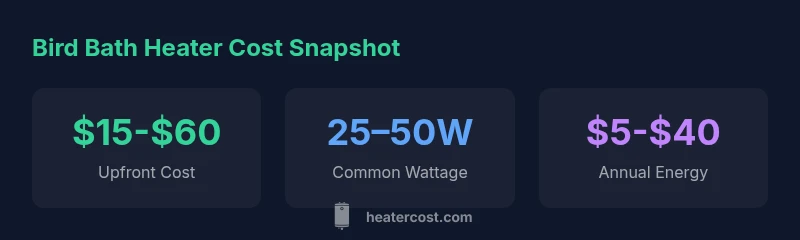
Bird bath heaters typically cost between $15 and $60 upfront, with annual energy costs depending on wattage and climate. For most setups, a small heater in the 25–50W range paired with a thermostat keeps water from freezing, while larger baths may require 100W units. Always match wattage to bath size and climate.
Frost protection basics for backyard water features
Backyard water features like bird baths are surprisingly vulnerable to freezing temperatures, especially during extended cold snaps or sudden cold fronts. A frozen bath not only stops birds from drinking and bathing but can increase algae growth and create slippery ice hazards for you and visiting wildlife. In many climates, even outdoor water features benefit from a dedicated bird bath heater that maintains a small, consistent thermal reserve around the water surface. According to Heater Cost analysis, the upfront cost is modest relative to the long term value of reliable water access for birds. A properly chosen heater reduces maintenance hassles and helps ensure a steady supply of drinking water in the coldest months. When you plan for a heater, also consider wind exposure, shade, and the bath material, all of which impact heat transfer and heater performance.
Energy use varies with climate and usage, so estimating annual costs helps with budgeting and decisions about thermostat control and backup options.
Types of bird bath heaters
There are several common heater configurations for bird baths, each with its own pros and cons. Immersion heaters sit at the bottom of the bath and create a warm water layer around the heater element. Some models include a built in thermostat or an external controller for precise temperature management. Thermal mats or hydronic mats can be placed under the bath to reduce heat loss at the surface without heating the entire bath volume. Floating or clip on de-icers are useful in shallow baths where a full immersion unit would be overkill. For most homeowners, a combination of a small immersion heater (25–50W) with a thermostat or smart controller provides reliable, energy efficient performance. When selecting a type, consider bath size, material, and local climate. In passive climates, a clip on de-icer may suffice, while in freezing environments a dedicated heater with thermostat is typically warranted.
Choosing the right type also means thinking about safety and weather exposure. Outdoor rated units with proper cord management and weatherproof fittings perform best over multiple seasons, and the thermostat helps prevent overheating and energy waste.
Sizing and wattage guidelines for different bath sizes
Sizing a bird bath heater starts with bath volume and surface area. A small, shallow bath may only need 25W, while medium baths often benefit from 35–50W, and large or very deep baths may require 75–100W. The goal is to maintain a small unfrozen layer around the water surface with minimal energy usage. A thermostat is essential to prevent heat from running continuously. In milder climates, a 25–40W unit with a thermostat can be adequate, whereas in colder regions you may prefer 50–100W units with multiple safety features. Always verify that the heater is rated for outdoor use and that the bath is stable and secure to avoid tipping or cord damage.
If you observe rapid water temperature fluctuations or boiling in extreme cold, reassess the bath size, heat source, and thermostat settings. A larger bath generally requires more precise control to avoid unnecessary energy use while still protecting against freezing.
Thermostats and controllers: saving energy and preventing freezing
Thermostats and controllers are the backbone of energy efficiency for bird bath heaters. A basic on/off thermostat turns the heater on when water approaches freezing and off once the water warms above the target threshold. More advanced controllers monitor ambient temperature and moisture levels to optimize performance. Smart plugs or outdoor-rated timers can be programmed to run during specific hours or weather conditions, reducing energy waste on milder days. For most backyard setups, a thermostat paired with a simple timer provides a good balance of reliability and efficiency. When selecting a device, ensure it has outdoor rating, splash resistance, and a guard against overheating.
Setting the thermostat to a target around 35–40 F (2–4 C) is a common starting point in many temperate regions. You can adjust based on your local climate, typical bird activity, and the bath’s exposure to wind and sun. Regularly test the system to confirm consistent operation through the winter season.
Installation and safety considerations
Installations should prioritize electrical safety and bird protection. Use a weatherproof, GFCI protected outlet and ensure cables are elevated or shielded to prevent chewing or entanglement. Place the heater away from the bath rim to avoid splashing into connectors and always follow manufacturer installation instructions. Use non slip, corrosion resistant hardware and secure the bath on a stable surface to prevent tipping. Keep cords out of the splash zone and consider a drip loop to divert water away from power connections. Outdoor electrical work should comply with local codes and safety standards; consult a licensed electrician if you are unsure about wiring or outdoor outlets. Energy and safety guidelines from energy.gov and OSHA emphasize outdoor electrical safety and proper equipment selection to minimize risk.
Regular inspections are essential. Check for cracks, exposed wires, or corrosion at least monthly during the season. Replace damaged components promptly and never operate a heater with a damaged cord or plug. When in doubt, switch off power and seek professional assistance.
Maintenance and troubleshooting basics
Maintenance is a quiet winner for long term reliability. Clean the bath and heater housing to remove mineral buildup and debris that can impede heat transfer. Inspect the thermostat or controller for signs of wear and verify that connections are tight. If the unit ceases to heat, examine the power source, ensure the circuit breaker hasn’t tripped, and test the GFCI outlet. Replace any worn gaskets or seals to maintain weatherproof integrity. During seasons with little use, protect connectors with a moisture barrier and store removable components in a dry place. If energy use spikes unexpectedly, check for calcification on the heater element or a stuck thermostat that causes continuous operation. Manufacturer support forums and extension programs from universities often provide practical maintenance checklists.
Proactive maintenance reduces the risk of freeze events and extends the life of the heater.
Cost considerations: upfront and ongoing energy costs
Cost planning for a bird bath heater involves upfront purchase prices, installation, and ongoing energy costs. Upfront costs are typically modest, with 15 to 60 USD as a common range for basic models. Wattage choices affect energy consumption: 25–50W heaters are common for small to medium baths, while larger baths may require 75–100W units, which increases annual energy use accordingly. In temperate climates, energy costs might be modest, whereas very cold regions will see higher annual costs due to longer heating periods. Incorporating a thermostat and, if feasible, a smart controller can yield meaningful energy savings over multiple winters. When budgeting, consider also the cost of replacing worn parts and any seasonal storage needs. Heater Cost analysis in 2026 shows that a disciplined approach combining proper sizing with thermostat control offers the best balance of reliability and cost efficiency.
Seasonal use and long term planning
Birds need reliable water sources year round, which makes seasonal planning essential. In winter, you should expect to run the heater periodically to maintain a safe ice free surface. In milder months the heater may run only on cold snaps or during storms. Evaluate the local climate, bird activity, and yard exposure to sun and wind when planning use. Investing in a professional outdoor electrical setup can reduce risk and ensure safe operation across seasons. Use a weatherproof enclosure, outdoor rated cords, and a properly grounded outlet to protect both family and wildlife. With thoughtful sizing and a good thermostat, you create a dependable year round water source for birds while keeping energy costs in check.
Quick decision checklist: choosing a model
If you need a quick decision guide, start with bath size, climate, and budget. For small to medium baths in temperate areas, a 25–50W heater with thermostat is typically sufficient. In colder regions or larger baths, opt for 75–100W with a robust outdoor controller. Ensure outdoor rating and a safety compliant outlet. Prioritize models with a secure mounting option, weatherproof connections, and easy maintenance access. Compare upfront costs, energy use, and warranty terms. Finally, review your local codes and consider professional installation if you are unsure about wiring or safety.
Overall, a well chosen bird bath heater balances fortitude against freezing conditions with prudent energy use, supported by a thermostat, and a careful installation plan.
Cost ranges for bird bath heater setups by size and wattage
| Aspect | Low end | Mid-range | High end |
|---|---|---|---|
| Upfront cost | $15 | $30 | $60 |
| Wattage | 25W | 50W | 100W |
| Annual energy cost | $5 | $20 | $40 |
Got Questions?
What is the typical upfront cost for a bird bath heater?
Most bird bath heaters fall in the 15 to 60 range for basic models. Costs rise slightly with additional features like thermostats or smart controllers. This range reflects common market options and represents a reasonable starting point for budgeting.
Most heaters cost between fifteen and sixty dollars upfront, with higher end options offering thermostats for better control.
What wattage should I choose for a standard backyard bird bath?
A 25 to 50 watt heater is typical for standard backyard baths. Larger baths or very cold climates may require 75 to 100 watts. Always match wattage to bath size and climate, and pair with a thermostat for efficiency.
A 25 to 50 watt heater is common; bigger baths may need 75 to 100 watts.
Do I need a thermostat or external controller?
Yes. A thermostat or external controller helps prevent overheating and reduces energy waste. It ensures the bath remains ice free without running continuously.
Yes, use a thermostat to save energy and prevent overheating.
Is it safe to use a bird bath heater outdoors?
Outdoor rated heaters with proper weatherproofing and GFCI protection are essential. Keep cords away from water and birds, and follow manufacturer safety guidelines.
Use outdoor rated heaters with weatherproofing and a GFCI outlet.
How do I install a bird bath heater?
Follow the manufacturer instructions and local electrical codes. Use a grounded outdoor outlet, mount securely, and ensure cords are protected from moisture and chewing hazards.
Follow the manual, use a grounded outlet, and protect the cord.
What maintenance is required?
Regular cleaning and inspection of the heater housing, thermostat, and connections is advised. Replace worn seals and test the thermostat annually to ensure reliable performance.
Clean and inspect regularly; test the thermostat every season.
“A well selected bird bath heater provides reliable access to drinking water for birds while keeping energy use in check when paired with a good thermostat.”
The Essentials
- Assess climate and bath size before buying
- Pair a heater with a thermostat for efficiency
- Keep safety first with outdoor-rated equipment
- Factor upfront cost into a multi-year budget
- Regular maintenance yields longer heater life